Gregg Keller Joins Show-Me Institute’s Board

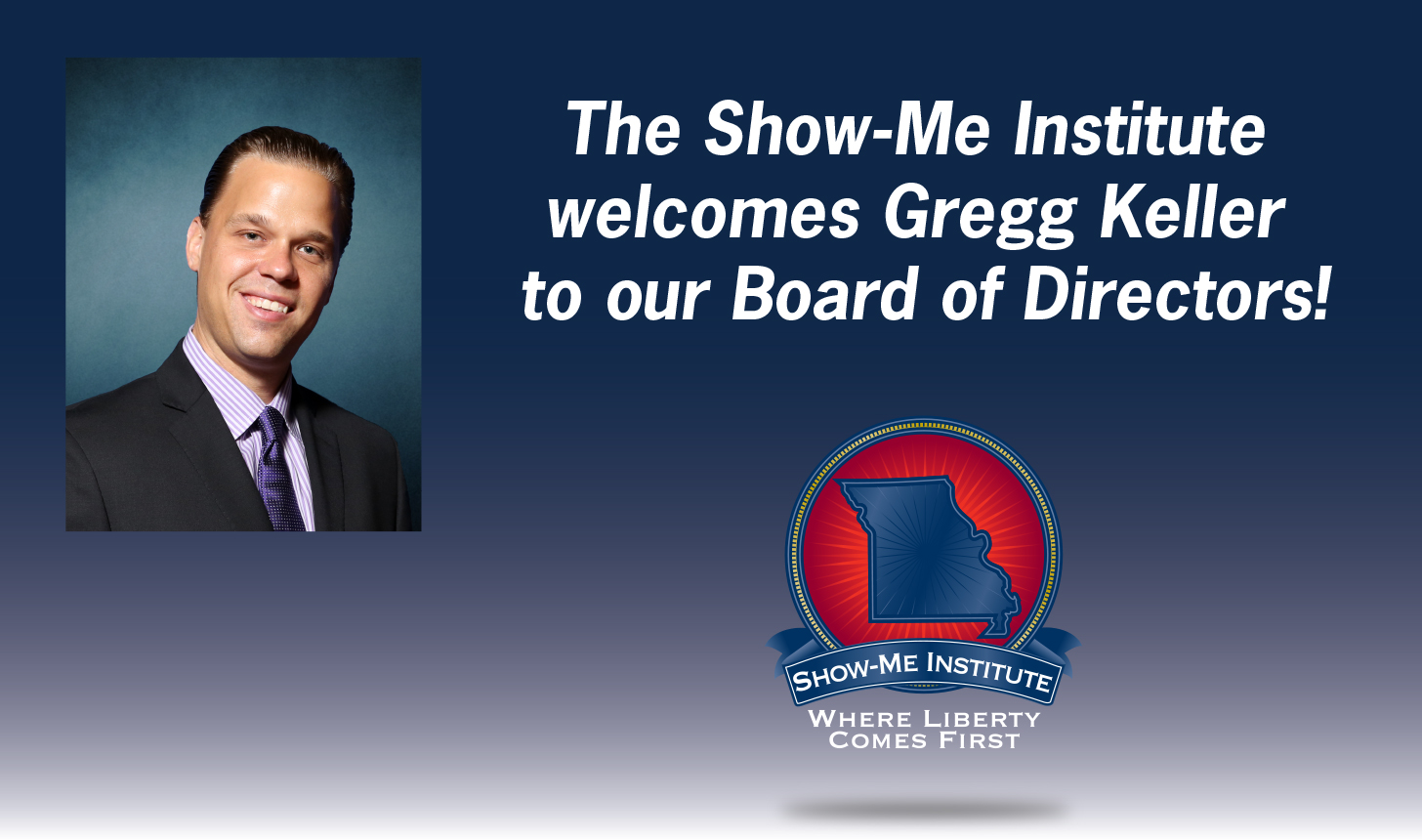
We are pleased to announce that Gregg Keller is now a member of the Show-Me Institute’s Board of Directors.

Gregg is the Principal of Atlas Strategy Group and is widely regarded as one of the preeminent public affairs professionals in the country. A former Executive Director of the American Conservative Union, the Conservative Political Action Conference (CPAC), and the Faith & Freedom Coalition, Gregg has been an advocate for free-market public policy at local, state, and national levels for 15 years.

Gregg has worked—and continues to work—extensively with the Show-Me Institute to increase the organization’s membership and following among the next generation of free-market leaders. 

Show-Me Institute Chief Executive Officer Brenda Talent had this to say about our newest board member:

"We’re excited to have Gregg Keller join the Board at the Show-Me Institute. His youth and expertise in free-market public policy will bring a fresh and vital perspective to our Board."


Riverfront Stadium Costs Change, Backers Push Ahead

We’ve covered the proposal to spend some $400 million in public dollars on a new stadium for Rams extensively on this blog. Specific plans have come and gone with regularity, leading to a continuous shell game that can be difficult for residents to follow. That is, perhaps, why a $10 million increase in the amount the city has to pay went almost completely unnoticed.

As part of a recent overhaul of the stadium financing package, which includes giving the NFL all the naming rights proceeds for “National Car Rental Field,” the total cost of the stadium went up about $10 million dollars. With NFL uninterested in paying anything (much less more), and state legislators in near revolt over the governor’s plan to unilaterally extend bonds for the stadium, the city is left holding the bag. Its total payments will increase from an estimate $150 million to $160 million:


Current Proposal

Old Proposal

NFL

 $450,000,000

 $450,000,000

PSLs

 $160,395,657

 $160,395,657

State

 $239,950,585

 $239,950,585

City

 $160,453,758

 $150,438,514

Total Cost

 $1,010,800,000

 $1,000,784,756


Ten million dollars is not a small amount for Saint Louis City. That’s the equivalent of the annual salaries of 190 teachers or the cost of 20 brand new buses. It should not be treated like a rounding error.

Worse than the cost escalation is the reaction of stadium backers to the funding reconfiguration. I sat in hearings where city representatives said, in contradiction to dozens of academic studies, that the stadium would be an economic boon for Saint Louis. I heard how the city was supposedly shifting risk to the NFL by using naming rights dollars to pay for the stadium and paying the NFL back with future tax revenue. I heard how the stadium plan would supposedly be a tax benefit to the city.

Now that the naming rights are going to the NFL and the cost of the stadium has gone up, has this prompted stadium backers to rethink their support? Unfortunately, no. Now they simply argue that keeping the tax revenue and giving away the naming rights proceeds was always better for the city all along. And what’s ten million when the Chamber of Commerce thinks the stadium will generate more than $100 million in new taxes?

With this type of non-response to a worsening deal, what reaction can we expect when we find out who will pay for maintenance? Or when someone has to pay to refurbish the Edward Jones Dome? Or if there are cost overruns? Will stadium backers still claim the plan makes financial sense, or that it is too late to turn back?

New Terminal Plans on the Table in Kansas City

Last week, the Kansas City Aviation Department updated the City Council on its efforts to overhaul Kansas City International Airport (MCI). The current planning process got underway after a previous terminal plan from 2013 failed to gain support. This was due in no small part to the fact that the Aviation Department had not consulted or sought the approval of Southwest Airlines (MCI’s main tenant) for $1.223 billion plan.

At the latest meeting, the Aviation Department told the Council that building a new terminal would cost less than refurbishing the existing terminals. The department claims that refurbishing the current configuration would cost more than $1.1 billion dollars, while a slate of new terminal plans would cost less than $1 billion.

Two things are interesting to note here. First, the Aviation Department’s cost of refurbishing the terminals has escalated dramatically from July 2013, when the initial new terminal plan was proposed. At that time, keeping the existing design was supposed to cost up to $785 million, not more than $1.1 billion. This is likely due to the scale of the refurbishment now proposed, which is more extensive than what the department had previously recommended. The cost escalation underscores the fact that the scale of the refurbishment is directly related to the cost. Certainly, fixing up the existing terminals could cost less than $1.1 billion, but that would mean a different and possibly less desirable end product.

The second interesting point is the cost of the new terminal plans, which range between $900 million and $1 billion. The Aviation Department claims that these are not “Taj Mahal” plans, that is to say they are cost effective. However, the department said the same thing for the plan that they proposed in 2013, which was $1.223 billion. The ability to find more than $200 million in savings indicates that either the “old” new terminal plan was in fact more expensive than was necessary, or that the “new” new terminal plans have lowballed cost estimates (or are insufficient).

We will continue to follow this story as the Aviation Department prepares a final recommendation. 

Show-Me Institute’s Griesemer One of “12 to Know in 2016”

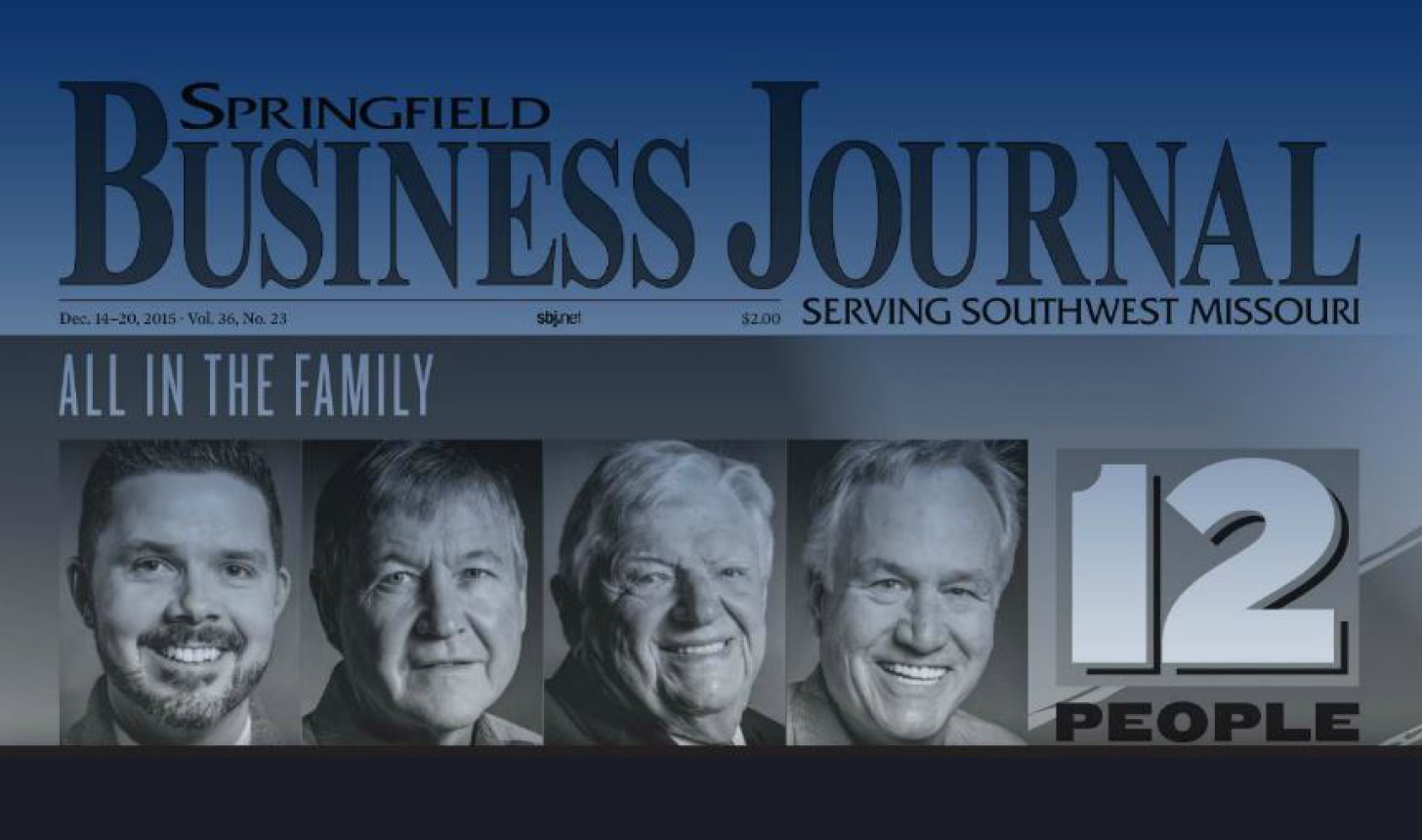
Show-Me Institute Board Member Louis Griesemer was named one of "12 People You Need to Know in 2016" by the Springfield Business Journal. In the article, he sums up his economic philosophy: “My thinking is the free market has worked every time it’s tried. It’s not a religion with me. I’m just trying to make things work.”

Read the full story here.

It Truly Is a Wonderful Life

As a child, I never understood the appeal of the old black-and-white film It’s a Wonderful Life. My mother would watch it every Christmas season without fail, and invariably it would bring a tear to her eye. Maybe I lacked the capacity for introspection needed to understand the film’s message. Maybe I just needed to experience life a little more.

As I have aged, I have grown to love and appreciate the story of George Bailey. Like my mother, I now watch it annually. I watch because the film stirs my emotions and shows me just how wonderful life really is. I watch so that I can be reminded that my life can have an impact on others, and I watch to remember the impact that others have had on me.

We may never get a glimpse at what the world would be like without us, but we can thank those who have made a lasting mark on our lives. Some people, like George Bailey, who saved his younger brother from drowning, affect our lives in grand ways. More commonly, however, people change us simply by caring and sharing their hearts. Some people shape us in ways they never realize.

I think back to my time in Mrs. Kunst’s second grade class. Her kindness and devotion made me love going to school, and she inspired me to read and read some more. Mr. Dan McClain’s loud and gregarious personality brought the story of Beowulf to life in English Literature. As he wielded his sword and pounded on the tables as if we were in a mead hall, he taught me to appreciate literature.

Yet, despite the best efforts of my teachers, I was not an accomplished student. After high school, I floundered at community college and eventually dropped out. As I was laboring aimlessly in a dead-end job, it was another teacher, Mr. Eric Smith, who inspired me to go back to college. Were it not for the bond we had formed while I was in school and his words of encouragement, I never would have gone to Missouri Southern State University, his alma mater. I never would have met my wife. I would not have had the opportunity to let the seeds Mrs. Kunst and Mr. McClain planted come into bloom. And I certainly would not be where I am today.

Like my appreciation of It’s a Wonderful Life, my understanding of how important these people were to me took time to develop. Indeed, it wasn’t until much later that I realized the impact they had on me. The influence of a great teacher often works this way.

This holiday season, I hope you will take a few moments to thank the friends, family, pastors, and teachers who have helped make you who you are.


The End of the Road for Scenic Missouri?

Missouri has some breathtaking scenery. Whether it’s the Gateway Arch or the Missouri River Bluffs or the cotton farms in boot heel, the state is dressed to impress. With the scenery rightfully grabbing all the attention, perhaps we can be forgiven, as we drive around the state, for ignoring what’s right in front of us—and under us: the highways.

And while they might not seem like much, Missouri’s highways are something to be proud of, too. Even though we have one of the largest highway systems in the country, the vast majority of those roads, from I-44 to US 36 to Route ZZ, are in great condition. They get us to work, get goods to us, and allow us to enjoy virtually every corner of the state.

While there is no threat to Missouri’s natural beauty, the same cannot be said of the condition of the state highways.  The Missouri Department of Transportation (MoDOT), which funds our state highways, is in serious financial trouble. Whether or not the state can continue to maintain the highway system is an open question. Even worse, there is no money for major improvements like rebuilding I-70 or replacing our many aging bridges.

The prime reason for this is that the largest source of funding for highways, a 17 cent fuel tax, has brought in less and less money over the years. Part of that can be blamed on inflation; part of it is the result of more fuel-efficient vehicles. And no doubt, MoDOT—like any government organization—could have made more prudent spending decisions in decades past.

The most important question now is not how Missouri has gotten into this mess, but how we’re going to out of it. Not long ago, state policymakers backed a statewide sales tax to pay for highways. Bad idea. Why should Missouri’s shoppers pay as much as—or more than—trucks just passing through the state for improved roads? It’s not fair to those who choose to drive less, and it’s not good economic policy to subsidize driving. Missouri voters did the right thing when they overwhelmingly rejected the new tax.

Fortunately, Missouri has a better option: have drivers pay for the highways. Since the inception of the state highway system, it has relied on user fees for funds. There is no reason to abandon that principle now. A small increase in the fuel tax—a few cents per gallon—could prevent MoDOT from running out of money. Many policymakers agree. The governor has come out in favor of a fuel tax increase, and multiple legislators have pre-filed bills that would enact such an increase. For example, one proposal would increase the state’s per-gallon tax on diesel fuel by 3.5 cents and on regular fuel by 1.5 cents.

Higher fuel taxes are not the only solution. MoDOT is looking at tolling I-70, which could provide the funds to construct a modern highway, paid for by those who benefit from it most. Another proposal would allow the state to hand over control of smaller highways to counties and cities in return for additional local transportation funding from MoDOT. Giving local governments the responsibility for maintaining what are for practical purposes local roads, as is done in other states, could allow MoDOT to better focus its resources.

Missouri can’t let its highway system fall into a state of disrepair, but it can fix the system’s user funding base. If Missouri can do that, both residents and visitors alike will be able to enjoy the view with full confidence that the road is good shape and that they are helping to pay for it. 

Higher Property Taxes: The Cost of Doing Business?

Taxes are, unfortunately, a necessary evil. But when we have to pay them, we should at least expect that they be applied fairly, so everyone pays his or her share. It would be hard to argue that this is the case in the 10 Saint Louis municipalities listed in the table below. All of them tax commercial property owners at rates that are at least 125% of the rates that residents pay. In Edmundson, Twin Oaks, and Brentwood, residential property isn’t taxed at all. Even among these three, Edmundson stands out, because the commercial property tax rate there was doubled with the passage of Proposition C in the November 3 general election, while the residential rate remained unchanged—at zero. As a result, the commercial property tax rate in Edmundson will be more than 30 cents per $100 assessed value higher than in any of the other municipalities listed on the table.

2014 Property Tax Rates for Commercial and Residential Properties

Municipality

Commercial Assessed Value

Residential Assessed Value

Comm. Rate

Res. Rate

Rate Ratio (C/R)

1.

Edmundson

$18,330,570

$3,830,260

0.5*

0

No Res. Rate

2.

Twin Oaks

$8,211,080

$4,803,540

0.342

0

No Res. Rate

3.

Brentwood

$108,114,606

$131,496,620

0.2

0

No Res. Rate

4.

Maplewood

$68,431,831

$71,415,070

0.51

0.19

2.68

5.

Westwood

$236,136**

$18,275,380

0.1

0.059

1.69

6.

Crestwood

$59,662,160

$160,432,460

0.431

0.256

1.68

7.

Bridgeton

$249,636,058

$97,184,040

0.25

0.16

1.56

8.

Pasadena Hills

$105,890**

$9,212,610

0.5

0.3386

1.48

9.

Valley Park

$36,622,033

$68,733,500

0.668

0.484

1.38

10.

Pagedale

$11,446,030

$10,842,420

0.341

0.264

1.29

* Edmundson's Commercial Rate of 0.5 was just raised to 1.0.

** The total commercial property in these cities is so small that it raises very little money, whatever the rate may be.

Assessed values and rates are 2014 figures taken from the Missouri State Auditor's Office 2014 Property Tax Rates

Former Show-Me Institute Policy Researcher Michael Rathbone has taken Edmundson to task over this issue before, but the other municipalities listed have similar (if less extreme) taxation policies, shifting much of the cost of government services away from residents and onto commercial property owners. Residents in these areas might enjoy the low tax rates on their property (if they pay property tax at all), but it is short-sighted—not to mention unfair—to expect the owners of commercial property to pick up the slack.

Support Us

The work of the Show-Me Institute would not be possible without the generous support of people who are inspired by the vision of liberty and free enterprise. We hope you will join our efforts and become a Show-Me Institute sponsor.

Donate
Man on Horse Charging