Is a New Mississippi River Bridge Worth $60 Million?

Plans are underway to replace an aging bridge that carries US Route 54 across the Mississippi River at Louisiana, Missouri. The existing bridge (the Champ Clark Bridge) was built in the 1920s and is in such poor shape that MoDOT has placed extensive weight and speed restrictions to ensure safety. Under a new proposal, Missouri, Illinois, and the federal government would spend $60 million on a replacement, with split of $25 million, $25 million, and $10 million, respectively. But is such an expenditure justified for Missouri?

To explore this question, we first need to look at traffic on the bridge. Before MoDOT placed weight restrictions, about 4,000 vehicles used the Champ Clark Bridge every day. That’s about as much as a lightly used urban street, and it’s low for a Mississippi River crossing. For example, bridges at Hannibal and Quincy each carry between 15,000 and 17,000 vehicles per day. Also, according to the Census Bureau, only four Missourians living in Pike County, Missouri (where the bridge is located) commuted to work in Pike County, Illinois. Actually, that estimate was within the margin of error, meaning it is possible that no one who lives in the county on the Missouri side of the Champ Clark Bridge works in the county on the Illinois side. About 500 residents of Pike County, Illinois, work in Pike County, Missouri. This low traffic makes sense when one notes that on the Missouri side there is only the small city of Louisiana (population 3,300) and the Illinois side of river is primarily farmland. Additionally, commodity flows are generally routed to the north or south of the Champ Clark Bridge.

Given the low traffic level on the Champ Clark Bridge, and the very few commuters who live in Missouri and commute to Illinois, a new Mississippi River bridge is likely to have limited positive impact for Missouri. The bridge’s replacement, therefore, is a perfect opportunity for Missouri to explore the option of tolling. Assuming the $60 million cost estimate is correct, a toll of around $2.50 per vehicle would be able to pay for bridge in 30 years, assuming existing drivers were willing to pay for the convenience of a Mississippi River bridge in that area. And if they are not, it calls into question the need for a bridge, with or without a toll. By placing a toll on the bridge, those who benefit greatly from the new bridge can fund its replacement without much, if any, additional strain on MoDOT’s or IDOT’s finances. It would be a fair way of funding a new bridge, and was in fact the method used to fund the construction of the Champ Clark Bridge in the first place.

The bottom line is that paying a new bridge on US Route 54 may not be worth it for Missouri, but it may be worth it for those who would actually use the bridge. The best way to find out whether that is the case is to explore the tolling option.


No Issue at MCI for American Airlines

Multiple news outlets have reported that passengers at airports across the country have seen increased wait times due to short-staffing at the Transportation Security Administration (TSA). We addressed this matter in a post just yesterday.

On Thursday, according to Reuters, an American Airlines executive testified before a congressional subcommittee that “airport screening delays have caused more than 70,000 American Airlines customers and 40,000 checked bags to miss their flights this year.”

Kansas City International Airport (MCI) uses a private security firm rather than the TSA, and I wrote to American Airlines to ask if they tracked the number of flights missed as MCI due to security. Their media representative quickly responded that they do track it, “but at the current time, we haven’t seen an issue at MCI for American.”

Proponents of building a new, $1.2 billion terminal at MCI are going to show pictures of as many long lines as they can at MCI to justify the expense. But there are long lines all over the country—even in new, single-terminal airports. At least for one airline, MCI is not seeing the problems that are occurring elsewhere.

Long Security Lines? Not at MCI

The Transportation Security Agency (TSA) has been telling travelers to expect longer lines at the airport this summer. Lines at security checkpoints have been longer than usual across the country, but not at Kansas City International Airport (MCI).

Why not? Certainly, size is a consideration. MCI is a mid-sized airport and not a hub like Chicago’s O’Hare airport. But there's more to it. According to The Chicago Tribune (emphasis added):

Private contractors also work well for certain types of airports—Kansas City, for example, has a terminal with multiple checkpoints, and workers can be shifted quickly depending on need, the [airport management consultant Steven] Baldwin report found. Neither San Francisco nor Kansas City has reported the lines seen at O'Hare and Midway.

This should not be surprising. Regular readers of this blog know that we’ve been impressed with private screening and the multi-terminal design for some time. And we suspect most people who fly share this view.

An expensive new terminal may be popular among Kansas City political leaders and their developer cronies, but it is unlikely to improve wait times, convenience, or safety.

Session Notes: TIF Reform Gets Approval, But More Needs To Be Done

In a victory for good governance, the Missouri legislature passed important tax increment financing (TIF) legislation, which I wrote about at some length before. Congratulations to all the stakeholders and policymakers who have pushed for changes to the state's local tax incentive laws for years, including current and former Show-Me Institute staff members. 

The TIF reform passed here deals primarily with St. Louis region tax incentive practices, which—while a step in the right direction—do not represent the sort of comprehensive, statewide tax incentive solution that Missouri ultimately needs. As my colleague Patrick Tuohey would remind us, TIF abuse is a problem that permeates all parts of the state, including and especially Kansas City. While restricting the geographic scope of this measure may have been the only way to ensure any TIF reform passed this year, we hope that broader changes to TIF are in the offing next year.

That said, the law's passage marks an important moment in the fight for tax incentive reform. Missouri and its localities have a long way to go to curb the cronyism embedded in the state's tax incentive culture, but it's encouraging to see progress being made on the issue.

End of Session Puts the Brakes on Transportation Reform in Missouri

At the beginning of this year’s legislative session, there were high hopes that Missouri’s legislators would focus on major transportation issues affecting the state. Concerns over funding problems at the Missouri Department of Transportation (MoDOT), which we’ve discussed many times before, appeared to be on policymakers’ radar. In addition, local regulatory intransigence toward ridesharing services like Uber and Lyft prompted calls for simpler statewide regulation. Leadership in Missouri’s legislature claimed that fixing these issues would be one of the main priorities of this year’s session.

Unfortunately, nothing was accomplished. On the issue of MoDOT funding, many reforms were proposed, such as reducing the size of the state highway system, increasing the state fuel tax, and allowing for public-private partnerships for tolling I-70. None of these proposals became law, although a proposal to increase fuel taxes by 5.9 cents came very close to going to a vote of the people.

As for ridesharing regulation, bickering over the exact level of safety regulation in the Senate was enough to scupper a promising reform bill. Until lawmakers are convinced that Missourians can choose for themselves the level of security that they consider adequate, the chances are slim for further regulatory reform in the state.

The only major transportation bill that passed the Missouri legislature was SB 861, which started out as a port improvement measure but ended up as a grab bag of corporate welfare measures. For instance, the bill would authorize tax deductions to lure back jobs that have gone to other states, whether or not these jobs have anything to do with ports.

While the legislature may have left transportation in the lurch, the news is not all bad. The recent passage of more funding at the federal level (through the FAST Act) and increased revenue at the state level has placed MoDOT on firmer financial footing, at least for the near future. This has led MoDOT to add 855 projects to its 2017–2021 state transportation improvement program, providing more than $700 million in new construction awards every year through 2021. As the threat that MoDOT will be unable to maintain the state highway system recedes, so does pressure to do anything to increase MoDOT’s funding.

However, major projects, like the rebuilding of I-70, remain out of reach for Missouri. And access to ridesharing services in Missouri’s largest metropolitan area (St. Louis) is still in legal limbo. It would be a mistake for Missouri’s policymakers to think they can continue to put off making sound policy reforms and hope outside circumstances continue to break in our favor. 

The Missing Element in the 2016 Legislative Session

In the 2016 session of the Missouri Legislature, our lawmakers expended millions of words on dozens of issues – everything from guns to fantasy sports, from medical marijuana to opioid abuse, from limits on lobbyists’ gifts to lawmakers . . . to a “cooling off “ period for lawmakers before they become lobbyists, and much else besides.

It was indeed a busy session. When it ended on May 13, people on both sides of the aisle congratulated themselves on the good work they had done.

But there was a disconsolate creature that wandered back and forth between the Senate and House chambers that nobody seemed to notice.

This was the elephant that everyone chose to ignore: the Show-Me State’s far-below-normal economic growth going back more than a decade.

From 2001 to 2014, Missouri’s annual output of goods and services grew at an annual inflation-adjusted rate of just 0.85%, compared to the national median for all state of 1.57%. In average real GDP growth, Missouri ranked 45th among the 50 states.

With average economic growth over that time, state GDP would be 10.4% higher than it is today, and median household income would be up 9.8%, or $4,739—at $53,102.

Before adjourning on Friday, May 13, our lawmakers sent a total of 139 bills to the governor, compared to 130 in 2015 and 190 in 2014.

Without arguing the merits of any of these bills, I would point out that none of them was directly related to anything that would spur economic growth . . . and few were even tangentially related to that issue.

That sets this session of the legislature apart from the previous two sessions.

Two years ago, the Missouri Legislature took at least one step in the right direction when it overrode Gov. Jay Nixon’s veto and passed the first reduction in Missouri income tax rates in 93 years (albeit a small reduction that will not begin to take effect until 2017).

A year ago, the legislature passed a bill that would have made Missouri the 26th “right to work” state, meaning that workers would no longer be required to join a union or pay union dues to qualify for many private and public sector jobs. Nixon vetoed the bill, and its supporters were unable to override the veto.

This year, the would-be champions of greater freedom in the workplace passed a watered-down “paycheck protection” bill to allow workers to opt out of the campaign contributions and expenditures of most government labor unions (excluding fire and police unions). Again, Nixon vetoed the bill. On the last day of the session, the effort to override the veto failed by a single vote.

In any event, the “protection” offered to workers under the so-called paycheck protection bill was highly dubious. As it was written, the bill did not require government unions to make financial information publicly available, and it would have painted a bullseye on the back of any union member who dared to request union financials as a basis for opting out of some portion of dues.

I am hoping that in the next session of the Missouri Legislature, we will see much more of a pro-growth agenda—with a concentration on cutting taxes, reducing regulation and red tape, and doing more to secure greater freedom in the workplace.

Be Like Kansas City-Avoid the TSA

Frequent fliers: get ready for a long summer. The Transportation Security Administration (TSA) has told the public that it will be unable to cope with increasing passenger traffic at America’s airports, leading to security lines that CNN and travelers alike have called, “insane.” For example, travelers at O’Hare International Airport have been told to arrive three hours before their flights. The TSA blames Congress for not increasing its budget fast enough to hire new officers. TSA critics claim the TSA is grossly inefficient, virtually ineffective, and, instead of streamlining its operations, has chosen to sabotage the public to dislodge more Congressional funding.

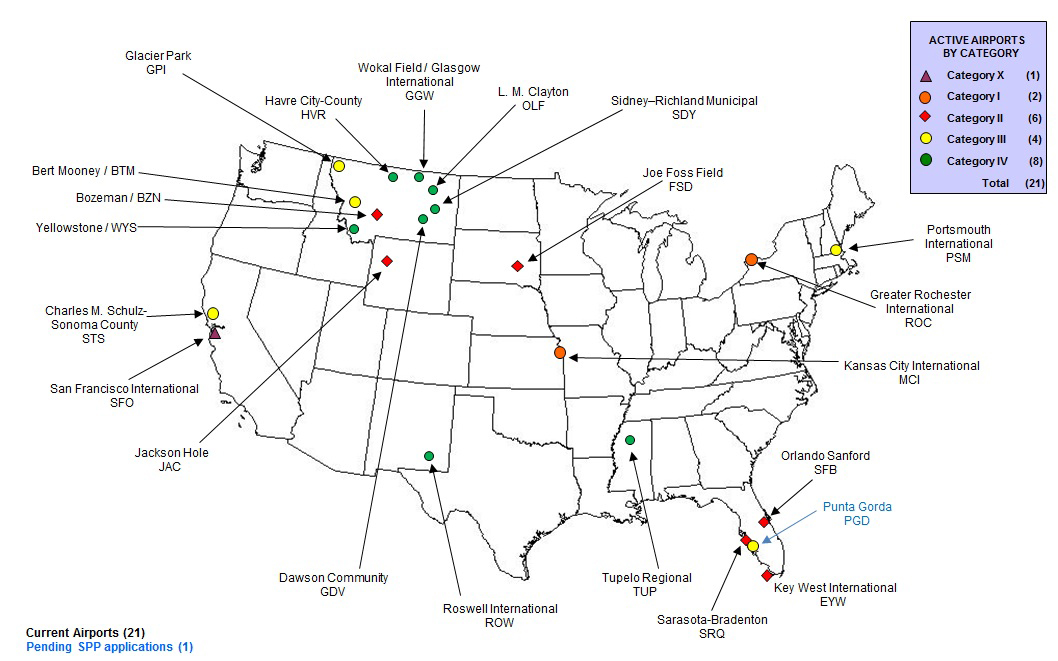
But not every airport in Missouri need fear the meltdown (or tantrum) of the TSA.  One lucky airport is Kansas City International (MCI), which contracts security out to the private sector and does not use the TSA. MCI is one of a handful of major airports across the United States (including San Francisco) that participate in the Screening Partnership Program (SPP). In this program, the TSA sets standards for airport security, but the airport itself is allowed to contract service out to qualified vendors. Using contractors for screening is mainly touted as a money-saving measure, but it also allows an airport to essentially fire its security team if it isn’t performing. Compare that with the normal operating procedure: no matter how bad things get at Saint Louis-Lambert International Airport (STL) or Chicago O’Hare (ORD), the TSA cannot and will not be fired.

The map below shows airports that are participating in the SPP program.

Map showing airports participating in SPP

So why haven’t more airports in Missouri and nationwide opted out of the TSA? In fact, many of them have tried, including Springfield-Branson Airport (SGF) in Southwest Missouri. Unfortunately, for many airports the TSA has held up the application process to join the SPP. TSA officials have argued to Congress that actual TSA officers are better and more efficient than private screeners, justifying their foot-dragging on the SPP program. It seems unlikely that such a claim will survive the summer, and large airports across the country are already telling the TSA that enough is enough.

One of the greatest benefits any airport can provide to the flying public is reliably short security lines. But aside from MCI, commercial airports in Missouri don’t currently have any control over this amenity. TSA’s current failings might finally create an impetus to reform airport security and expand the SPP program, and airports like SGF and STL should take advantage.


Support Us

The work of the Show-Me Institute would not be possible without the generous support of people who are inspired by the vision of liberty and free enterprise. We hope you will join our efforts and become a Show-Me Institute sponsor.

Donate
Man on Horse Charging