

This holiday season, please support liberty in Missouri by making a tax-deductible donation to the Show-Me Institute.
We Are Thankful for Citizen Petitioners

The recent past has been a busy time for citizen petitioners in Kansas City. Current and recent efforts have included an audit of the water department, an expensive light rail system, and an increase in the minimum wage. Some have been successful, such as that requiring a public vote on any changes to the airport or a challenge to a crossroads tax increment financing effort, and some—such as a challenge to a proposed convention hotel—have failed. But all are signs of a healthy democracy.
In 2011, we published:
One of the greatest strengths of American government is that there are a number of checks and balances at the federal, state, and local levels that limit the ability of any one branch of government to abuse its power. The initiative petition process is one of those checks on power, and restricting it further will serve only to erode Missourians’ ability to limit legislators by initiating good—but politically difficult—policy change.
This remains as true today as ever. And while we may not always agree with the goals of the petitions—as is the case with efforts to increase the minimum wage in Kansas City—we respect citizens exercising their rights. And we are thankful that people still care enough about public policy to roll up their sleeves and get involved in ways that go beyond simply casting the occasional ballot.
Graham Renz Discusses Water Infrastructure on ABC30
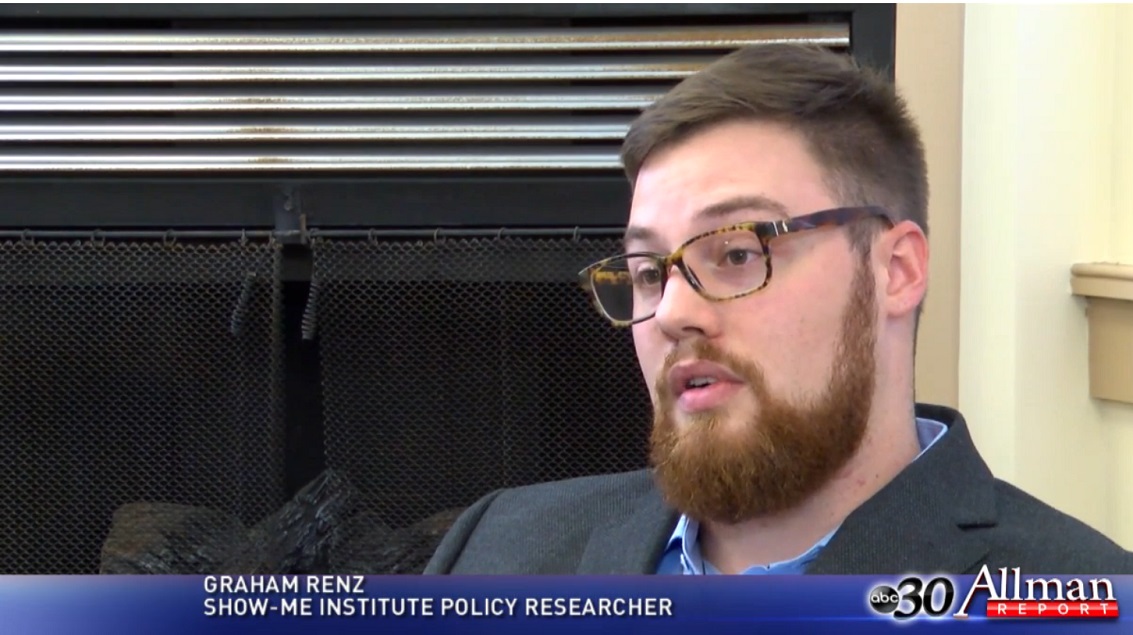
Graham Renz appeared on ABC 30’s The Allman Report on November 22 to discuss alternative ways the city of St. Louis can fund its water infrastructure needs. Click here to watch.
Watch Michael Highsmith On The Allman Report
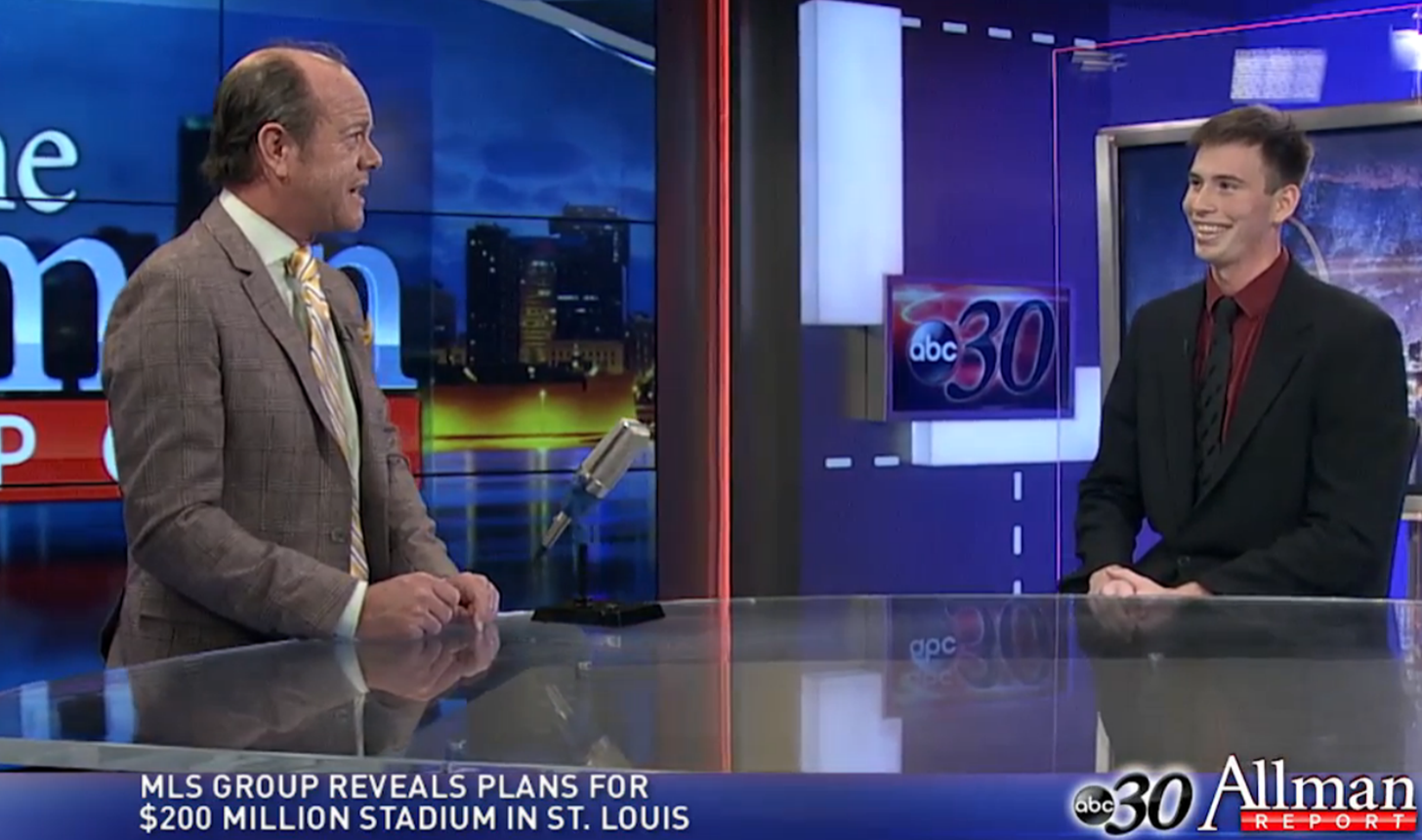
Michael Highsmith appeared on ABC 30’s The Allman Report on Monday, November 21 to discuss public funding for a new MLS stadium in St. Louis. Click here to watch!
What Can City Leaders Do To Grow A City? Not Much

Wendell Cox recently wrote a paper for the Show Me Institute titled, “Kansas City—Genuinely World Class: A Competitive Analysis.” In it, Cox assesses our economic strengths and weaknesses so that we can develop better public policy.
In a recent interview on Missouri Viewpoints, Cox said
I’m a bit of a skeptic on how much difference it makes to have a great economic development department. People move where housing is affordable; where life is good—livable communities. And by livable I mean low cost of living, good traffic, a place where you can raise your family from before you have children to the point where you have children and move later.
This may be disheartening to policy wonks and anyone working in the economic development field, but Cox is not alone. In 2014, economist Enrico Moretti gave an interview to National Public Radio where he said the same thing about cities that had become innovation centers:
"[Interviewer] This is the unsettling part of your book: How do cities replicate these innovative job clusters?
"[Moretti] It's very tough, because if you look historically where the innovation clusters are located, almost none of them [were] created by some deliberate, explicit policy. It's really hard to engineer an innovation cluster. We talk about Seattle, but if you look at a lot of the clusters, they were all born in very random, often serendipitous, ways. So it's really hard for policymakers to engineer from scratch."
This is important because Kansas City leaders are already on the record talking about how they want to build a city for the future. But how likely is it that city officials will be able to legislate into reality an as-yet-imaginary Kansas City technology district. The takeaway from Cox’s research is that policymakers ought to understand Kansas City’s strengths and build on them rather than just imitate what other cities are doing.
Education Reform Should Be Top Priority for Missouri’s Leaders

On November 8, Missourians sent a clear message: We want change. Republicans won every major statewide office—all of which but one had been held by Democrats. The Missouri House and Senate retained Republican supermajorities. President-elect Trump won the state by 19 points.
Now it’s time to get to work. At the top of the to-do list should be education reform. Education reform has a proud tradition among conservatives, and reflects the core conservative values of free enterprise, entrepreneurship, and accountability for public dollars.
The need is great. Among the class of 2015, only 22 percent of Missouri students who took the ACT scored “college ready” in all four tested subjects. On the 2015 National Assessment for Educational Progress, only 31 percent of Missouri 8th-graders were deemed “proficient” in math and only 36% were found proficient in reading. The most recent AP Report to the Nation found that only 9.5% of Missouri’s students graduated high school having scored 3 or higher on an AP test, putting us in the bottom five states in the nation for AP performance.
There is no time to waste. Luckily, there are at least three steps policymakers can take to improve Missouri’s education system:
Expand charter schools statewide. Right now, charter schools are functionally limited to operating within the boundaries of the Kansas City and Saint Louis school districts. Within those constraints, they have created some incredible opportunities for students. Independent evaluators found that Kansas City’s Ewing Marion Kaufmann School produced a whopping 1.35 additional years of learning in Math and 1.29 years of learning in reading for students who attended the school for at least three years—all while serving a student population that is 86% free and reduced lunch eligible. Many students in Hickman Mills (whose performance data looks nearly indistinguishable from that of the Kansas City Public Schools) and other struggling districts across the state would jump at the chance to attend such a school.
Create a course access program. In the 2014–15 school year, 285 school districts in Missouri had zero students take an AP class. 255 districts didn’t have a single student take Calculus. 213 districts didn’t have a single student take Physics. In most cases, these are smaller rural districts that simply don’t have enough demand to justify hiring a full-time AP or advanced Math or Science teacher. Course access programs were created to address this very problem; they allow students to direct a portion of their annual per-pupil funding to approved course providers outside of their traditional public schools and to receive credit for classes they successfully pass. If, for example, a student’s school doesn’t offer calculus, or only offers Spanish and she wants to take Mandarin, she could head to the library and log into an online class. The cost for the class would be paid with the fraction of her state funding that would normally cover that class period.
Establish an education savings account program. Rather than sending a child’s yearly education funding to their local public or charter school, the state could put that money into a flexible-use spending account that parents could control. Parents could use the money in this account for private school tuition, tutoring, special education services, or any number of other approved expenses. This maximally flexible funding system would do the most to move our education system into the 21st century, allowing families to fully customize their child’s education.
Our children deserve a world-class education system. Gridlock, vetoes, or divided government can’t be an excuse. Let’s work together to give it to them.
Speakers Series on Economic Policy: The Success Academy Experience and Lessons Learned
Eva Moskowitz founded Success Academy Charter Schools in 2006. Over the past ten years, Success has become the largest network of public charter schools in New York City, and one of the highest-performing schools in the country. Success has proved many times over that, regardless of neighborhood, racial, ethnic, and socio-economic lines, children can attain the highest academic standards. Success Academy scholars, from primarily high-risk, low-income, inner-city neighborhoods, have achieved tremendous academic success, scoring in the top 1% in math and top 2% in English Language Arts among all New York State schools in 2016.
Ms. Moskowitz began her leadership in education reform with her service as a member of the New York City Council, and she served as chair of the Council’s Education Committee. She earned her B.A. at the University of Pennsylvania and her Ph.D. in American History at Johns Hopkins University, Ms. Moskowitz also taught civics at Prep for Prep, a program for gifted minority students.
Straight Talk on Kansas City’s Incentive Reform
In 2014, Mayor Sly James said that “Now is the time to start a conversation about the appropriate level of incentives we need to grant, especially considering the impact of declining property values felt by all taxing jurisdictions during the recent economic downturn.” At the time, he suggested that a 50% reduction in subsidies would be a “new normal”.
But very recently, when the City Council of Kansas City passed an incentive reform measure that lowers the level of subsidies that developers receive by 25%, the Mayor’s reaction was less than enthusiastic. He said that the reform could “once again put up a sign that says Kansas City is closed for business.” It’s disheartening that our leadership would reverse course on such an important issue, and it’s unfortunate that the Mayor would respond to sound policy changes with such overblown and misguided worries.
Councilman Quinton Lucas and others deserve credit for their efforts in passing reasonable and fair development incentive reform. Even the modest 25% reduction in subsidies can be waived if a project is determined to be “high-impact” or falls within an economically depressed area. The measure passed by the City Council is a first step in the right direction. The Mayor’s complaints—which defend the status-quo, crony-capitalist development scheme Kansas City has pushed for decades—seem to be a step backward.
The reform places a modest cap on development subsidies. Do developers truly need bigger tax breaks than the new cap allows for their projects to move forward? If so, then the real problem isn’t that the city is closed for business, but rather that its tax and regulatory climate make huge subsidies necessary. In any case, the bill contains provisions allowing high-impact projects to receive the pre-reform level of assistance, so any game-changing projects would be unaffected. In fact, some projects have already avoided the 75% cap.
In addition, proponents of development incentives like tax-increment financing (TIF) and tax abatements have been unable to provide solid evidence that such subsidies work; that is, they don’t create jobs or enliven our economy. Shiny new office towers and a handful of construction jobs are nice, but they won’t spark a new era of growth in one of Missouri’s slowest-growing cities. A comprehensive report on incentives in St. Louis, much like the one Kansas City officials intend to conduct, concluded that “[w]hile there may be disagreement about the value of some packages, it is clear that the City gains no net benefit from an extremely costly program with no real economic development impact.”
In short, we’re fooling ourselves if we think Kansas City’s economic engine is fueled solely or even substantially by incentives.
Over the past fifteen years, Kansas City’s tax base has been hollowed out by incentives like TIF and abatements. The schools, libraries, mental health funds, and local governments affected by Kansas City’s incentive policies have been shorted for the benefit of developers.
Incentive reforms like those championed by Councilman Lucas are welcome steps toward curbing incentive abuse, and toward restoring funding for essential government services—and with them, our faith in city government. Perhaps we wouldn’t need such reforms if local leaders would just say “No” to excessive taxpayer giveaways in the first place.
Wendell Cox and Crosby Kemper III on KCPT’s Ruckus
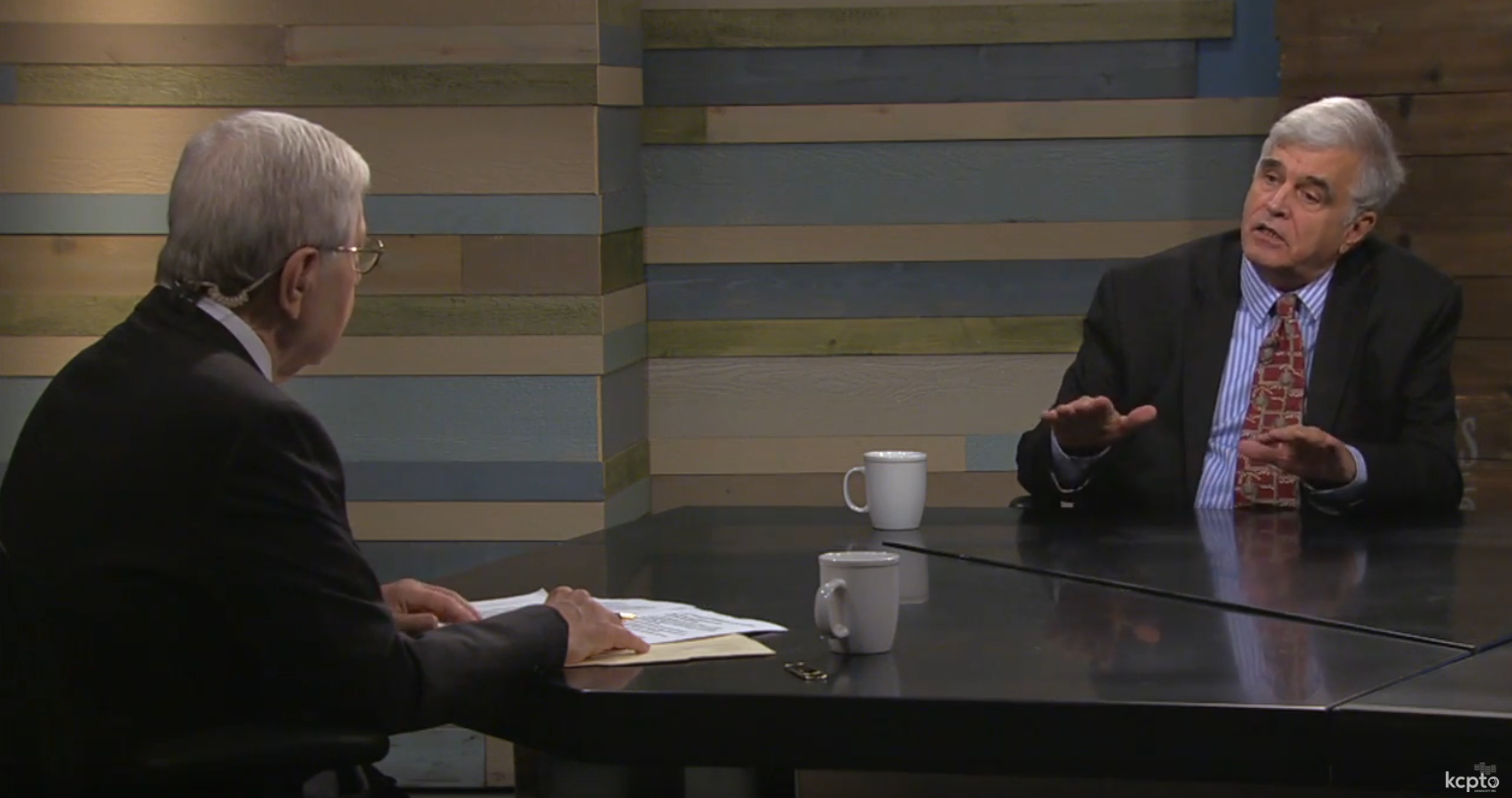
Wendell Cox discusses his recent essay on the competitive strengths and weaknesses of Kansas City. Crosby Kemper III also appears as a panelist and discusses budget shortfalls in Kansas and the wave of protests sweeping the nation since the presidential election.
