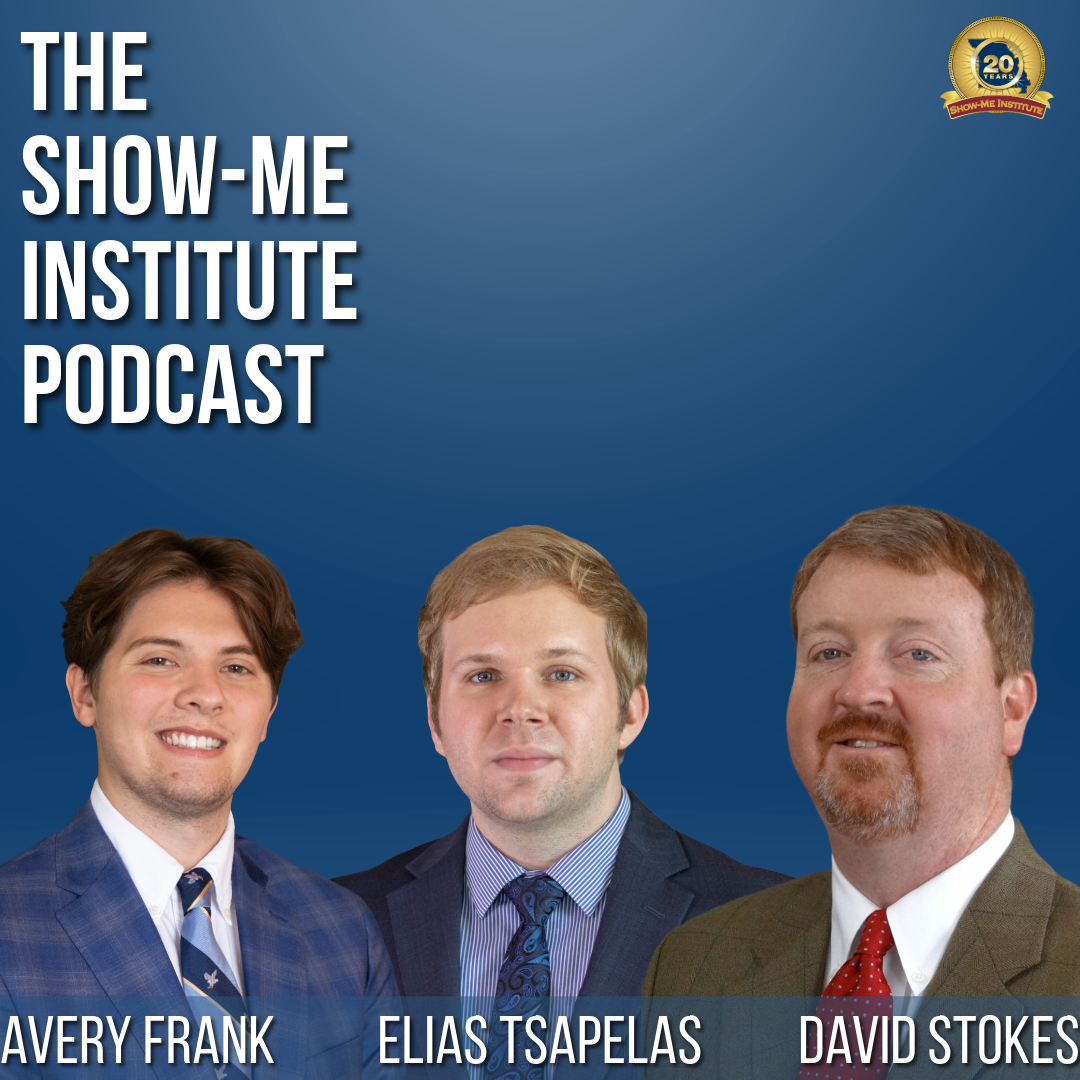
Susan Pendergrass speaks with Robert C. Enlow, president and CEO of EdChoice, about the expansion of school choice and the organization’s work advancing parental freedom in education. They discuss Milton Friedman’s original vision, how states like Florida, Arizona, and Indiana have moved toward universal choice, Missouri’s legal fight over its scholarship program, and how parental demand is reshaping education markets, and more.
Listen on Spotify
Listen on Apple Podcasts
Listen on SoundCloud
Timestamps
00:00 Introduction to Ed Choice and Leadership
01:00 Milton Friedman’s Legacy in Education
02:26 The State of School Choice in America
04:57 Challenges in Missouri’s Education System
07:38 The Importance of Universal School Choice
09:39 The Role of Leadership in Education Reform
11:49 Parental Advocacy and the Future of School Choice
14:15 Market Demand and Private School Growth
16:59 The Evolution of Educational Options
19:49 Redefining Quality in Education
22:18 Civic Values and Shared Experiences in Education
26:05 The Debate on Public vs. Private Education
29:47 Legal Challenges and Advocacy for School Choice
Transcript
Susan Pendergrass (00:00)
So I am actually very excited that you have joined our podcast, Robert Enlow. You are CEO or executive director of EdChoice—which one? President and CEO. How long have you been president and CEO of that organization?
Robert Enlow (00:08)
I’m president and CEO of EdChoice.
Well, that’s a great question, Susan. And thanks for having me, and thanks to Show-Me for all they do. I believe I’ve been president and CEO since 2009, but I joined the organization in 1996. We opened our doors on September 23, 1996, and I was the first guy walking in the door.
Susan Pendergrass (00:31)
And it was originally called the Milton and Rose Friedman Foundation.
Robert Enlow (00:34)
Correct, the Milton and Rose D. Friedman Foundation, obviously established after Nobel Laureate Milton Friedman and his wife, Rose. During the last decade of their lives, I got to know them—particularly in the last five years of his life. As a young kid coming from England who had these wild-eyed liberal ideas in some ways, it took me a little while for him and Rose to get to understand me and warm up to me, but they did, and it was an amazing experience getting to watch them work.
Susan Pendergrass (00:40)
And you knew them both. What do you think he would think of what’s going on right now in K–12 education?
Robert Enlow (01:04)
You know, I will tell you what he would say to me every single time we passed a bill in another state. He would say, “Robert, we’re on the right track, but you’ve got a lot more to do.” I think he would be happy that we got to universality of people. I think he would be really pleased with the fact that we’re now at a universe of eligibility. I think he’d be less pleased that we’re still controlling the marketplace and controlling the spigot of funds. So I think he would be saying we’re not getting to a true universal marketplace unless you think about supply and information and funding just as much as you think of everyone choosing. Like in a state like Texas, everyone’s excited—oh my God, everyone gets to choose. Well, not really. It’s a billion-dollar appropriation. That means only maybe 90,000 kids get to choose out of 6 million. So when you think about who can really choose, we’ve got to think about the money. And the same thing is true in Missouri with its $50 million—$75 million tax rate and $50 million appropriation still limits the number of fan futures. Yeah.
Susan Pendergrass (02:02)
Like nobody. Tiny, tiny. But we do have an Arizona and a Florida now. I think, you know, I remember a very long time ago working with you on an Arizona voucher that got vetoed by the governor, but now Arizona is essentially universal school choice, and Florida. What I’m seeing most recently that I really love is with their universal school choice and more than half of parents choosing something, the public schools are getting in the game. The public schools are like, okay, spend your scholarship dollars with us, because we’ve been at this a long time. And they’re not seeing it as this us versus them. It’s like, we are all working together to educate our kids. And maybe, you know, we all have a place in this.
Robert Enlow (02:30)
That’s right. So people ask me all the time, Susan, they’re like, well, when will you work with the opponents of school choice, or when will you work with public schools? I’m like, we’ll work with public schools when there truly is a level playing field for all families to be able to choose. Now we actually see there are three aspects to that that we care about, right? All families can choose, right? They can choose all the options, and they can choose with all available dollars. We see five states that have that criteria now: Florida, Arizona, West Virginia, and now New Hampshire. Arkansas—Arkansas. So Arkansas, yeah, Arkansas, Arizona, the A’s; W’s—West Virginia; Florida; and New Hampshire. And what’s really interesting about that, if you look over time—we do this thing called the EdChoice Share, which is what we really care about: how many people are choosing all the options that they want. Florida and Arizona are the top two. And it’s really amazing to see what’s happened in Florida.
Susan Pendergrass (03:16)
Arkansas.
Robert Enlow (03:39)
—people, of families going to traditional assigned public schools. Now, even in that, they are choosing by buying a house, right? So that’s gone from 86.2% in 2001–2002 to now, today, just 51.8%. About half. Isn’t that crazy?
Susan Pendergrass (03:46)
Sure, sure, sure. About half. And I will tell you from my experience in Missouri, that sort of reality—where almost every kid just goes to their assigned public school, whatever’s on the utility bill, that’s where you go to school and you have no other options—is still assumed to be almost universal. In fact, it is in Missouri, because we only have charter schools as punishment. We have that tiny little scholarship program. You can go to a full-time virtual, which isn’t for everyone. So essentially, you see the address on the utility bill is where you go to school. And I just think that it’s been really hard to sort of break through that mindset and let folks know, like in Florida, only half of parents are doing that. And probably, like you said, a sizable percentage of that half decided where to live based on what school their kids would go to. So they are, in a sense, exercising some choice. And I just wonder, when you have two states in the same nation that are so completely divergent, where does that lead us to? So Missouri’s kind of surrounded.
Robert Enlow (04:57)
Well, it’s—yeah, so Missouri is surrounded, and where it leads you to is a couple of things. It leads you to a metric of in-migration. In Indiana, one of the things I get asked a lot is, you know, what’s the success metric for your state? And I say the number of people migrating to our state because they have educational options. Right. So we are a state of educational options on your border, almost, and everyone can choose. Right. And it’s a big deal, and it’s why we’ve had more and more families. You’re ranked in our study 28th out of 51. And you really have not seen a change. Well, I mean, you still have 80.3% in traditional schools, but what you’ve done is you’ve allowed magnet schools to grow and you’ve had some charter school—your charter school growth has been—let’s take a look. You’ve actually had a decent—
Susan Pendergrass (05:32)
That seems high, to be honest. Yeah, but I can tell you our charter schools are punishments. They’re only in Kansas City and St. Louis, only in non-accredited districts. So right now there might be a charter school in the works in a fully accredited district—in Columbia 93—and people in Columbia 93 are freaking out about a charter school opening. This is how sort of, like, behind the curve we are. They’re freaking out that a charter school might open, and they’re arguing we don’t need it. And I will say—I want to get to the lawsuit against our scholarship program. We have a very strong, what I sort of call the—
Robert Enlow (05:52)
Yeah, that’s great.
Susan Pendergrass (06:16)
—educational establishment in Jefferson City. That is the teacher union leadership, the Association of School Boards, and the Association of Superintendents. Because we have 520 districts, there’s a lot of superintendents and a lot of school boards, and they will show up to a hearing to make sure that parents don’t get to choose where their kids go to school.
Robert Enlow (06:35)
Yeah, so this is one of the reasons why, in 2016, when the Milton Friedman Foundation changed its name to EdChoice, we focused on universality. Because I think we realized that the fights for school choice—where they’re fighting to make sure that children can escape from bad schools—is the wrong message. The message is that all families need to have some freedom to choose what works best for them. And that should be across all income levels. Why are we okay with giving billionaires access to gated, segregated public schools, but freak out when we give them the options to choose private schools? Moreover, you can’t continue to ask Republican legislators to vote for something that they’re going to get killed for in their district. Right. And so one of the key points of universality has been being able to say, we need you to support choice so that constituents of yours can get an opportunity. So in your state, one of the challenges has been: how do we get eligibility to where it’s supposed to be universal? And you’ve done your—yeah.
Susan Pendergrass (07:38)
Funding, funding. I mean, we had tiny funding up until this $50 million. The only scholarship dollars we had were fundraised from individual and corporate donors. So getting that money together has been a real challenge, and I think we got to $15 to $20 million finally. And ironically—I don’t know, you may not know this because it’s very in the weeds—but when that ESA program, when that scholarship program passed, we agreed—the legislature agreed—that any district that lost a student to the scholarship program could continue to count them for five years. So this year they’re asking for $30 million to cover the kids who took the scholarship. Thirty million dollars is going to go to public schools for the kids who took the scholarships, but they don’t want the scholarship program to get $50 million. And I just think the irony kills me.
Robert Enlow (08:25)
Well, hold on—just, I think—so this hold-harmless thing, let me just ask a question. I think Show-Me then should put in a bill like this: if they want to be held harmless when a student leaves, then anytime a child moves from one public school to another public school, they should hold that other public school to account. Public schools are getting—they’re the ones where families are moving the most, right? So aren’t other public schools in Missouri taking more money from other public schools than any kind of choice or charter program?
Susan Pendergrass (08:42)
That’s right. Yeah, and God forbid that we’re sending kids to Indiana for your in-migration, right? Like, when kids leave, somehow we should—and we do have these crazy hold-harmless policies that you guys have analyzed—but I feel like it’s starting to feel like we have sort of two different worlds. If you raise your kids in Florida or Arizona or Arkansas, when they get to be four or five years old, then good news: you get to sit down and look at your options and look at your kid and look at where you work, what might fit your schedule, and you can pick from a number of things. If you live in Missouri, you cannot. And I just think that’s gonna start to diverge.
Robert Enlow (09:25)
So here’s what I’m going to say about that. I agree with you. And there is a divergence happening, particularly in the states in America that have broad choices—and I don’t just mean private school; I mean charter and all of that. But once you get a taste of choice—we have really believed this over time—once you start to get a taste of choice, and if you make it broad enough and open enough, parents begin to start utilizing that option; they learn over time. And so it didn’t happen overnight that Florida went from 90% to 51%. It happened over 20 years as choice grew and became more eligible. So, you know, key point is you in Missouri now have a program. It now has some public funds attached to it. And the goal is to get that utilized as much and as broadly as possible in every district. I say this all the time: one of the reasons why Indiana’s Choice Program is so defensible is—we love our charter schools—but charter schools, I think, are in 30 districts and 30 legislative districts. Private schools are in every single legislative district in the state, and all of them take choice dollars. And so you have a built-in constituency of support. We now have 110,000 families using choice out of our million kids. And so it’s amazing, the growth. It didn’t start off that way. It started off with 3,500. Right. And so you see the growth of choice over time. And as long as your legislatures are willing to move forward, then you’re going to continue to see that change. And no amount of union hacking and no amount of school board association—because they’re ultimately disconnected with what the parents want. And that’s particularly true after COVID, because there’s a ton of micro schools and a ton of—Milton Friedman used to say, you know you’re ready for a free market when there’s the presence of an underground market. And there’s a huge underground market for education happening all over Missouri right now in the form of micro schools and pods. Parents are wanting to move. And as the legislature starts giving them access to public funds, you’ll see growth over time.
Susan Pendergrass (11:22)
And we’ve got some parent advocacy groups that have appeared on the scene, like Activate Missouri. And I know, like in Florida, there were some very loud parent groups that influenced elections because they wanted school choice. And I do believe that parents are going to be the ones that sort of drive the change in Missouri. But you guys in Indiana also had very strong leadership. You had Governor Mitch Daniels—like, you had very strong leadership. We’ve had a bit of a vacuum in that regard in Missouri. Our new governor supports the idea of school choice. I’m not sure that he’s willing to put his political capital on the line for it in the way that you guys—
Robert Enlow (11:57)
Yeah, so there’s a lot of feeling out there now—oh my God, if I get a governor, it’ll be a savior, right? And look, governors are super important and they are critical for getting it over the line. Mitch Daniels was critical to take this movement in the country to the next step. Prior to Mitch Daniels, we’d sort of seen the failure of a voucher program in Florida—Jeb Bush’s voucher program—and so we’d gone to this tax-credit scholarship model, right? And Mitch said, no, we’re going to do something big, statewide and large. And when he did that, he sort of opened the floodgates for a bunch of states. So that was really important. Governor Pence was supportive. But the governors after that haven’t been, like, massively out in front driving stuff. They’ve not not signed it when it comes to their table, but they haven’t been out there leading the way. Having a Speaker of the House like Representative Todd Huston—by the way, it’s amazing. So having leadership roles is critically important. I can’t say enough for someone like Speaker Huston. So, you know, it’s important to have a governor, but it’s super important to have leadership in the House and Senate.
Susan Pendergrass (13:05)
Yeah, you must, because I know you have the third-grade non-retention for kids who are behind in reading. I know that you guys are out in front on the—really the first really meaty—federal waiver request that the Secretary of Education has been asking for states to send in their waiver requests. And Indiana’s is certainly the most robust. You’re going back to letter grades for your schools. I mean, you’re not just doing choice. You guys are seemingly moving on a lot of fronts in education in a way that will make it very attractive to families. And I try to make this point all the time in Missouri: families are gonna leave and businesses are gonna leave because we have all of these second-generation choosers, right? So kids who chose their school are having kids, and they expect to choose their school.
Robert Enlow (13:47)
Look, the idea of customer choice is embedded into anyone who’s under 30, right? And so when they begin to realize that’s going to be true in education, they’re going to be like, why am I getting this one-size-fits-all system that doesn’t actually fit either my values or my safety or what I think of academic quality—or what if I want something more hybrid? I mean, the reality is that families under 30 now—they’re not having kids; we have a baby bust here—but those under 30 are definitely saying, “I want more choice and customization.”
Susan Pendergrass (14:15)
Yeah, and as you know, you have multiple kids, I have multiple kids—they’re not even all the same. So what works for one might not work for all of them within a family. Now, another argument that we get in Missouri, in terms of the need for private school choice, is we don’t have enough—you know, we don’t have very many private schools, and most rural districts don’t have any. And we are seeing some research emerge that the private school market responds in these scholarship programs, right?
Robert Enlow (14:38)
I love hearing this, Susan, and I’m sorry if I am frustrated by that question. I don’t think you ever, ever ask—no one in the world ever asked—and I know this is not comparing education with this product—but no one in the world ever asked Lay’s Potato Chips how many bags of Fritos they need. They figure that out based on customer and market demand. This idea that somehow private schools don’t exist—of course they exist to market demand.
Susan Pendergrass (14:45)
Go ahead. Go ahead. Yeah.
Robert Enlow (15:06)
When it comes and when it’s free and when it’s open. Let me give you an example. In Indiana, when we first started our program in 2010, it was like, “There’s not enough private school spaces. There’s not enough private school spaces.” Okay, so we did a survey of all the private schools. We got all the private schools to get together on how many spaces they had. They had 22,000 available spaces. We went through district and grade. Great. And then when we expanded it in 2013, the governor says, “We need to know how many spaces there are going to be.” All right, we’ll do another survey—since no one believes that markets respond, right? Well, we did a whole other survey. How many spaces do you think there were? Twenty-two thousand. Exactly. My point is—like 20 or 22,000, right? This concept of “Oh, we don’t know if there’s enough supply.” Look, markets will respond so long as markets are free to respond. So one of the biggest challenges right now going forward is—look, try to—
Susan Pendergrass (15:41)
I don’t—
Robert Enlow (16:01)
School choice—or private school choice, or educational choice—can do one of three things: fill seats in existing schools, build new seats in existing schools, or build new schools, right? Now, the way we’ve run private schooling in America is we’re only doing one and two. We’re filling seats in existing. And just remember, private schools in the last 25 years lost 10% market share total, right? So there’s a ton of spaces. There’s a ton of spaces in private schools all over America, right? So if you think you lost 10% of—
Susan Pendergrass (16:20)
That’s right. Closed. A lot of schools closed. Ahem.
Robert Enlow (16:30)
—five million, right? Or whatever the number is. You have plenty of spaces out there in private currently. Now we need to grow those spaces and grow the different types of models. That’s going to require legislators to be a bit more willing to take some risk around the types of schools that they allow to be, quote-unquote, “accredited,” right? So you need to allow micro schools. You need to allow new entrants into the marketplace. And the more you do that, the faster it will grow. But there are slots out there. And what we’re really finding from the emerging research is that private schools are growing faster in rural areas—like in Florida—and they’re actually growing. I mean, Susan, you did this research for us about Florida and Arizona, so why don’t you tell us how fast they’re growing?
Susan Pendergrass (17:07)
Right. Well, they’re growing in Arizona. What I will say that comes out of that research is parents don’t really care what the label is on the bill. They are calling a lot of things “schools” now, right, that you might not have called schools before. And you guys survey parents—you do your monthly surveys. Schooling in America—what’s it called? What’s your monthly survey? Yeah. You’ve been doing it since COVID.
Robert Enlow (17:27)
It’s called Morning Consult—sorry, Schooling in America polling.
Susan Pendergrass (17:32)
And what I think is one of the most interesting findings is that consistently, now that COVID’s way in the rearview, parents want their kids to go to school two or three days a week. More parents want their kids home a couple days and in school a couple days than want five days in school or five days at home. People sort of want this—they like this sort of flexibility thing. And what I think we’re seeing is a growth in, like you said, micro schools, hybrid schools, homeschool co-ops where I am homeschooling a couple days, then a couple days my child is going somewhere to be part of group activities. And parents are doing online coding schools, and that’s a school to them, right? It’s an online situation where their kids are learning to code, and they’re calling it a school. So, yeah, the definition of what is a private school—the fact that it’s not a nonprofit provider, that it’s a private provider and they’re providing all sorts of different things—is really getting blurry. I think that that is a definite finding. And where that’s allowed to thrive, like Arizona, where you have this massive ESA program, and Florida—that’s where you’re seeing parents are only limited by what they can think up, right?
Robert Enlow (18:39)
So how much growth was there in Arizona and Florida? You saw it. Tell me how much there was.
Susan Pendergrass (18:44)
In the number of private schools? Well, I will say this: private school data is messy. And in most states, it looks like they’re declining. Florida and Arizona are two of the states where you can say for sure—outside the error ranges—they have more private schools now than they did 10 years ago. And that is the exception to the rest of the country. You can say for sure California and New York have fewer private schools than they did 10 years ago.
Robert Enlow (18:45)
Yeah. I love you, Reese Richard.
Susan Pendergrass (19:08)
And the nation as a whole has fewer private schools. But in Florida and Arizona, you’re seeing the opposite direction—and Ohio. So the market is responding, but it might not be, you know, a full-on brick-and-mortar cafeteria-gym-library private school. It might be something that doesn’t look exactly like that. And to a parent, it’s a school. And that’s what I think we’re seeing. And I know that in Florida, parents are combining scholarship programs to have their child see a paraprofessional and get some specialized equipment if they have a disability, and be part of a group activity. And I think that is one of the most exciting things that’s happening—these really interesting, expansive, curated experiences that parents are putting together.
Robert Enlow (19:49)
Yeah, you saw in one year a growth of 150—think—private schools or private options in Arizona in just one year. So it’s not like the market won’t respond.
Susan Pendergrass (19:56)
Yeah. And more of them are accessing online schools than they used to. Right—Stanford has a school, BYU has a school. If you can access these online schools, they don’t have to be in-state. That’s because the parents are deciding where the money goes. But in Missouri, Missouri has accredited Missouri virtual schools, and that’s where you have to enroll your child. But when you let the parents and word of mouth—say, you know, “Hey, I’ve got a great foreign language school”—word of mouth works. Then I think you definitely see a massive expansion of what parents are accessing through these programs. And I can only imagine, based on Milton Friedman’s—what, 1955? 57? 55—premise on this, that achievement should go up. I mean, I know that this isn’t the thing that we are focused on, but it should.
Robert Enlow (20:36)
Yep, 1955.
Susan Pendergrass (20:46)
I’ve always said, like, if 25% of Missouri eighth graders are proficient in math, I don’t think 75% of Missouri parents, if they were given control over it, would just accept the fact that their kid didn’t learn math.
Robert Enlow (20:56)
So one of the challenges I think we have with that is: what do we determine to be quality, and how do we measure that, right? I’m one of the few that think that the standards movements of the 1980s did more harm to K–12 education than good.
Susan Pendergrass (21:02)
Yeah, that’s a big question. Tell me why.
Robert Enlow (21:14)
Because I think the standardization to such a point—which then meant you had to have state tests aligned to that standardization, which then meant you had to create very rigid scope and sequencing for teachers—it really did, in a way, de-professionalize the teaching industry and make it a widget industry. And so, as a result, I think we’ve lost this ability to educate, and we’ve created this desire to—
Susan Pendergrass (21:17)
—teach to it.
Robert Enlow (21:43)
—to inculcate in terms of how to get them to do a test. I’m not a big fan of state tests. I think they get gamed all the time and changed all the time. I’m not a huge fan of state standards. I think you can have standards, but align them to something else. We had the Iowa Test of Basic Skills growing up, and that was a fine test, and we could do the same. So we, for example, are believers in testing choice and think we should allow families to do that. So when you look at quality—
Susan Pendergrass (22:10)
You mean pick a test—allow them to pick a test? And how would you hold any schools accountable, or would you? Would you do the Ashley Berner or the British approach? What would you do?
Robert Enlow (22:13)
Yeah, they should all be taking tests if they want. I think—no, look, first of all, I think parents hold schools accountable. We’re learning that from Arizona, right? By the time they close a charter school in Arizona, there’s like 12 parents in it, right? So, I mean, parents know quality. But you’ve got to remember, parents are choosing for different reasons. I think about this all the time. I had a son who had special needs, and I didn’t want to send him to the local public school because it was going to be bad for him, in my opinion. He wasn’t going to be served. So I went and did a whole bunch of searching around, and I picked a school that was 15th on the I-STEP for third-grade results—that was Indiana—versus the other school that was seventh, right? Why did I do that? Well, I did it because I thought he’d have a safer environment, he’d have a more moral environment—an environment with my values—and it was cheap enough for me, and it was good enough. So, parents make decisions based on a whole host of factors, and I think it’s silly for us to think that they don’t. The other thing is: what do we mean by quality is a big deal. I am not a fan of saying quality is only a test score. I think quality is much more than that. I don’t know about your kids, Susan.
Susan Pendergrass (23:18)
That’s a great question. But do test scores matter?
Robert Enlow (23:43)
I’m not sure I’d say—they matter insofar as you inform parents how kids are doing relative to others. I think it’s important that families know that. I’m a big fan of the one thing I do like about the British system—just ranking all the schools. That’s what they do: they take a test and everyone gets put on a league table. I love that concept. Everyone gets on a league table, and you can say, “Oh, you’re going to a school that’s 100 out of 200. Well, you’re mid-table. Why aren’t you going to a school that’s 85 or 60,” or something like that? So I think it’s really important to just put it on a table, because I think keeping up with the Joneses is actually a valuable part of society. But think about—
Susan Pendergrass (24:01)
We do that at the Show-Me Institute. For Missouri schools, we do rank all the schools. But one more question—just to push back on that a little bit, but not exactly that. One thing that we’re seeing, or that I’ve seen in these scholarship programs, is that kids are potentially—we’re growing the number of kids who are not having shared experiences with their peers. And by that, I mean probably going to have a lot fewer kids playing the trumpet or playing the cello.
Robert Enlow (24:10)
No.
Susan Pendergrass (24:28)
Because when you go to middle school and you say, “I’m going to take band,” and then they’re like, “Let’s pick an instrument,” right? That is kind of hokey, but that was what a lot of us did. And now you have parents who are simply having their child go to guitar lessons or piano lessons because that’s what their kid wants to play. And you’re not going to have kids hauling their flute home on the bus. And that’s kind of a shared experience. Also, things like the weird PE classes I had to take, like square dancing or, I don’t know, bowling. You know, we’re going to lose some of that from a civic point of view. We’re going to lose lots of the shared experience, and kids are going to have these algorithm-driven or curated experiences. What do you think?
Robert Enlow (25:06)
Okay, comrade. Let me just say, okay, comrade. I can’t believe I just heard an apologist for school buses, right? I mean, everyone get on a bus with a snotty—listen, common cultural experiences happen by common cultural things, not by being in the same place at the same time. This idea that schools are the locus of all of our common cultural experiences is part of the problem we have in education. So in Arizona—
Susan Pendergrass (25:08)
Come on, come on, what do you think? You have to ride the school bus?
Robert Enlow (25:35)
Yeah. Yes, yes. There are tons and tons of common cultural experiences right now. The fastest-growing type of tutor is music and physical instruction, right? Are they not taking classes together? Are they not working together with other kids? They’re just not working with other kids in a common—in a socialist—environment of a school bus or in a school, right? This idea that acculturation and socialization happen only inside of a K–12 school building strikes me as very socialistic.
Susan Pendergrass (26:05)
I hear it. I hear it a lot from the—air quotes—other side. I hear that they are the great equalizing institution: traditional K–12 public schools.
Robert Enlow (26:13)
Okay, if that were the case—if that were the case—why is the data extremely clear in voucher programs and choice programs that the civic values of kids in choice programs who attend private schools are far greater than the civic values and virtues of those who attend traditional public schools? I say this all the time: if you go to the GLSEN survey—the Gay, Lesbian & Straight Education Network survey of kids and their issues in dealing with being gay—Which school system is the worst on gay kids? They get dead. Based on the data that they bring out, public schools have significantly higher rates of abuse of gay kids. Right? How tolerant is that? Now, what ends up happening is they hear about it more in religious schools—they hear about being gay—but they’re not bullied. So you actually ask yourself this question: Do you want your gay kid bullied, or do you want them to hear about it more?
Susan Pendergrass (26:42)
I’m guessing you’re going to say traditional public schools.
Robert Enlow (27:06)
These are legitimate questions to ask. And by the way, we’re not doing well with this at all in any school system. But this idea of civic virtue coming from a homogenized institution strikes me as naive at best—particularly since, if you think those schools don’t teach values, you’re wrong. They absolutely teach values. And then they teach values based on their school assignment, which is based on where they live. And if you don’t think neighborhoods produce value and values, then you’re wrong. Anyone who knows me knows that I rail against suburbia all the time—it’s just part of who I am. Gated, segregated communities really bother me. It bothers me. These ideas of living in enclaves piss me off, because I don’t think that’s what America is supposed to be about. But that ends up what’s happening in schooling, right? And what private schooling and choice does is it breaks that apart. How are you getting more civic tolerance—how are you getting more integration—in private schooling than you are in public schools? Whenever I hear, “Public schools are the center and locus of our community shared experience,” I actually cringe and start worrying about what they’re teaching.
Susan Pendergrass (28:13)
Yeah, I also saw a comment the other day on a Signal chat I’m on that charter schools are part of the right-wing conservative agenda to kill public education, which just makes me crazy, because charter schools by and large serve poor kids of color, and there’s nothing to do with the—there’s no right-wing conservative agenda there. And I know a lot of parents who would very much disagree with that. But that is the perception that’s out there—that you guys, with your school choice and your vouchers—and I know that you guys did a whole market test on the word “voucher,” which I think is brilliant, because no matter what the program is, folks on the left call it a voucher scheme. There’s a “scheme,” and that it’s killing public education, and then we won’t have a civic-minded, you know, equal electorate, basically.
Robert Enlow (28:39)
Yep. Can we start to redefine—and I have to redefine—look, I am a huge believer in public education. I want an educated public. I want kids to be educated. I want those—because I think society is benefited. That is a very different thing from running a system of common schools that was built off the backs of a potentially bigoted idea in the 1840s, right? I think there’s a different conversation. I think government-run, district-run schools, while a reality, are different than public education. Kids are educated to the public interest if they go to a school or learning environment where they get educated. And so that’s why Milton Friedman’s original idea—separate the public financing of education from the government running a school.
Susan Pendergrass (29:47)
Well, it’s a brilliant idea, and I appreciate you coming to argue with me about it. That’s great. I could go on, but I’m going to let it go at that. I appreciate that you guys—I didn’t really get into it—but that you’re an intervenor in the Missouri case. Clearly you believe that more Missouri families should have access to this. The parents who are the defendants basically have a sibling that they would like to join the program that one of their kids is in. And I suspect that—
Robert Enlow (29:51)
I love arguing with you. You’re one of my dearest, oldest friends. There’s very few people like you, right?
Susan Pendergrass (30:17)
I think we’re going to be successful. We had one successful ruling so far where the program gets to continue.
Robert Enlow (30:22)
Yeah, we’re the intervenors. Choice Legal Advocates is the intervenor in Missouri National Education Association et al. versus State of Missouri. So we are intervening on behalf of parents. Currently, the district court denied a temporary injunction, so they allowed the program to continue. We’re excited by that. We’re strongly positive that we think it’s a good sign for us and that we should end up on the right side of this. You know, I’m just shocked that the unions continue to be on the wrong side of parents all the time.
Susan Pendergrass (30:49)
They sure do. All right. Well, I appreciate it, and I appreciate you taking the time to join us on the podcast.
Robert Enlow (30:54)
Thanks for having me, Susan.
Produced by Show-Me Opportunity