
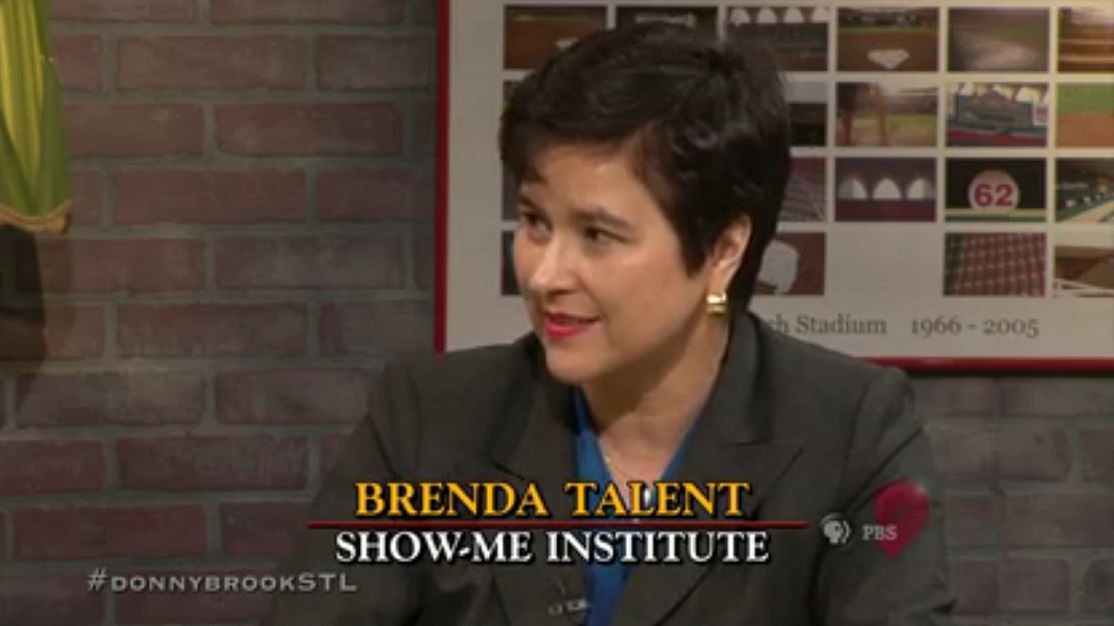
On May 4, Show-Me Institute CEO Brenda Talent appeared on Saint Louis Public Television’s Donnybrook to discuss the recent flooding in Saint Louis, efforts to privatize the airport, off-duty officers’ use of police vehicles, and the state of Missouri’s economy.
Michael McShane on Course Access

Show-Me Institute Director of Education Policy Michael McShane is co-author (with Max Eden) of an article on course access that appeared today on the RealClear Education website. The piece explains some of the advantages of course access, a widely popular measure that would make advanced-level coursework available in rural school districts that cannot afford to offer such courses on their own. Click on the link to read the entire article.
House Vote The First of Many Important Health Care Milestones

Today the U.S. House of Representatives passed an amended draft of the American Health Care Act, described by Congressional leaders as the first phase of a replacement package for Obamacare. Its passage was not without drama, obviously, as the vote had to be put on hold earlier this year when consensus language couldn’t be reached in the lower chamber. The conflict was driven both by substantive policy differences and by concerns that if the entire Obamacare law wasn’t repealed in the AHCA, that it would never be repealed. I share concerns in both categories; I am disappointed that the reform continues to track with insurance as a primary vehicle for health care, and I am hesitant to believe politicians when they say they’ll finish the job of unwinding Obamacare.
But as has been said, a journey of a thousand miles begins with a single step. The House’s action today is an important step of a longer journey, not only at the federal level but among the states as well. From licensure reciprocity to direct primary care promotion to Medicaid reform, the list of projects to be undertaken by free marketeers at the state level is a lengthy one that would never be accomplished in a single law, federal or otherwise. Indeed, ours is a policy journey that will span years and even decades to reach anything resembling completion.
That said and with the initial passage of the AHCA, I am hopeful that the federal government is commited to taking that long and important policy trip with us.
Why Subsidize It Once When You Can Subsidize It Twice?

There is so much demand for hockey in the Saint Louis region that officials and special interests want to subsidize not just one, but two new ice facilities. That’s right; even though the Hardee’s Iceplex in Chesterfield is going out of business, officials want taxpayers to help pay for two new facilities in its place.
One facility, planned for construction in the Chesterfield valley, would include $7 million in taxpayer handouts from a special sales tax district known as a transportation development district (TDD). If the TDD is approved (by the less than 1% of households in Chesterfield who get to vote), anyone who shops in the valley retail area will pay extra sales taxes to help subsidize the private venture. The other facility, which would double as a new practice facility for the Saint Louis Blues, would entail $6 million in taxpayer help from the City of Maryland Heights and 40 acres of free land in Creve Coeur Lake Park from Saint Louis County.
At least two aspects of these proposals warrant further discussion.
- Proponents of both projects claim there is high demand for hockey and ice time in the Saint Louis region. This may or may not be true (though a recent market analysis concluded it is not). One would think the closure of the current ice complex in Chesterfield is telling of the market for hockey and ice time. But, suppose it isn’t, and that subsidy proponents’ claims are true; let’s say there is genuine demand for ice time in the region. If so, why does the public need to subsidize private ice facilities? If Saint Louis (or Chesterfield, or Maryland Heights) is a “hockey town,” and if these facilities will be such powerful economic engines, why are project boosters panhandling? If a project is meeting a real demand, it shouldn’t need taxpayer help.
- One facility is leaving the market, and two are trying to take its place. This would be fine—if no public money were involved. Subsidizing a private business (especially in a depressed market) is questionable policy, but it is even harder to justify asking taxpayers to subsidize competing businesses. Suppose one facility puts the other out of business. What then? Are taxpayers left holding the bag as their “investment” in one facility goes down the drain? It should go without saying that it isn’t the taxpayers’ responsibility to subsidize one facility to siphon business away from another taxpayer-subsidized facility.
The region dodged a bullet when cash-hungry millionaires were denied $60 million in public funds for a professional soccer stadium in downtown Saint Louis. But some local officials, along with those on the receiving end of subsidies, still appear to have taxpayer dollars in their sights. Policymakers who want to know where demand exists for ice time (or anything else) would do well to listen to the market instead of special interests.
Statewide Electrician License Advancing in the House

From hair braiders to physicians, Show-Me Institute analysts have supported a lot of important licensure reform initiatives over the years, but one area we haven’t addressed recently is the licensure of electricians. Unlike many other states, Missouri does not have a statewide license for its electricians, which—given our skepticism of many state licensing regimes—would seem at first glance to be a good thing for free marketeers.
The problem is that in the absence of state action, local governments have imposed their own licensing regimes on their respective electricians, effectively requiring already-qualified electricians to re-license if they want to practice in, say, Springfield, if they aren’t already licensed there. In that respect, the plight of Missouri electricians parallels that of doctors who can’t easily practice across state lines: Onerous licensing requirements create barriers to entry that negatively impact practitioners and also reduce options (and increase prices) for local customers who would benefit from greater access to these services.
That regulatory tension may be relieved if a Senate bill currently before the House becomes law. SB 240 would allow local municipalities to continue licensing electricians, but it would also require them to accept a statewide electrician license without also requiring the local licensing requirements be fulfilled. Moreover, the bill would grandfather many electricians operating already under a local license into the statewide licensing framework. That means that a longtime electrician with a local license could access a statewide license, and with that statewide license, she could access other municipalities—whether a city had its own licensing regime or not. Also worth noting: the bill passed the Senate unanimously. Given the slow pace of other legislation through that chamber this session, unanimous passage of this bill is amazing in its own right.
Whether the bill passes the House remains to be seen, but electrician licensure reform certainly deserves consideration. Our ongoing skepticism of state licensing remains in effect, and as time goes by, regular audits of the effect of electrician licensure would be necessary to ensure it does not fall victim to regulatory capture. Future legisuatures should also consider national reciprocity measures for these licenses so that Missouri electricians and customers are able to work where they want, and hire who they want at the best price. That said, the proposed reform—which ultimately simplifies life for Missouri electricians and customers alike—would be an improvement over the current licensing system in effect in the state.
Speakers Series on Economic Policy: Income Inequality, Human Capital, and Economic Growth

Kevin M. Murphy, Professor of Economics at the University of Chicago Booth School of Business, discusses the economics behind the rise in income inequality and what it tells us about the forces driving modern labor market outcomes.
What Happened to Course Access?
In the early days of this legislative session, course access seemed primed for success. Both the House and Senate held hearings for course access bills for which there were zero witnesses in opposition. The Governor made it clear that it was a priority of his office as well. One version of the bill passed the House, and the other made it out of committee in the Senate. And then . . . nothing.
It is no secret that the Missouri Senate is a tumultuous place in these waning days of the legislative session. But as the final days of the calendar tick away, it’s looking increasingly likely that course access isn’t going to happen this year. This would be a shame, for several reasons.
First, a course access program would address a serious problem in our state. As we have reported for some time now, hundreds of districts in our state have zero students enrolled in AP classes or advanced math and science classes. Other districts lack access to quality career and technical education because they simply don’t have the capacity to offer such programs. Course access could help solve this problem and amplify what smaller schools and school districts are doing to try and meet the needs of their students.
Second, it would help bridge the urban/rural divide. Education policy debates in the state often break along urban and rural fault lines. Rural folks think that the state is too narrowly focused on Kansas City and St. Louis, and to be honest, this is often a fair assessment. A program designed specifically to help rural school districts (though urban and suburban students would benefit as well) could help establish common ground across the state.
Finally, passage of course access legislation would be an example of bipartisan comity that the education policy community could build upon in the future. In our polarized times, there is less and less that unites people across the political spectrum. Education policy is not spared from this trend. Course access is an issue to which legislators on both sides of the aisle have contributed their support. It would be awful to squander that.
All is not lost. The legislature, and particularly the Senate, still has time to consider the course access bills before it. Here’s hoping they make use of their final days to score a big win for students, our state, and our political culture.
Patrick Tuohey on KCPT Infrastructure Panel
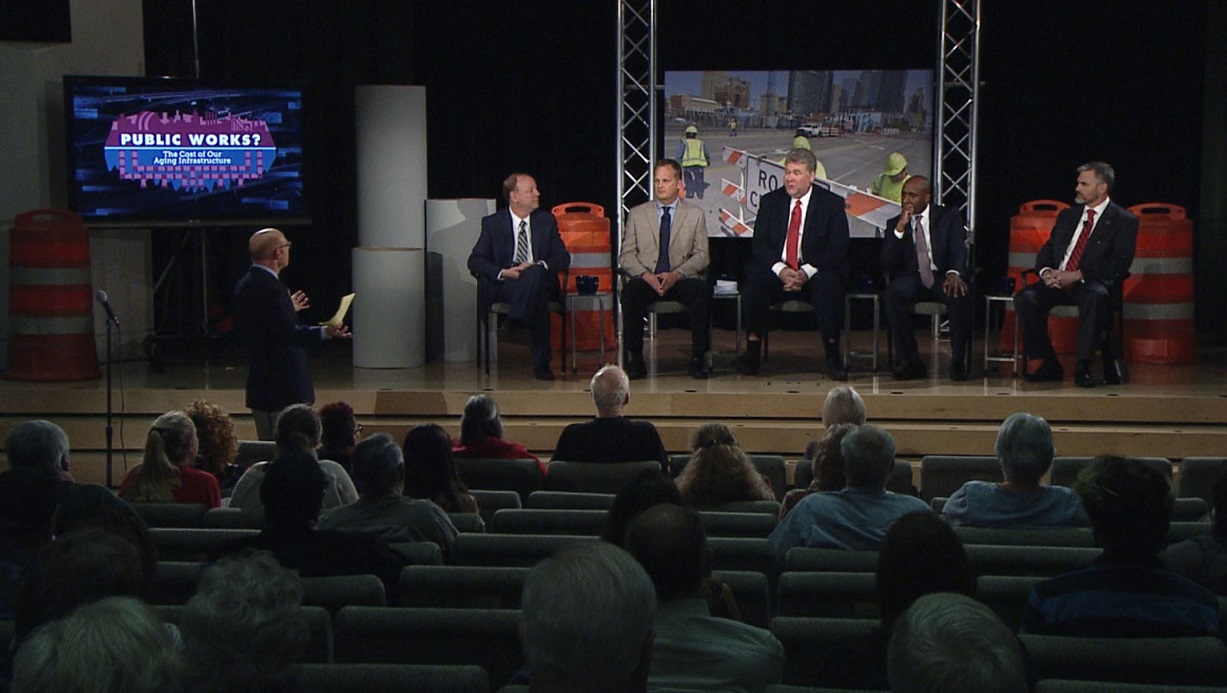
On Friday, April 28, Patrick Tuohey appeared on KCPT’s Public Works? The Cost of Our Aging Infrastructure . Tuohey appeared as panelist to discuss the current state of Kansas City’s infrastructure and the recently passed general obligation bond.
Session Notes: ESAs Clear the Senate!
Yesterday afternoon, the Missouri Senate passed Senate Bill 313, which would create a $25 million tax-credit-funded education savings account (ESA) program for students with special needs, children who are wards of the state, and children from military families. The bill passed 20-12, and not on strict party lines, as is common with so many votes in the Missouri Legislature. Both Senator Maria Chapelle-Nadal and Senator Jamilah Nasheed joined 18 of their Republican compatriots in supporting the bill.
In the process of the bill working its way through the Senate, several additional provisions were added to it. If passed, the bill would also authorize the Department of Elementary and Secondary Education to accredit individual school buildings in Jackson and Saint Louis Counties. If those schools did not pass muster, students would have similar transfer rights as currently exist in districts that lose accreditation. The bill also takes steps to rectify some of the problems that have developed with the school transfer program and specifies several interventions to be taken in schools in Saint Louis and Kansas City around literacy instruction in early grades.
Generally, I favor “clean” bills that tackle one topic at a time. I also realize that policymaking requires compromise, and that some of the additions to this bill deal with issues that people in the state have been trying to address for years. While I immediately recoil at the legislature trying to dictate pedagogical decisions for individual school districts, I recognize that making sure a wider set of views are represented during its enactment can make the ESA program more durable and ensure more buy-in at the state and local level. That seems like a compromise worth making.
The main obstacle ESAs now face is Missouri is the calendar. With only two weeks left in session and budget that still must be agreed upon, time will be short. We will be following this closely and will report back with news.
