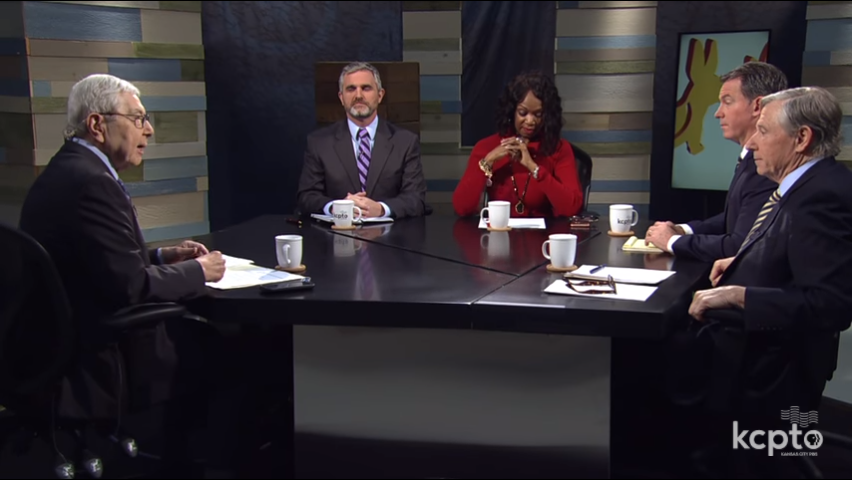
Who Wants to Talk About Failure?

It was the Irish Playwright Samuel Beckett who wrote, “Ever tried. Ever failed. No matter. Try Again. Fail again. Fail better.”

This admonition is often forgotten in the world of education reform, where advocates wade hip-deep into the trenches of political warfare, researchers build staffs that require ever more philanthropic dollars, and writers make the TED talk circuit. Saying “I was wrong” can be seen as suicidal.

But it doesn’t even have to go that far. Policy ideas like charter schools, teacher evaluation, and high standards first exist in the abstract. When they are actually implemented, they look quite different from state to state or district to district. What one state calls “charter schooling” might look different from charter schooling in another state. So, if charter schools struggle in one state, it isn’t necessarily an indictment of the idea a whole. It might just be that the implementation didn’t match the specific environment where it was tried. In an ideal world, we’d learn from that, and do better.

But we don’t. When a new study comes out that says a policy has “failed,” we man the ramparts. Opponents (who were against the policy before any data was available) come out and tut-tut at advocates, telling them to “follow the data” or not to “cling to ideology.” Advocates circle the wagons. They spin the findings or pettifog the implications. They counter with personal stories or impugn the motives of critics. Rinse and repeat. (By the way, much of this is covered much more in depth than I can manage here in Rick Hess’s great new volume Letters to a Young Education Reformer).

Now I’m not naïve. Part of this is the way of the world. We live in a dynamic, diverse, pluralistic, democratic republic; the politics that define us, as the old saying goes, ain’t beanbag.  I’m hard pressed to advise one group or another to unilaterally disarm and allow people who aren’t dealing in good faith to seize the high ground. Still, if we want to be better, we’ve got to do better.

For our part, Jay Greene (head of the University of Arkansas’ Department of Education Reform) and I are co-hosting a conference in Kansas City on May 22 where top education researchers are going to talk about failure. We have recruited a rock-star set of presenters who will discuss papers that are slated for publication in the near future by Rowman and Littlefield as an edited volume. Local education figures will serve as discussants, preventing any conversation from being too theoretical.

Authors will tackle many of the major topics of education policy of the last quarter century: Test-based teacher evaluation, technology in classrooms, teacher Preparation, No Child Left Behind, and more.  But rather than trying to make some kind of global statement about whether or not something like evaluating teachers based on performance or having the federal government intervene in low-performing schools is a “success” or “failure,” authors will dig into specific examples, what went wrong, and most importantly, what we can learn from it.

Anyone who has spent more than a day in front a classroom knows that failure is an essential part of learning. You’ve got to let a student get a math problem wrong so they can learn how to avoid that mistake in the future. You wouldn’t tell her that she should never try and solve for a missing side of a triangle using the Pythagorean Theorem. You’d help her figure out how she applied it incorrectly, or if it was a right triangle in the first place. That’s how children get better. It’s how adults get better too.

We have to be humble. We are going to get stuff wrong. The more honest we can be about that, and the sooner we can admit we made a mistake, learn from it, and fail better, the better our overall system will be.

Keep the Line Moving: Looking Beyond the 2017 Session

The Missouri legislative session ended May 12th, and there are enough storylines of intrigue, failure, and victory to fill a season of Game of Thrones. There was shouting and foot-dragging and name-calling, but by the time the session ended at 6:00 pm last Friday, several substantive reforms had gone to the governor for his signature. Right to Work, the elimination of Project Labor Agreements, minimum wage harmonization, TNC reforms, and the success of Article V convention legislation all qualify as important advancements for the state. That the state has fully funded the formula for K-12 schools also deserves recognition.

The accomplishments of the session still leave Missouri far from where it needs to be. And certainly we would offer our 2017 Blueprint as a baseline for the sorts of reforms our state needs going forward. That menu of reforms includes the elimination of the state’s Certificate of Need laws; expansion of school choice through education savings accounts, charter schools, and course access; and substantive transportation and labor reforms to make sure that the state can compete for jobs and capital, whether already in the state or currently outside of it. Alongside the policy, we need procedural reforms in the state Senate where an historic number of bills languished and died; indeed, a filibuster on the last day of session nearly killed the state’s minimum wage reforms.

Still, there is ample room for optimism. The governor’s Committee on Simple, Fair and Low Taxes seems well-positioned to make 2018 the year of serious tax reform. Those reforms should include advancement of an earned income tax credit, the reform of state and local tax incentives, and the reduction of taxes on individuals and businesses in the state. Moreover, the passage of some priorities this year obviously clears space for the passage of other priorities in education, labor, and other areas that didn’t make it to home plate as the 2017 session closed.

The key, as some Kansas City Royals fans might put it, is to “keep the line moving.” The legislature doesn’t have to hit a home run every time it steps up to the policy plate; it just has to keep hitting singles with increasing frequency. And as baseball fans would tell you, if you do those small things right, chances are good that big things will eventually come.

While we would all have loved to see a towering moonshot of a legislative session, the Legislature ultimately hit enough singles to merit a cheer from free marketeers. Missourians had a good inning; we’re looking forward to seeing bigger and better things happen in the next one.

Session Notes: Electrician Licensing Reform Passes

Congratulations to Missouri’s electricians who, thanks to legislation that passed the House yesterday, will soon have greater flexibility in where they can work around the state. As we’ve written before, Missouri’s patchwork of local electrician licensure laws has acted as a barrier to employment for electricians—and as a barrier to service for consumers—preventing qualified tradesmen and women from easily plying their trade around the state. The bill now goes on to the Governor, who is expected to sign it into law.

As McGraw Milhaven, tongue in cheek, asked our own Brenda Talent earlier this week, “Is electricity different in South County [Saint Louis] than it is in North County?” Of course not, and it’s good to see the Legislature take action to pursue a state licensing policy that reflects that truth.

Session Notes: Article V Convention Resolution Passes

The House has passed SCR 4, a resolution that adds Missouri to a growing list of states calling for a Constitutional convention to rein in government. As we wrote last month, the Convention — if officially called — would focus on implementing “federal fiscal limitations, federal power limitations, and federal term limitations.” Such limits do not appear to be forthcoming from those presently in federal office today or any time soon, so it’s appropriate for states to step into their Constitutional roles to advance those important interests directly. Missouri becomes the twelfth state to pass such a resolution. Congratulations to everyone involved.

What’s the Matter with Connecticut?

In 1971, the band Ten Years After released the song “I’d Love to Change the World” in which they bemoaned society’s troubles and offered some possible solutions, including:

Tax the rich, feed the poor
Till there are no rich no more?

More than 40 years after that song was released, the state of Connecticut is learning a lesson from  policies that heavily tax the rich. According to the Associated Press:

New figures released last week show tax revenue from the state’s top 100 highest-paying taxpayers declined 45 percent from 2015 to 2016. The drop adds up to a $200 million revenue loss for the state…

This latest drop in tax revenues paid by the wealthy, a problem for the past several years, has exacerbated Connecticut’s current budget woes. The projected deficit for the new fiscal year beginning July 1 has now jumped from about $1.7 billion to $2.3 billion, while the deficit predicted for the second year of the state’s two-year budget is now about $2.7 billion. The state’s main spending account, the general fund, is roughly about $18 billion annually.

As the headquarters of several hedge funds, Connecticut is especially sensitive to changes in that industry. Recent fund failures have meant that investors have sought to protect themselves from risk, meaning less profit and a double whammy for the Nutmeg State.

The commissioner for the state’s Department of Revenue Services conceded to the AP that “part of revenue decline can also be attributed to ‘a handful’ of wealthy individuals who moved to more tax-friendly states.” Imagine that. If your state levies higher taxes on the wealthy than other states do, the wealthy leave. The AP story also cites a similar example in New Jersey last year.

Soak-the-rich tax policies may seem great on bumper stickers and in song lyrics, but they are no way to run an economy. As we have written, in Missouri and elsewhere governments must compete against one another. Rather than penalize producers to cover for profligate spending, government should only tax what is needed to provide basic services effectively and efficiently.

To their credit, even Ten Years After wasn’t convinced of the merits of their proposal, ending with the refrain,

I’d love to change the world
But I don’t know what to do
So I’ll leave it up to you

Session Notes: Minimum Wage To Be Set By State Alone

The debate was lengthy, but after a raucous couple of hours the House and Senate both voted to preempt local minimum wages in Missouri in favor of the minimum wage set by the state itself. Show-Me Institute writers have long raised the negative consequences of minimum wage laws and their levels — levels often set by political will rather than good economics. We’ll have more to say later. Congratulations to the reformers.

Important Background on the Airport Discussion

The Kansas City Star is reporting on efforts to revive the effort to build a new $1.2-billion single airport terminal. While we’re all waiting on the details, here are some things to keep in mind:

  • People in Kansas City love their airport. Pride in a local airport probably isn’t very common around the country, but it is a very important aspect of this campaign. Mayor James, before celebrating criticism of the airport, counseled consultants not to criticize the airport for that very reason.
  • The plan at hand is to spend $1.2 billion to reduce the number of gates we have now. Where else does a city spend that sort of money to get less service?
  • The matter of financing has never been an issue with the Show-Me Institute. Back in 2014, we listed some reasons to oppose the airport terminal, but the cost to taxpayers is not one of them. Financing only became an issue when city leaders said that the airlines agreed to finance the project. They didn’t.
  • Regardless of whether the financing is done publicly or privately, it would result in a higher cost to travelers to pay down the debt. That higher cost would make MCI less attractive to airlines and travelers alike. Consider Cincinnati, where ticket prices were so high that local businesses flew employees out of Dayton, an hour away. Or consider Sacramento. Or San Jose.
  • We published a piece in 2014, “Five Good Reasons to Reject New KCI Terminal.” At least four of those reasons still stand, and the piece remains a worthwhile read.

According to the Star story, Kansas City engineering firm Burns & McDonnell has proposed to privately build and finance a new single terminal at MCI. However, there appear to be strings attached:

One key to the proposal for Burns & McDonnell is that it would get an exclusive arrangement with the city to provide the design and come up with a guaranteed maximum price.

Other firms would not have access to make their own offer, nor would the city request bids.

Not surprisingly, Steve McDowell, CEO of BNIM (another architectural firm in KC), expressed concern that such a deal would exclude a great deal of area architectural and engineering talent, telling the Star that “some of the best work in the country is coming out of our city, and I’d hate to see that not taken advantage of for the design of our gateway.”

  • The Show-Me Institute is aligned with The Kansas City Star editorial board calling for a policy debate that is “open, fair, complete, fact-based and inclusive.” If the past four years are any indication, it’s fair to wonder whether that debate will happen.
  • Lastly, the Star mentions that privately financed airports are nothing new; they’re common in Europe. And therein lies an idea worthy of consideration in Kansas City. If Burns & McDonnell is eager to build and operate a new terminal, why don’t they buy the whole thing? The Show-Me Institute published a paper on this not too long ago. (See page 17.) Not only is Branson’s airport privately owned, but the Kansas City Council previously considered privatizing MCI.

If the City is open to private financing and private operations, how far are we from private ownership?

Mizzou Enrollment Shrinks to a New Low

Mizzou is slated to enroll its smallest freshman class in nearly two decades. Whereas in 2015 the school saw more than 6,000 students start classes in August, this year it is looking to be only 4,000.

Tuition revenue is a huge part of Mizzou’s operating budget, as are Pell Grants and other forms of state and federal support that are directly linked to the number of students who enroll. Huge declines in enrollment mean huge declines in tuition, which mean huge declines in funding and serious ramifications for the university’s operations.

Already the university has closed seven residence halls. The University of Missouri system as a whole is looking at 8 to 12 percent budget cuts.

There is not a lot to say at this point, to be quite honest. As I wrote over a year ago, actions have consequences, and we are continuing to see them play out today. Students have more and more choice in where they spend their college years, and Mizzou isn’t guaranteed students. It desperately needs to change its image and reform its operation.

One thing I will say is that we are rapidly moving out of tinkering-around-the-edges territory. Continuing to lose students at this rate means a fundamentally different university in a few short years.  While I certainly appreciate president Choi offering ideas like free open source textbooks as a way to decrease costs, it’s going to take more than that to right this ship.  It’s time for some fresh thinking. I hope we get it.

The Washington Post and St. Louis Post-Dispatch: A Study in Contrasts

Both the St. Louis Post-Dispatch and Washington Post editorial boards published pieces this weekend concerning the findings of a new U.S. Department of Education study of the DC Opportunity Scholarship Program, a school voucher program operated by the federal government in our nation’s capital.

The study was noteworthy because it found negative academic results for some of the students who participated in the program, which is a departure from what careful study of the program has found in the past. There is more to the most recent study than meets the eye, and many caveats that readers should take into account, as ably explained by Jason Bedrick and Marty Lueken of EdChoice here.

But I want to highlight how differently these two outlets covered that study. The Washington Post, which serves the city where the voucher program operates, wrote an even-handed analysis titled “Voucher critics are seizing on D.C. test scores. They’re missing the point.”

The piece is worth reading in full, but the second paragraph is key:

With the D.C. Opportunity Scholarship Program reauthorized by Congress this week, it is important that any assessment be complete, clear-eyed and not formed through the prism of those advancing special interests or narrow political points. What should be taken into account along with test scores is the positive difference the program has made in the lives of thousands of families, and how it and the thriving community of charter schools have enriched school choice and helped improve public education in the city.

The Washington Post piece acknowledges that the study’s findings demand attention, but examines them in the real-world context of an education environment where many factors other than test scores (e.g., graduation rates and demand among parents for alternatives to public schools) deserve consideration.

By contrast, the op-ed in the Post-Dispatch describes the findings as helping to “debunk the notion that voucher-enabled students in private schools produce better outcomes than those attending public schools.” It doesn’t, but that’s beside the point.

What is more surprising to me is the Post-Dispatch’s closing admonition that we should “trust the data, not loosely grounded ideology.”

Where was this attitude when studies of private school vouchers found positive results for students? Like this one. Or this one. Or this one. Or this one. Or this one. Or this one. Or this one. Or this one. Or this one. Or this one. Or this one. Or this one. Or this one. (I could go on, but this is just a sample of studies that found positive test-score results for students who participated in voucher program or whose test-scores were driven upward as a result of voucher programs. I didn’t even touch the large empirical literature on civic effects or parental satisfaction.)

Even when all of these studies had been published, the Post-Dispatch was still publishing editorials like this one, and this one. Physician, heal thyself.

Those closest to the action in DC see much to admire in the DC Opportunity Scholarship Program, and a few recent studies need to be put in the context of the multi-decade literature on school choice. Then, and only then, can we have a real discussion about school choice as part of a solution to vexing problems in education.

Support Us

The work of the Show-Me Institute would not be possible without the generous support of people who are inspired by the vision of liberty and free enterprise. We hope you will join our efforts and become a Show-Me Institute sponsor.

Donate
Man on Horse Charging