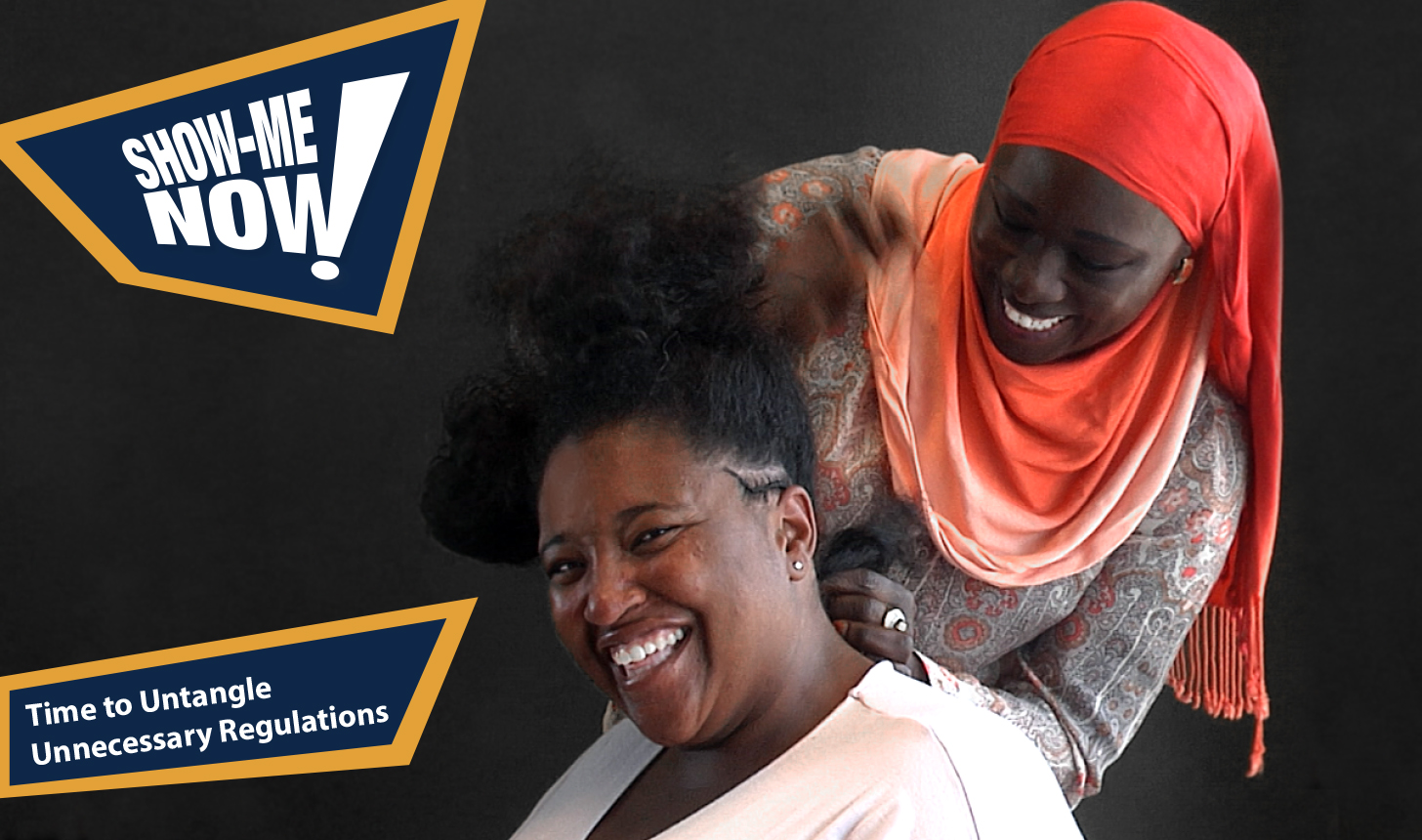
Burdensome licensing requirements are making it very difficult for Missouri business owners. That’s why some entrepreneurs are challenging the state’s licensing requirements on African-style hair braiding.
Learn more about the case:

Burdensome licensing requirements are making it very difficult for Missouri business owners. That’s why some entrepreneurs are challenging the state’s licensing requirements on African-style hair braiding.
Learn more about the case:
Americans are well aware of problems in urban public schools. We see news stories about violence in the hallways and regular reports about abysmally low test scores. Could private school choice help address these issues or offer a way out for some students? When I asked 35 parents in focus groups a version of this question, many had reservations. In posts two, three, and four of this series, I address the first three major reservations. Here I address the final one.
Reservation Number 4: School choice does not solve the larger problem of concentrated poverty.
The parents in my focus groups recognized that some schools are not doing well. That’s why many of them refused to enroll their children in their local public schools. Yet many wouldn’t support a state-supported private school choice program. To them, that was just a Band-Aid to cover over a problem rather than actually solving it. Instead, the concerned parents thought more needed to be done to address the root cause that led to the poor educational opportunities: poverty.
This line of argument suffers from two shortcomings. First, it sets an almost impossible expectation of school choice programs—that they solve a problem that traditional public schools have failed to solve for centuries. Rarely do we expect public policies to solve this kind of massive societal problem. Even when considering issues related to poverty, we often hope an intervention will move the needle in the right direction by a matter of degrees. When it does, we consider it a success.
Second, this argument absolves public schools of blame for the role that they have played in exacerbating the problems of poverty. Not only have traditional public schools failed to solve the problems of poverty, in some places, they have actually made it worse. Look at the patchwork of school districts in the areas surrounding Kansas City and Saint Louis. Homes in the higher-performing districts cost more because the schools are better; wealthier families segregate themselves from lower-income families by moving to these better districts. This creates virtuous cycles within these districts, where wealthier students attend better schools, get better jobs, move to places with even better schools, and then send their children to them. But it also creates a vicious cycle in poorer-performing districts, where families that are not able to break into the housing market of better districts are shut out of higher-performing schools, are prevented from accessing better opportunities, and stay trapped in poverty.
There is nothing nefarious about a family wanting to be in a good neighborhood with great schools. There is, however, something wrong with a school system that only allows families with financial means to access great educational options.
Vouchers and charter schools have done nothing to create this situation. But they can help stop it by breaking the connection between where children live to where they go to school.
It is true that school choice does not solve issues of poverty. School choice programs also do not cure cancer, reduce tensions in North Korea, or solve male pattern baldness. In other words, school choice does not solve complicated, thorny issues that are incredibly complex. It does, however, reduce the barriers that stand between low-income families and educational opportunities for their children.
A quick post and a short video about a topic we’ve talked a lot about. Direct primary care is one of the most exciting health care innovations of the last few years, and for those unfamiliar with what it is and why it matters, the video below does a great job of laying out its benefits. If you’re looking for a DPC physician, try this Mapper tool.
Direct Primary Care (DPC): A Health Care Revolution from Day’s Edge Productions on Vimeo.
Are school boards actually effective at improving standards for students? Dr. James Shuls explains why a school choice system may actually offer parents more control than the traditional public school system.
To learn more check out School Choice For Me, But Not For Thee: Part 3.
The Show-Me Institute is pleased to offer internship opportunities for Spring 2018.
Those wishing to be considered for an internship should submit an application (link below) and the requested supporting materials no later than December 8, 2017. Applications will be accepted on a rolling basis. We will begin conducting interviews as applications are received. Applicants can expect a decision no later than Monday, January 8, 2018.
Last week, a principal and a vice principal from the Riverview Gardens School District filed a lawsuit alleging that district administrators falsified attendance records. The district has denied the claims.
At this point, nothing has been established—all we know is that an accusation has been made and denied. But in any case, attendance numbers are more important than many people realize. Not only do attendance data affect how much funding the district receives from the state, but they also factor in the Annual Performance Review and the district’s accreditation classification.
Last December, the State Board of Education voted unanimously to reclassify Riverview Gardens as provisionally accredited. According to state law, because the district was no longer unaccredited, students from Riverview Gardens lost the right to transfer to better-performing districts. If the accreditation of the district was based on incorrect attendance information, then students may have been unfairly deprived of better educational opportunities.
I do not doubt that there has been real progress in the district in the past few years, but the integrity of the attendance numbers is vital so that the district can be evaluated according to its true performance. We will continue to watch this story closely as it develops.
Competition and supply are good things, and as we’ve said before, health care needs more of both. Innovations along those lines could mean interstate licensing of doctors to ensure wider access and lower prices for Missouri patients. It could mean making sure innovative primary care practices are able to practice medicine without undue government interference. It could mean reimagining the Medicaid program into one that breaks the network limitations of the current program and empowers patients. Indeed, competition and supply are good things for customers and patients—patients, of course, being customers by another name.
That’s why news broken by Samantha Liss at the St. Louis Post-Dispatch should be very welcome to patients in Missouri and elsewhere, as it appears the market for at least some pharmacy services is about to grow:
Throughout the past year, and without much fanfare, Amazon.com Inc. has gained approval to become a wholesale distributor from a number of state pharmaceutical boards, according to a review of public records….
According to a review of records by the St. Louis Post-Dispatch, Amazon has received approval for wholesale pharmacy licenses in at least 12 states, including Nevada, Arizona, North Dakota, Louisiana, Alabama, New Jersey, Michigan, Connecticut, Idaho, New Hampshire, Oregon and Tennessee.
An application is currently pending in the state of Maine.
An Amazon spokesperson told the Post-Dispatch via email that the company does not comment on “rumors and speculation.”
It’s a little complicated, but one of the big questions surrounding the Post-Dispatch report is the ultimate aim of the Amazon filings—that is, whether Amazon wants to open up a pharmacy benefits management business only, or whether a soup to nuts model is also in the tech giant’s future. Does Amazon want to be Express Scripts? Does it want to be Walgreens? Or does it want to be both? I would welcome all of the above, actually, and I suspect millions of Amazon customers would feel likewise.
And despite the failure of our Federal representatives to actually do what they said and repeal Obamacare, there is still reason to be optimistic about the trajectory of care in this country. Along with the reform initiatives above, tech innovations like 3D printing of prosthetics, and much more, the potential entry of Amazon into the pharmaceutical space reiterates that the future of health care as some government product remains anything but assured. After all, people are markets, and markets are powerful things.
The Show-Me Institute’s Chairman Crosby Kemper III and Director of Municipal Policy Patrick Tuohey appeared on KCPT’s Ruckus on Thursday, October 26, to discuss criticisms of the low tax evaluation of the Country Club Plaza, the future of the American Jazz Museum, and the ongoing debate over a new single airport terminal at KCI.
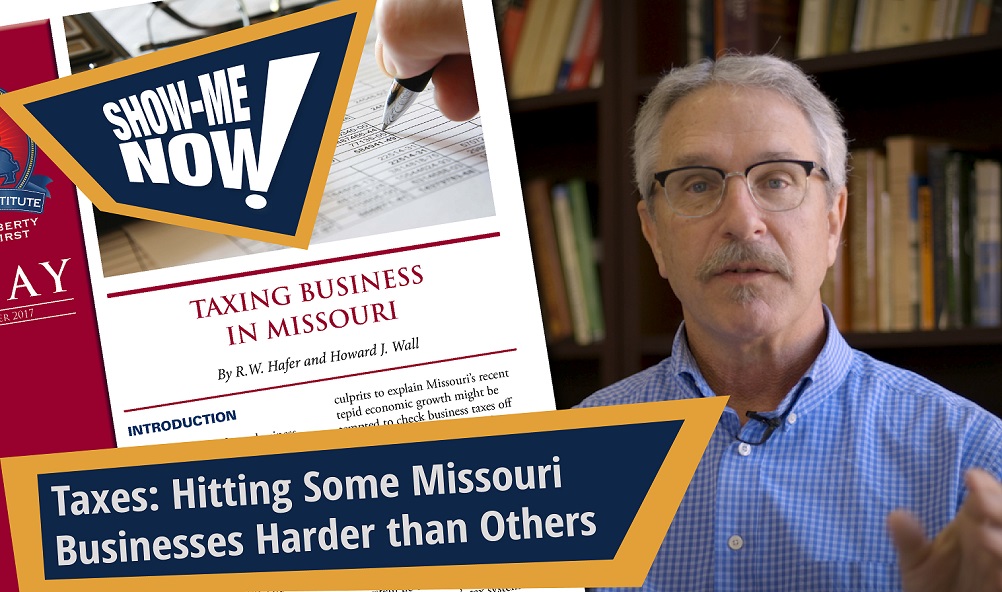
In their essay, “Taxing Business in Missouri,” Professors Rik Hafer, Ph.D., and Howard Wall, Ph.D., review the research of the Tax Foundation to better understand tax policy in Missouri. Their meta-analysis explains why Missouri’s economic performance remains below the national average. If Missouri reformed tax policy to lift the burden on all businesses, would that improve the Show-Me State’s economic performance?