Attendance Matters: Following Up with Riverview Gardens

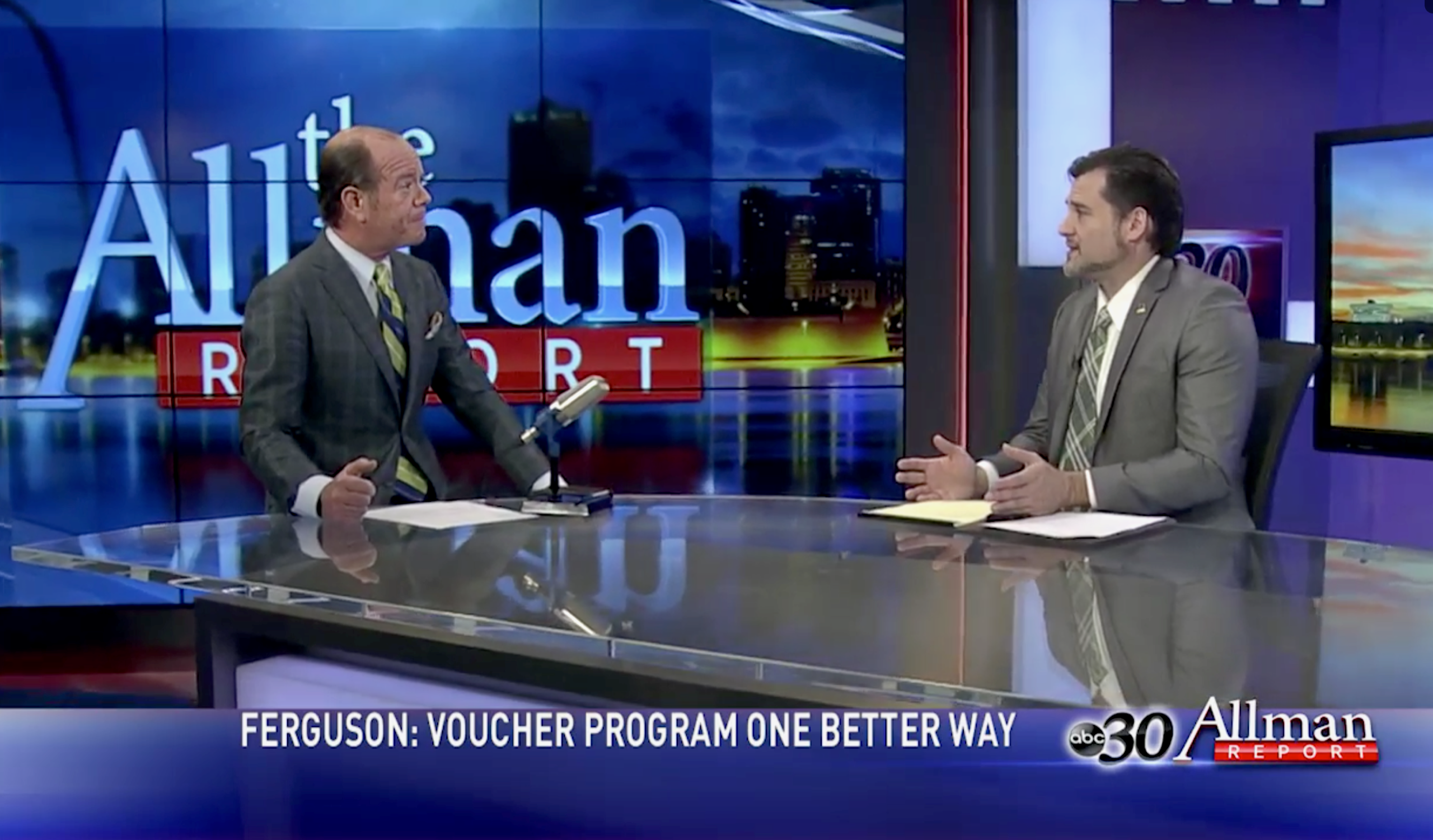
A little over a month ago, the St. Louis Post-Dispatch reported that two administrators from Riverview Gardens filed separate lawsuits against the district over pressure to falsify attendance data. Since then, the district received a 70.7 percent score on the 2017 Annual Performance Review (APR), marking the third year in a row it scored over 70 percent—the threshold for full accreditation.

While the State Board of Education did not upgrade the district this year, it does not seem there will be a full review of Riverview Gardens’ records by the Department of Elementary and Secondary Education (DESE). The Post-Dispatch’s latest article quotes Sarah Potter, DESE spokesperson, who states that DESE “informally reviewed Riverview Gardens’ attendance data after hearing of the allegations, but didn’t find anything to investigate further.” Based on emails from a records request by the Post-Dispatch, the situation seems to merit a more thorough investigation.

Here are some of the findings from the Post article:

  • The district’s overall attendance rate was 78.8 percent on May 30 after the school year ended, but the district submitted an 81.5 percent attendance rate to DESE. (FYI, the attendance rate is the percentage of students who attend school at least 90 percent of the time.)
  • Riverview Gardens received 10 out of 10 attendance points on the APR for its 81.5 percent attendance rate. If its attendance rate was actually 78.8 percent, it would have received only 6 out of 10 points and the district would have scored 67.9 percent overall on the APR instead of 70.7 percent.
  • Superintendent Scott Spurgeon has denied any wrongdoing and said the district does attendance data clean-ups to ensure the data are accurate. Other Saint Louis area districts, however, say they rarely go back to fix their attendance records but make sure throughout the school year that their records are accurate.

It is possible that the numbers Riverview Gardens submitted to DESE are accurate, and that the district just manages its data differently than other districts. Nevertheless, these emails raise some red flags about its attendance numbers, and they also call into question the accuracy of other records it has submitted to the state.

As I explained in an earlier post, accurate attendance data matters quite a bit. In addition to affecting how much funding the district receives from the state, these numbers also affect the district’s accreditation classification—and consequently, whether students are allowed to transfer to better-performing districts. We must be sure students were not short-changed when Riverview Gardens was upgraded last year from unaccredited to provisionally accredited.

At the very least, shouldn’t DESE do a full audit of the district? Putting aside other issues with the accountability system, we must be confident that the numbers are accurate for the system to have a chance at being effective. Otherwise, failing schools will be let off the hook, ultimately hurting the students who live in those districts. 

Licensing Requirements Holding Back Telemedicine

Imagine that you suffer from a heart condition that requires daily monitoring of your resting heart rate, blood pressure, and other vital signs. Rather than daily hospital or doctor visits, you might use at-home monitoring devices that record your data and relay them to your doctor, who could decide if any intervention is necessary. Your healthcare costs would be significantly reduced, and you wouldn’t have to suffer the added inconvenience of regular, and perhaps daily, doctor visits. This scenario is an example of telemedicine, a common-sense application of innovations in medical and telecommunications services. And especially as the technology behind it improves, telemedicine offers an opportunity for patients to receive quality healthcare at a significantly reduced cost.

Unfortunately, state medical licensing restrictions often serve as a barrier to the expansion of telemedicine. Currently, physicians are required to obtain a medical license in any state where they practice, as defined by the location of their patients. For example, if a doctor in Missouri wants to use telemedicine to treat a patient in Illinois, that doctor would generally need to have a license to practice medicine in Illinois.

We have weighed on this topic at length in the past, and a recent analysis by Shirley Svorny of the Cato Institute, titled “Liberating Telemedicine: Options to Eliminate the State-Licensing Roadblock,” brings the licensing issue back to center stage in the national health care policy conversation.

Svorny’s essay offers the following four possible remedies for bringing down licensing barriers to care, particularly for physicians engaged in telemedicine practices.

  • Eliminating government licensing of medical professionals altogether.
  • Redefining the location of the interaction between patients and physicians from that of the patient to that of the physician.
  • For individual states to open their markets to physicians licensed in other states.
  • For the federal government to offer national telemedicine licenses

The essay includes a detailed pros-and-cons analysis of each recommendation. Svorny argues that implementing one or more of these reforms would have many advantages, including expanding access to specialists for individuals in rural areas and decreasing the cost of health care for patients across the country without sacrificing patient safety or healthcare quality. Regardless of whether you agree or disagree with Svorny’s proposals, the essay is worth a read.

Charter Schools’ Accountability Is Their Strength

The Nirvana fallacy often gets in the way of policymaking when, as Voltaire described, we let the perfect become the enemy of the good. It is easy to fall into this trap when discussing education because we want every child to have a world-class education. In Kansas City, however, this fallacy has led us to rejecting the good that charter schools can offer in exchange for empty platitudes about accountability, strategic plans, and prioritizing the children.

Charter schools are not the perfect solution—some fail to meet expectations and close—but they are the only thing that currently gives kids a chance to attend a better school within Kansas City. When the stakes are simply too high for students stuck in failing schools, charter schools must be part of the response to our public school woes.

While charter schools cannot magically transform public education for all students, they are already helping thousands of children in Kansas City by giving them alternatives to failing neighborhood schools. Even more students could have this opportunity if we allowed new charter schools to open, helped successful ones expand, and closed those that perform poorly. But for charters to reach their full potential, they need equitable funding for capital costs and access to empty school buildings in the city.

Judging by enrollment numbers and waiting lists, it appears that parents in the area are ready for more charter schools. While enrollment for Kansas City Public Schools continues to decline, charter school enrollment in Kansas City grew 17 percent between the 2015–2016 and 2016–2017 school years. And that doesn’t account for the students on waiting lists—at University Academy, the waiting list was 700 students long last year.

Unfortunately, there are major obstacles to charter school growth. When KIPP KC needed to buy its building, it had to raise the $2.3 million privately. When Crossroads Academy sought to use the historic Attucks School in the Jazz District for a high school, the city instead sold the building to the Zhou Brothers to be opened as an art center. The district also has resisted efforts to reopen Southwest High School as charter or innovation school. 

In a recent article, the editorial board of the Kansas City Star correctly pointed out that performance varies among charter schools—some scoring 100 percent and some less than 50 percent on the Annual Performance Report. What they fail to mention, however, is that charter schools shut down when they fail. The latest example is Benjamin Banneker Charter Academy, which will close unless it can find another sponsor. Closing unsuccessful schools is a strength of the charter school model, not a weakness.

Moreover, the variation in scores seen between individual charter schools is also seen in traditional public schools. Looking at 2016 scores, school performance ranges from 100 percent (at Lincoln College Prep, James Elementary, and Pitcher Elementary), to below 40 percent (at Longfellow, Benjamin Banneker, and Satchel Paige Elementary schools).

Charter schools are held accountable in two ways that traditional public schools are not: by their sponsors no longer authorizing them because of poor performance, and by unsatisfied parents choosing to leave. When the Kansas City School District closes schools, most of the time it is for low enrollment numbers, not performance. Many families have left the district, but many others who cannot afford to move are left behind. Should they be forced to keep their kids in failing schools? 

If we are serious about making the needs of students our top priority, the answer should be no. We should not expect kids to sit tight in their desks—all while losing valuable days of learning—as their districts make modest, if any, gains each year. Far too many students in Kansas City have no other option than their failing neighborhood schools; they deserve the opportunities new charter schools can offer.

A version of this op-ed appeared in the Kansas City Star.

A Thanksgiving Reflection: How Private Property and Economic Freedom Saved the Pilgrims

Americans readily accept two opposing ideas about the first Thanksgiving – one bright and highly idealized, the other grey and somber, but closer to the truth. Jean Ferris captured the first idea in a painting completed in 1915, some three centuries after the actual event.

In his First Thanksgiving 1621, we see prosperous, black-clad Pilgrims in the company of new-found friends – bare-chested Indians in feathered war bonnets (one of several historical inaccuracies). The “thanks” here are for a bountiful harvest and the early realization of America as a land of milk and honey.

But how could it have been so easy for the settlers to carve a life out of the wildness in a cold and unknown land far from home?  Simple answer: It wasn’t, as most people instinctively recognize.

Out of 102 passengers on the Mayflower who arrived in Plymouth, Massachusetts, in December of 1620, 51, or exactly half, died from malnutrition or disease within a few months. The bereaved survivors must have been painfully aware of the precariousness of their own existence. They included William Bradford, the author of the classic Of Plymouth Plantation, who went on to become governor of the colony for many years. Gravely ill, his young wife, Dorothy May, either fell or threw herself to her death as the Mayflower lay at anchor in Cape Cod.

The Pilgrims did not build on a record of success.  As Donna Curtin, the executive director of the Pilgrim Hall Museum points out, “Many other colonies (in the Americas) had failed terribly.” Set up in 1607, the original English settlement in Jamestown, Virginia, had all but collapsed three years later – with 80-90 percent of its inhabitants lost to starvation and disease. In Ms. Curtin’s words, “They had murder, cannibalism, you name it – horrific, brutal conditions.”  No fewer than 10 colonies set up before Jamestown by the Spanish and French had also ended in disaster.

The Pilgrim leaders were well aware of this string of failures, as we know from Bradford’s journal. Coming with intact families and a strong sense of community, the Pilgrims bore more than a passing resemblance to the ancient Jews who sojourned in Egypt before going on to find their new home. Having fled religious persecution in England, the Pilgrims spent a dozen years in the Netherlands before fresh troubles there prompted many of their congregation to pin their hopes on the new world.

However, within three years of their landing, Pilgrims faced major problems of their own.   Bradford wrote:  “Famine began to pinch them [the Pilgrims] sore.”

The investors who paid their passage hoped to get an adequate payback on their investment in the founding company.  Fearing that would not be possible if people were free to farm their own land, they insisted upon “a common course and conditions” over the first seven years – under which there were no individual property rights and each member was entitled an equal share of total output.

Bradford recognized the demoralizing aspect of this arrangement. The industrious would subsidize the slackers; the most productive would get no more “in the division of the victuals and clothes” than the least productive. Instead of fostering harmony, communal property led to laziness, envy, thievery, poverty, and social dysfunction – just as it would in the 20th Century through the spread of communism.

In 1623, Bradford and other leaders assigned to every family “a parcel of land” for its own use. With private property came economic freedom and individual initiative. “This had a very good result,” Bradford wrote, “for it made all hands very industrious” – leading to a big increase in corn production and far greater “contentment” for the community as a whole.

That’s how private property and economic freedom saved the Pilgrims. Happy Thanksgiving!

With MoDOT’s Tank Nearly Empty, a Fuel-Tax Increase Might Be the Answer

If you are younger than 36 years old, then Missouri hasn’t raised its gas tax since you started driving. But that might need to change. The Missouri Department of Transportation (MODOT) is arguably underfunded for the job it is being asked to perform. Enter the legislature, where gas tax increases may be gaining momentum as a solution to this problem.

Missouri State Representative Greg Razer, speaking about raising the gas tax, said last week, “That is absolutely, in my view, the way we have to go in the short term. . . . We have to take care of it (transportation). We have lots of state assets that we have neglected over the last 15–20 years, and it’s time that we as a state start living up to our responsibility.”

The state does have some wiggle room to keep gas taxes low even after an increase. Missouri’s fuel taxes—currently 17 cents per gallon for both regular and diesel—are the 4th and 5th lowest of all 50 states, respectively.

A policy study conducted by the Show-Me Institute’s Joe Miller in 2016 listed the following advantages to raising the gas tax:

  1. It would raise revenue that is constitutionally appropriated towards roads.
  2. It would have a low implementation cost.
  3. The money raised would benefit the entire state highway system, along with local road and bridge projects.
  4. It could be enacted without amendments to Missouri’s constitution.

But this is not a perfect solution, as the same policy study found the following disadvantages to a gas tax hike:

  1. The revenue base would decline over the long term as cars become more fuel efficient and/or battery powered.
  2. Fuel taxes are regressive.
  3. The tax an individual pays is proportional to the amount of gasoline that they purchase, not to the number of miles driven on the state highway system.

Ideally, I would like any gas tax increase to be revenue-neutral. While our transportation system may need more money, that doesn’t necessarily mean that more money overall should go to government.

Regardless, the sooner we decide how to fund our infrastructure for the next century, the better. In addition to other measures such as toll roads, a gas tax may be an appropriate way to keep Missouri moving.

Political Courage: LIHTC Program Cut to Zero by MHDC

The details are still trickling out, but news is now breaking that the Missouri Housing Development Commission (MHDC) voted 6-2 today to reduce state tax credit spending on the Low Income Housing Tax Credit (LIHTC) to $0 for the coming year. The MHDC is made up of a variety of elected officials and appointees, among them the governor, but to my understanding, Missouri governors have not typically participated in MHDC deliberations. Today, however, Governor Eric Greitens called into the meeting and cast what turned out to be the deciding 6th vote—curbing a tax credit program that regularly costs the state about $150 million annually. Another vote will take place in about a month to reaffirm this decision, but the result is expected to be the same.

It is difficult to describe how important, and courageous, the MHDC’s decision is. Those who profit from tax credits make up a powerful and well-organized lobby that has been successful in protecting its interests in the past, even when the evidence against a given corporate handout is overwhelming. That most members of the MHDC stood firm in protecting the interests of taxpayers is a leap forward for the tax credit reform movement—and a credit to those who took a hard vote on behalf of the public interest. Tax money saved from a program like the LIHTC can be used to better fund existing state services and to cut taxes more generally, but so long as a program like the LIHTC was taking tax dollars and depositing them back with special interests, advancement on those two fronts was always going to be more difficult. Instead, the MHDC’s decision primes the pump for wider and substantive tax reforms in 2018, should the Legislature choose to capitalize on the opportunity.

We’ll talk more about this, and at greater depth, later. In the meantime, congratulations to the committee members, and congratulations to taxpayers. Today is a very good day for policy reform.

Support Us

The work of the Show-Me Institute would not be possible without the generous support of people who are inspired by the vision of liberty and free enterprise. We hope you will join our efforts and become a Show-Me Institute sponsor.

Donate
Man on Horse Charging