Kansas City’s World Cup Potemkin Village

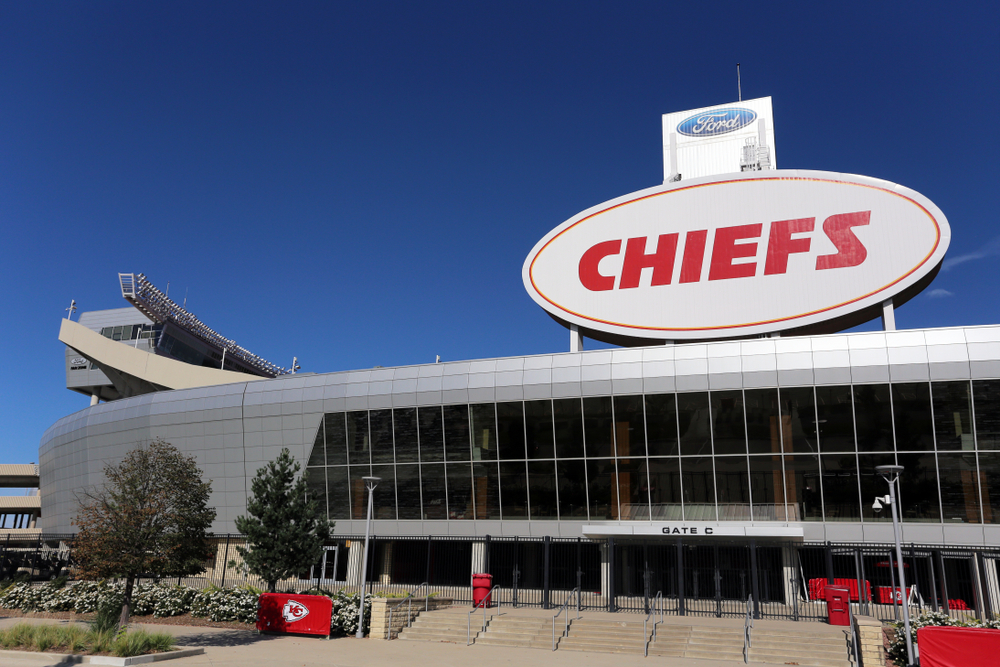
Kansas City is spending $1.4 million in previously allocated World Cup funds to subsidize vacant storefronts ahead of the 2026 tournament. But if mega events like the World Cup really sparked economic development, would we need to pay businesses to show up?

There’s a long track record of inflated claims around the economic benefits of hosting major sporting events. Economists Robert Baade and Victor Matheson found that the 1994 World Cup resulted not in a $4 billion boost, as advertised, but in a net loss between $5.5 billion and $9.3 billion across host cities. Despite this, city officials—and their usual partners in the Chamber of Commerce and Downtown Council—continue to market the 2026 event as transformational for Kansas City.

A recent Kansas City Star article outlines the Small Business Storefront Vacancy Revitalization initiative, under which the city will offer up to $25,000 per year in rent subsidies to small businesses that occupy empty retail spaces. The goal is to fill downtown with activity and present a more vibrant environment to World Cup visitors.

But if the World Cup were the growth engine it’s advertised to be, wouldn’t businesses already be competing for these spaces?

The need for incentives suggests otherwise. Rather than a natural uptick in demand, the city appears to be staging vitality. Pop-up stores and subsidized art installations may look good for a few days, but they are not a substitute for long-term market viability. Officials point to similar programs in Seattle and San Francisco, yet even there, long-term results remain unclear.

Yes, some storefronts may light up temporarily. But if Kansas City genuinely wants to support small business, better options exist: streamline the permitting process, reduce regulatory barriers, address infrastructure needs, and improve public safety. These are structural reforms that support entrepreneurs regardless of tourist calendars.

Instead, city leaders appear to be following a familiar pattern: promote a high-profile event, rush to spend earmarked funds on short-term optics, and then dodge accountability when outcomes fall short.

If it hasn’t worked so far, why would anyone expect it to work in the future?

The Miseducation of Kansas City Councilman Wes Rogers

At the June 3, 2025, hearing before the Missouri Senate Fiscal Oversight Committee about Senate Bill (SB) 3, The Show-Me Sports Investment Act, all the usual suspects took a moment to dust off their talking points about why taxpayers should subsidize the construction or renovation of stadia for the wealthy Kansas City Chiefs and Royals.

There wasn’t anything new in the testimony. It included romantic nostalgia for bygone players and the pride we have in our teams, claims about all the economic impacts that these subsidies will drive, and, of course, fears that the teams will leave if we don’t give them what we want.

Toward the end of the supporters’ testimony, Wes Rogers, a Kansas City councilmember and former state legislator, rose to speak in favor. His remarks included the following:

I make my living selling and leasing commercial dishwashers to restaurants. Already, no matter where the Royals and Chiefs go, Kansas is kicking our butt. I install more dishwashers in the state of Kansas than I do in the state of Missouri, period. And there’s a whole bunch of reasons for that I’m happy to talk about later. But I promise you this, if we put this stadium or the Chiefs stadium in Kansas, my guys are going to be to Kansas more than they are to Missouri and that’s going to continue. And so we can say this doesn’t have an economic impact. I know it does because I’m paying 20 guys to go to Kansas instead of Missouri to work and that number is going to increase.

This is odd testimony in favor of subsidies as a source of economic development because the Chiefs and Royals already have stadia in Missouri. Yet (despite this?) he argues “Kansas is kicking our butt,” and he is seeing more business on the Kansas side. Redirecting taxpayer dollars toward new or refurbished facilities won’t change that.

I suspect Rogers knows that the real reasons for Kansas outperforming Missouri are the “whole bunch of reasons” he alludes to. For example, the high tax rate and low level of services Kansas City provides—in large part because of taxpayer-funded subsidies, such as those for sports teams, being such a huge drain on city coffers.

Earlier in his testimony, Rogers offered, “I’m actually reading economic studies about baseball, which I’ve never done before.” This is good news, but if the statement above is a reflection of his grasp of the material so far, he needs to do more reading—and rereading.

The Power of Markets

This chart is produced by Mark Perry at the American Enterprise Institute, and this version is an update he released in January of 2024. As he describes in an earlier blog post, there is an important pattern in the price trends: the greater the degree of government involvement in the provision of a good or service, the greater the price increase over time.

If this chart is the answer, the question would be something like “Why are free-market principles so important?”

The chart shows that between 2000—2023, inflation was 82.4 percent. Price changes over this time period greatly exceeded inflation in the following categories: Hospital services, college tuition and fees, college textbooks, childcare and nursery school, and medical care services. Housing and food and beverage prices also increased by more than inflation, but barely.

At the other end of the spectrum, prices on electronics, toys, clothes, cars, cellphone service, and household furnishings have fallen, or grown much less than inflation.

Once you see the stunning gap between goods and services in industries regulated and subsidized by the government versus goods and services in industries where the government is mostly uninvolved, it is hard to unsee it. This is just descriptive data and is not meant to be a rigorous causal analysis of the effect of government. But where there’s smoke, there’s usually fire.

This is a good reminder of the reason we fight for free-market policies in Missouri. Though often well intentioned, the government is just not very good at providing goods and services efficiently. When it gets involved, we all pay the price. Of course, there are some roles the government must handle (national security is an easy example), but for the most part, we’re better off when it stays out of the way.

Licensing Compact Exception Is Removed in Missouri

Missouri recently eliminated the “compact exception” for occupational licensing reciprocity. Show-Me Institute analysts have flagged this loophole numerous times, and it is gratifying to see these recommendations reflected in policy.

What Is the Compact Exception, and Why Does It Matter?

Currently, state law allows most professionals licensed in other states who relocate to Missouri an expedited path to receiving an occupational license. If the professional has been licensed for at least one year and remains in good standing, Missouri’s occupational licensing bodies must waive the state’s requirements and issue a license within six months of application.

This makes it easier for workers to relocate to Missouri. However, two key weaknesses remained:

  • The relevant oversight body can wait up to six months to issue a waiver for those who meet the reciprocity guidelines.
  • According to the old statue, Missouri’s licensing reciprocity “shall not apply to an oversight body that has entered a compact with another state for the regulation of practice under the oversight body’s jurisdiction.”

The second issue—the “compact exception”—was addressed by the recent passage of Senate Bill (SB) 150. SB 150 resolves this issue entirely.

Under the current language, if a Missouri licensing board joins a compact, it could actually make things worse for Missouri consumers. For example, all states require cosmetologists to have a license. Today, Missourians could have access to cosmetologists moving from all 50 states, because licensing requirements would be waived in our state. Now suppose Missouri joins a cosmetology compact that only has six member states. Due to the compact exception, licensing reciprocity would not apply to the other 43 states that have not joined the cosmetology compact (unless the language of the compact explicitly says otherwise).

Let’s Keep the Momentum Going in Occupational Licensing

SB 150 also expedites licensing timelines for qualified spouses of law enforcement officers moving to Missouri. The bill mandates that spouses of law enforcement officers who have a professional license in another state and remain in good standing receive a temporary license for their occupation in 30 days or less. Currently, this expedited process is only available to spouses of military members. This change in SB 150 points to the need for broader reform. As mentioned earlier, Missouri law allows the relevant oversight body to issue a reciprocal license in six months or less. Six months is far too long to wait to begin working, and all professionals seeking work in Missouri should have their applications reviewed in a timelier manner.

SB 150 eliminates one weakness of Missouri’s universal licensing reciprocity regime. It is a meaningful win, and hopefully we’ll see more reform in the future to make Missouri a more attractive state to move to.

The Missouri Legislature Was Right To Overturn Proposition A

At the Show-Me Institute, our economists and analysts have long been opposed to minimum-wage increases put before the voters of Missouri. Wages should be a contract between employers and employees that are determined by markets, not something legislated by the state.

That means employers and potential employees should be free to negotiate, agree, or disagree on compensation, and then employ or refuse employment. Of course, I am also for an economy that offers good jobs at high wages; the best and in fact only path to that is economic growth that increases the demand for labor, coupled with an educational system that teaches and trains people so that they can pursue the career of their choice.

In other words, freedom and good government produce more opportunity for everybody. Who could have known that?

Proposition A, which was passed by the voters in November 2024, increased the minimum wage, but it did more than that. It also instituted a complex sick-leave policy for most businesses in Missouri. Many of those same businesses already had more generous leave policies of various types than the one mandated by the new law, but even those businesses were forced by Proposition A to adjust their policies to the new formula. In some cases, those adjustments were going to be less generous to employees in order to adhere to the new requirements.

This is a perfect example of how a law can appear to do one thing—in this case, help employees—while actually doing the opposite—in this case, heaping transaction costs on business, and especially small business, and thereby discouraging those businesses from hiring employees and growing their companies in Missouri.

It’s not the fault of voters that they did not know what the effect of the law would be. Proposition A contained nine pages of detail that even lawyers have difficulty understanding.

The supporters of Proposition A made it a statutory proposition instead of a constitutional amendment because a statutory proposition is easier to get on the ballot. Because Proposition A was only a statutory change, it was within the authority of the legislature to adjust it, and fortunately the legislature has done so by eliminating the onerous sick leave provisions, moderating the minimum wage provisions, and vastly simplifying the burden on small business.

But this whole episode shows why we need initiative petition reforms in Missouri. It is too easy for interest groups to raise large sums of money so that they can mislead voters about complex initiative propositions that are deliberately written to hide their true purpose and likely effects. Even a good ballot summary can’t accurately convey the meaning of nine pages of inscrutable legal jargon.

We’re all for the people deciding the direction of their own government; in fact, we participate every day in the marketplace of ideas with a view to influencing Missourians on behalf of good policy. The initiative petition process is an important tool, but it should be designed so that voters, with a reasonable effort, can be aware of exactly what they are voting on and the choices they are being asked to make.

2025 End of the Legislative Session Report

The 2025 Missouri legislative session delivered both meaningful reforms and missed opportunities. Progress was made in
areas such as education, health care, and regulatory reform, but other important policy changes needed to move Missouri
forward did not make it across the finish line. There’s more work to be done.

Here’s an overview of some of the legislation passed this session (some of which is still awaiting the governor’s signature):

$50 MILLION FOR MOSCHOLARS PROGRAM

• First public investment in the K–12 scholarship program, with $50 million approved in the state budget
• Could triple the number of students served, expanding access to private school, homeschooling, and
specialized support

TELEHEALTH AND HEALTH CARE REFORMS: SB 79

• Improves telehealth access by allowing both audio-only and audiovisual services on any HIPAAcompliant
platform
• Expands health benefit offerings by allowing certain organizations to offer health plans to members,
sometimes referred to as farm bureau or association health plans, without many of the burdensome state
and federal restrictions that apply to traditional insurance offerings

PROTECTING PROPERTY RIGHTS: HB 595 AND HB 343

• Prohibits cities and counties from requiring landlords to participate in voluntary federal housing
programs such as Section 8 housing vouchers
• Bans caps on security deposits and restrictions on tenant screening criteria like income, credit, and
criminal history

CAPITAL GAINS TAX EXEMPTION: HB 594

• Exempts 100% of long-term capital gains from Missouri state income tax for individuals
• Applies to all individual income reported as capital gains for federal tax purposes, starting tax year 2025
• Designed to encourage investment and entrepreneurship by reducing the tax burden on productive
activity

EXPANDING LICENSE PORTABILITY: SB 150

• Expands access to temporary occupational licenses across most licensed professions in Missouri by
repealing the harmful compact exemption, ensuring that more professionals moving to Missouri can
start working without unnecessary delays
• Provides expedited occupational licenses to law enforcement spouses moving to Missouri, allowing
those licensed in another state for at least one year and in good standing to receive a Missouri license
within 30 days of applying

Download a copy of the report here.


Lawless: Ilya Shapiro on Free Speech in Higher Education

On April 10, 2025, Ilya Shapiro, Senior Fellow at the Manhattan Institute and author of Lawless: The Miseducation of America’s Elites, visited Washington University School of Law to discuss the ideological and bureaucratic challenges facing American higher education. In this lecture, Shapiro argues that elite universities have abandoned their core mission of truth-seeking in favor of activism, driven by bloated administrations and timid leadership. Drawing on personal experience and national trends, he explains how law schools, in particular, are failing to uphold classical liberal values such as free speech, academic freedom, and equal justice.

Listen to it as a podcast

The event was hosted by the Show-Me Institute, the Federalist Society, the Sinquefield Charitable Foundation, and Show-Me Opportunity.

Missouri’s Special Session and Giveaways to Billionaires with Patrick Tuohey

In this episode, Susan Pendergrass speaks with Patrick Tuohey, senior fellow at the Show-Me Institute, about Missouri’s upcoming special legislative session, slated to begin on June 2, and the debate over taxpayer subsidies for stadiums. They discuss why stadium subsidies often fail to deliver promised economic benefits, how billionaire sports team owners leverage public funds for private gain, and the potential impact of a $50 million annual giveaway to the Kansas City Chiefs and Royals. Tuohey explains the flawed logic behind the argument that Missouri must compete with Kansas in a “race to the bottom” and argues that the state should instead focus on core services like public safety, education, and infrastructure. They also cover the broader implications of using taxpayer dollars to benefit wealthy team owners, the political dynamics driving these proposals, and what citizens and lawmakers should consider as the special session begins.

Listen on Spotify

Listen on Apple Podcasts 

Listen on SoundCloud

Download a Transcript of the Episode

Timestamps: 

00:00 Introduction to the Special Session
01:59 Stadium Subsidies: The Chiefs and Royals
05:35 Economic Impact of Stadium Subsidies
09:43 Political Dynamics of the Special Session
12:34 Public Sentiment and Legislative Challenges
16:29 Conclusion and Future Implications

Produced by Show-Me Opportunity

A Step Backward for Transparency

Why would anyone be against transparent pricing? Last year, after taking a step forward on hospital price transparency, Missouri’s general assembly reversed course.

For several years now, my colleagues and I have been writing about the benefits of price transparency in healthcare, and the fierce opposition the idea has faced in Jefferson City. Naively, I assumed that informing patients of the cost of healthcare services before they were provided would be uncontroversial. After all, what other expensive goods or services do consumers purchase without knowing what they’ll pay beforehand? But after several price transparency bills received hearings last year the points of contention became a little clearer.

During public testimony on House Bill (HB) 1837 last year, the Missouri Hospital Association stated that complying with the bill’s price transparency requirements would be financially burdensome. This was confusing because HB 1837 simply added state-imposed penalties if hospitals didn’t comply with federal transparency requirements that are already on the books. As I’ve written previously, back in 2019, the Trump administration issued an executive order requiring hospitals to publish a list of standard charges for 300 common procedures in a user-friendly, shoppable display. This was a requirement that has since been extended to health plans and was kept in place throughout the entire Biden administration.

But as I’ve also explained at length, Missouri hospitals have been reluctant to comply (at least in spirit) with the federal requirements. In the years since, state legislators across the country have begun filing bills to encourage greater compliance. At first, the Missouri bills languished in committee without receiving public hearings. Then, last year, bills received hearings in both chambers of the legislature and were even voted out of committee. Unfortunately, this year, the subject didn’t receive a hearing in the House and wasn’t successfully voted out of committee in the Senate.

It’s hard to know what changed since last year that led to the policy losing support among Missouri’s legislators, but I think it’s safe to assume that hospitals still oppose the effort. Going into next year’s session, I’ll continue highlighting the benefits of price transparency and the importance of policymakers taking action to help rein in skyrocketing healthcare costs. While it may be true that price transparency isn’t a silver bullet for all that ails America’s broken healthcare system, it’s a step in the right direction that shouldn’t be delayed because certain providers claim they can’t afford it. Missouri patients can’t afford the wait.

Support Us

The work of the Show-Me Institute would not be possible without the generous support of people who are inspired by the vision of liberty and free enterprise. We hope you will join our efforts and become a Show-Me Institute sponsor.

Donate
Man on Horse Charging