Flipping the Script on School Choice

In Missouri, the public education powers that be insist that Missouri parents don’t need or want options other than the public school to which their address assigns them. Parents should simply defer to the “experts,” and go along to get along. In many cases, if not most, parents make whatever financial sacrifice is necessary to move their families to a school district they’ve heard is “good,” even though there is little information on what that means. But, if you can move to a “good” school district, the “experts” should be better, and your child should be okay.

School choice in Missouri, therefore, has come to mean forcing schools to relinquish some of their assumed power over families. And it doesn’t come easily. A law that allows parents to choose a full or partial virtual education for their children has been implemented very begrudgingly in multiple school systems across the state. According to an approved virtual education provider, the excuses being given to parents who request their courses include: programs that were already approved don’t meet the school’s standards, signatures were missing on the application, and the district has its own virtual program (even though the law ensures that parents get to choose a provider). And this is just a sample of the excuses given; there are many others. In some cases, the denial of access to the virtual education program conflicted with medical advice from the child’s doctors.

It’s time to flip the script. The public education establishment does not, and should not, grant power to parents. Parents grant power to their child’s school.  Yet, when one alternative becomes available, parents have grabbed hold of it only to have their hands slapped. A system that spends more than $11 billion each year to achieve mediocre results does not know better than parents. The demand for more options is only going to grow and the design of the system needs to change as a result.


A Deep Dive into Our Transparency Lawsuit

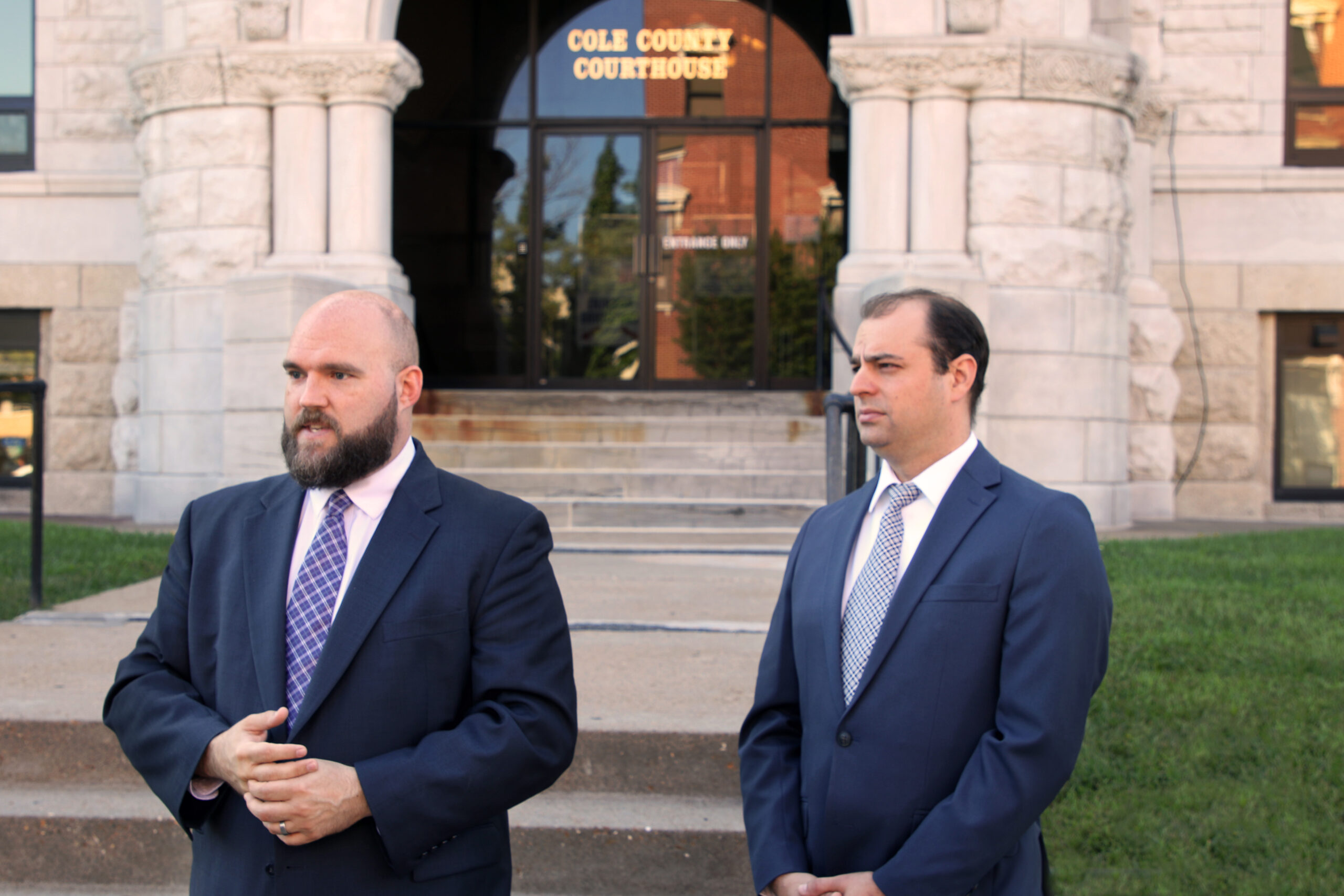
In this episode of the Show-Me Institute podcast, David Roland of the Freedom Center of Missouri, the Show-Me Institute’s Susan Pendergrass and I discuss the Sunshine Law lawsuit filed by our organizations earlier this week. We explore the facts and law surrounding the lawsuit, the lawsuit’s prospects, and the enormous importance of transparency on the part of government entities. Click here to listen to the podcast.


Why is Missouri’s Medicaid Enrollment Falling?

Since the beginning of 2018, roughly 120,000 people have left Missouri’s Medicaid rolls. It now looks like many of them shouldn’t have been there to begin with. As I wrote nearly six months ago, this “surprising” drop has puzzled policymakers and health care advocates alike. The majority of those no longer receiving services are children, which has fueled further investigation by the state’s Medicaid agency. This past week, Missouri’s Medicaid director released a statement explaining the agency’s view of the enrollment decline and admitted the change was no surprise after all.

Missouri’s governor and other state officials attributed the decrease in enrollment to the state’s improving economy. It makes sense that an improving economy would reduce the need for government-funded health benefits, as more people are employed today than were a year and a half ago. But as Missouri’s enrollment is declining faster than the national average, and the state’s economic growth remains lackluster compared to the rest of the nation, it is unlikely the economy alone can fully explain the drop in enrollment. I think the following point from the Medicaid director’s statement highlights an important yet under-discussed driver of the enrollment change:

From 2014 to 2018, a previous administration did not robustly verify eligibility requirements of individuals on an annual basis and therefore automatically renewed a significant number of enrollees, many of whom did not qualify for assistance . . .

In other words, the drop in Missouri’s Medicaid enrollment is not surprising because the program has been providing health coverage to individuals who did not meet eligibility requirements. This is a shocking admission from our state’s government, considering the federal government requires states to annually verify each participant’s Medicaid eligibility.

The extent of the wasteful spending remains unclear, but the fact it occurred is sadly unsurprising. A recent audit of the Medicaid program in Louisiana found that 82% of enrollees were ineligible at some point during the year they were enrolled. My colleagues and I have written about the state’s potential for wasteful Medicaid spending, and this report confirms our worst suspicions.

As Medicaid costs consume more and more of our state’s budget, limiting improper spending on ineligible individuals is essential. Policymakers should consider a new investigation into how much taxpayer money was wasted while wrongfully propping up the program’s enrollment in the first place.


Plugging the Port Hole

A recent column by Dave Helling in The Kansas City Star called for Kansas City Mayor Quinton Lucas to challenge Port KC, the city’s port authority, by asking for the resignation of the authority’s board of commissioners. Part of the reason was Port KC’s willingness to offer incentives to Google (a story we wrote about recently). This move apparently irritated the mayor, who had promised to rein in economic development subsidies.

The mayor’s irritation may have been exacerbated by Port KC CEO Jon Stephens’ reaction to the border war truce. He oddly offered that despite the truce, the port authority could “proactively recruit” businesses from the Kansas side of the border but that it wouldn’t. The quote does not present Stephens as a team player on economic development reform.

When asked if the port authority was just a way to grant tax incentives while avoiding city council and public scrutiny, Stephens answered [starts at 19:38):

I would say that that’s certainly is not something that I would consider. I view everything [Prima facie] on exactly what is the net benefit. And I can tell you that we’re working very hard on our social equity: how we roll out to communicate exactly what we’re going to do, how we’re going to do it, and how we’re going to communicate to the citizens and their elected officials.

I’m not sure what any of that means, but it’s a disappointment for anyone hoping the answer was simply “no.”

Even if the port authority is a subdivision of the state of Missouri, Kansas City leaders have the ability to rein it in. Its board is appointed by the mayor and state statute allows the city council to, “from time to time enlarge or reduce the area comprising any port district” with the approval of the Missouri Highways and Transportation Commission. Perhaps restricting future Port KC activity to within a quarter mile from the Missouri River is a good way to make sure that it cannot keep issuing incentives downtown or even, as Helling points out, south of Country Club Plaza. In appointing a new board, the mayor could make sure that within that quarter mile of the river, Port KC is acting in the best interests of taxpayers.

Missouri’s economic development policy is littered with legislative good intentions warped by subsidy-seeking developers and consultants. Such legislation must be revisited to clamp down on abuse. In many cases it’s the statutory definitions that must be revisited; in this case it may be port authority boundaries. Port KC has demonstrated it is unable—and perhaps unwilling—to restrain itself to development along the river. The mayor and city council—and perhaps the state legislature—should do it for them.


We’re Suing the State

This morning the Show-Me Institute filed suit against Missouri’s Office of Administration for violating the state’s Sunshine Law. A full explanation of the litigation can be found in the Kansas City Star today, but here’s a sneak peek at why we took this action:

Government entities may think they can get away with these excuses because too few citizens are able to invest the time money and emotional energy required to pursue a legal fight to keep these government entities transparent and accountable. We have determined that this case is a crucial opportunity to ensure equality in government transparency for all Missourians. It is but one of many such opportunities.

Click the link for the full commentary. More to come.


Why Is RideKC Entering The Electric Scooter Market?

It was a pleasant surprise to see a new company enter the burgeoning electric scooter market in Kansas City. However, upon closer inspection of the new orange and white scooters, it became obvious that they were not rolled out by a new company; these new scooters are controlled by RideKC. 

RideKC is the regional transit group responsible for the Kansas City streetcar. RideKC’s initiatives are largely funded by city taxpayers, and this latest venture is no exception. The cities of Kansas City, MO and North Kansas City, MO are both listed as public funders of the scooter project.

Eric Vaughan, bike share director for local advocacy group BikeWalkKC, commented on the scooter project:

RideKC is the only transit authority in the country that’s now integrating scooters as part of the regional transit network, which really goes to show how progressive our team here in Kansas City has been with their approach.

This raises an obvious question: If private companies are already putting electric scooters on the streets, why is taxpayer money being used so that the Kansas City transit authority can enter the market?

Bird is a company that consistently has scooters on the streets in Kansas City. Lime has had scooters in the area as well, and a company owned by Ford called SPIN will be placing scooters in Kansas City later this year. Scooters are widely available, and the companies’ use of private chargers and mechanics ensures that scooters are in good shape and located in well-trafficked areas. Lime’s 2018 year-end report claimed that 31,000 Kansas Citians used Lime scooters in a three month period.

The scooter market in Kansas City seems to be doing just fine without government help. If private companies are already providing services, why is our government spending taxpayer dollars on those services as well?


Movie Review: The Pursuit

If you’ve never watched Milton Friedman’s 1979 appearance on the Phil Donahue show, go watch it now. It is required viewing for anyone who is interested in free-market ideas and hopes to understand them. Better yet, let’s just say it is required for everyone. Friedman is lauded as one of the greatest champions of the free-enterprise system of all time. On Donahue, he was discussing his book, Free to Choose: A Personal Statement, which he co-wrote with his wife, Rose Friedman. He later released a 10-part television series with the same title.

In one of the more memorable exchanges of the interview, Donahue asks Friedman a question many are still asking today:

When you see around the globe, the maldistribution of wealth, the desperate plight of millions of people in underdeveloped countries. When you see so few “haves” and so many “have-nots.” When you see the greed and the concentration of power. Did you ever have a moment of doubt about capitalism and whether greed is a good idea to run on?

Friedman’s reply has become standard among capitalists like me. “Is there some society you know that doesn’t run on greed?”

Friedman continued:

You think China doesn’t run on greed? What is greed? Of course, none of us are greedy, it’s only the other fellow who is greedy. The world runs on individuals pursuing their separate interests.

The great achievements of civilization have not come from government bureaus. Einstein didn’t construct his theory under order from a bureaucrat. Henry Ford didn’t revolutionize the automobile industry that way.

In the only cases in which the masses have escaped from the kind of grinding poverty you’re talking about, the only cases in recorded history, are where they have had capitalism and largely free trade.

If you want to know where the masses are worst off, it’s exactly in the kinds of societies that depart from that. So that the record of history is absolutely crystal clear that there is no alternative way so far discovered of improving the lot of the ordinary people that can hold a candle to the productive activities that are unleashed by a free enterprise system.

In the years since the Donahue interview, the free enterprise system has continued to improve the lot of ordinary people. Yet today, possibly more than in Friedman’s day, Americans are showing support for socialist policies. Shockingly, a 2019 Gallup poll found that four out of ten Americans supported some form of socialism.

What happened? How can socialism be gaining popularity even as confidence in capitalism wanes? The problem is that a defense of capitalism like Friedman’s satisfies the head but not the heart. When people—especially young people—look around the world today, many of them see it as Donahue described it. As a result, they question the morality of capitalism.

Enter Arthur Brooks.

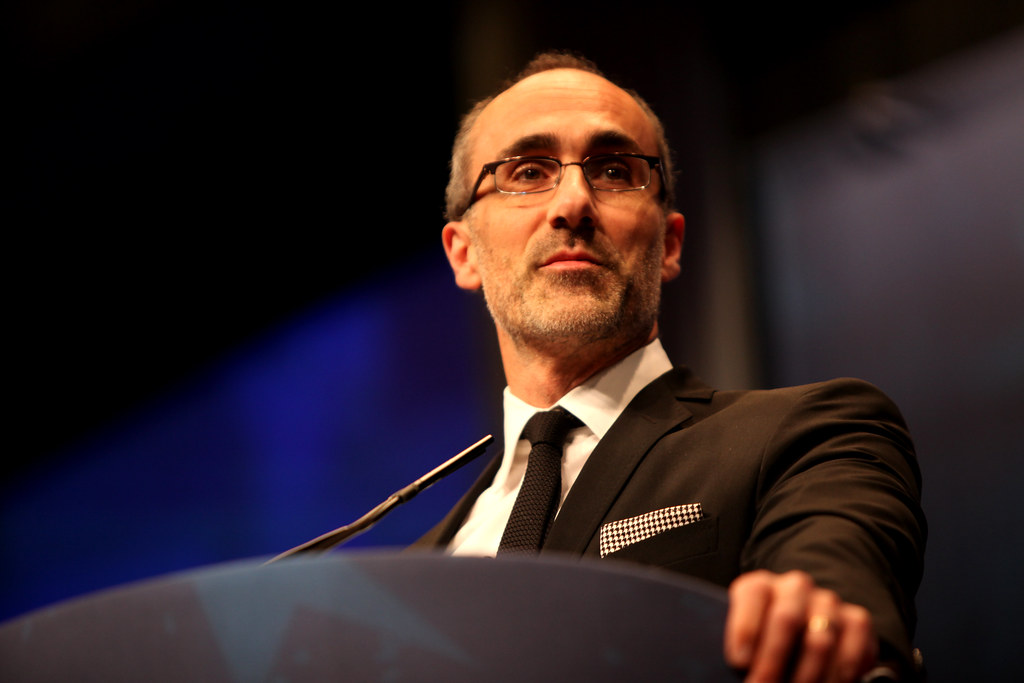
Brooks is the past president of the American Enterprise Institute, a social scientist, a former university professor, and a former professional French horn player. Yes, you read that right. Brooks has written best-selling books such as The Conservative Heart: How to Build a Fairer, Happier, and More Prosperous America and Love Your Enemies: How Decent People Can Save America from the Culture of Contempt.

Recently, Brooks released a documentary, The Pursuit, which is now available on Netflix.

In it, he asks, “From 1970 until today, the percentage of the world’s population living at starvation’s door has decreased by 80 percent. Two billion people have been pulled out of starvation level poverty. What did that?”

His answer is the same as Friedman’s—free enterprise. Indeed, the messages of Free to Choose and The Pursuit are essentially the same: No other system has succeeded like free enterprise in allowing people to direct their own destiny and pull themselves out of poverty.

The key difference between the two is that when Brooks discusses how to help the most disadvantaged, it’s clear that he’s making not just an intellectual argument but also an emotional appeal. He cares about human flourishing.  From the very beginning, he frames the argument for capitalism as a moral one, saying “the point of the American experience is basically a moral consensus that our society should push opportunity to the people who need it most. This is our pursuit, and it’s predicated on two fundamental moral principles: human dignity and human potential.” Brooks shows us this as he walks the streets of India, once a scene of abject poverty during the days of democratic socialism. Now, after free enterprise has been released, we see progress. Hindol Sengupta, editor-at-large of Fortune India, says it like this, “Capitalism allows human beings to choose an action to fulfill their own destiny. . . . Forget per-capita GDP—we didn’t even have per-capita hope.”  

None of this is to say Friedman did not care about the poor, but his arguments can come across as those of an academic. They are for the head. Through The Pursuit, Brooks provides the answer for the heart.

Add The Pursuit to your list of required viewing. Go watch it . . . after you watch the Friedman interview.


 

The More You Know

If your child is transitioning from middle to high school this fall, you might be wondering how many students at the high school graduate each year, or how many of them go on to college afterward. To find this information, you might look at the school’s report card. But many parents won’t be able to find such basic information in Missouri’s confusing school report cards.

Phi Delta Kappa recently released the results of its annual poll on education. The poll covered a lot of ground, but the results on school report cards raise some questions about Missouri. The poll found that when parents are aware of school report cards, 66 percent read them. Most parents said they have read a school report card within the past year. Eighty-two percent of responding parents found the report card useful after they read it. The positive responses to school report cards show that parents are looking for school information, and report cards can be an effective way to communicate it.

Missouri’s school report cards, which the Department of Elementary and Secondary Education (DESE) produces, are available on the DESE website. However, they pose significant challenges to readers. DESE’s school report card website is difficult to navigate and filled with jargon and technical language that can be time-consuming and difficult to understand.

For example, when the report card presents a large chart displaying results on the state’s standardized test, the Missouri Assessment Program (MAP), there are acronyms including “MAP-A,” “LND” and “HS MAPA” that are not immediately defined. It requires looking through other documents to find out that MAP-A is for students who took an alternative MAP assessment, and HS MAPA is the alternative MAP assessment for high school. Later in the report card, LND is defined as level not determined, even though the test results are the first time the acronym appears.

Why have other organizations found it necessary to step in to help provide school information to parents in Missouri? Other states have successfully produced user-friendly school report cards. Why hasn’t DESE?


Rest in Peace, Eric Dixon

Although the national news is focused today on the passing of a slightly higher profile figure in the free market movement, we at the Show-Me Institute are mourning a death closer to home. Eric Dixon, the good-humored former editor of the Institute, died unexpectedly this week at the age of 46. I had the opportunity to work with Eric when I arrived here in April 2011, and I considered his work to be always thorough and his door to be always open. He presided over the Institute’s book club, was an invaluable drafting and editing resource for young staffers, and left an indelible mark on the organization—and the market movement—in both obvious and quiet ways. He will be missed by many. On behalf of the Institute, our condolences to his close friends and family.

Support Us

The work of the Show-Me Institute would not be possible without the generous support of people who are inspired by the vision of liberty and free enterprise. We hope you will join our efforts and become a Show-Me Institute sponsor.

Donate
Man on Horse Charging