Update: St. Louis May Not Honor Earnings Tax Refund Requests

As recently as last month, it appeared that those working from home outside the city limits of St. Louis and Kansas City would qualify for a refund of some of their earnings taxes.

A subsequent piece in The Kansas City Star backed up my post. The Star reported:

City councilwoman Katheryn Shields, chair of the finance, governance and public safety committee, said the city didn’t have any plans to curb its longstanding refund process.

“The money is collected as usual, but then it’s upon the taxpayer to then reach out to the city and ask for a refund,” she said.

But this is apparently not the case in St. Louis. According to a piece in the St. Louis Post-Dispatch:

If you’ve worked from home in the suburbs during the recent coronavirus shutdown instead of driving to your office in the city, don’t expect a break from paying the St. Louis earnings tax.

City officials say telecommuters staying home due to the pandemic won’t be eligible to file for refunds of the 1% earnings tax for days they’re not at their desks inside the city limits.

The story suggests there may be court challenges to this position from members of the Associated Industries of Missouri, and Clayton attorney Bevis Schock is quoted as saying he strongly expects to file a class action suit next year if the city does not issue refunds. (Disclosure: Schock is a member of the Show-Me Institute’s Board of Directors.)

Researchers at the Show-Me Institute have argued for years that the earnings tax harms cities. But since both cities have chosen to keep the tax in place, they both ought to honor their policy of issuing refunds for days spent working outside city limits.

 

The Latest Show-Me Institute Podcast

On the latest Show-Me Institute Podcast, Dr. Susan Pendergrass is joined by Dr. Howard Wall. Dr. Wall directs the Hammond Institute for Free Enterprise and is a professor of economics at the Plaster School of Business & Entrepreneurship at Lindenwood University. They discuss the economic impact of the coronavirus pandemic on the St. Louis region and what a possible recovery looks like.

More on Moore’s “Planet of the Humans”

Michael Moore’s “Planet of the Humans” documentary has ruffled the feathers of environmental activists for over a month now. As I wrote recently, the film highlights the challenges that green energy faces. Many activists have clamored for its retraction from streaming services rather than engage in an open debate. Additionally, YouTube temporarily blocked the film on shaky copyright grounds.

The general public has largely been shielded from the challenges green energy faces, with much of the debate being left to behind-the-scenes energy analysts. By bringing these matters to the forefront, Moore’s documentary reminds us that while green energy has its place, it also has its limits.

For those wanting a closer look, I address these matters in more detail in a recent op-ed for Real Clear Energy.


Is This Town Big Enough for the Two of Us?

How much space should Missouri dedicate to energy production?

A study released earlier this year from the Brookings Institute drew attention to an often-overlooked aspect of electricity generation—land use.

The determining factor for the amount of land an energy source needs for its operations is power density. Power density measures the amount of land needed to produce a given amount of energy. Each energy source has its own power density. Fossil fuels are quite power-dense by nature, whereas wind and solar power are less dense by several orders of magnitude. In fact, wind and solar energy can require up to 100 times more space than a natural gas plant to generate an equivalent amount of electricity.

The power densities of several forms of electricity generation can be seen below. The higher the median power density (red dot) is, the less space it takes to generate electricity.

Power density graph

These results have important implications for Missouri. Land use for energy purposes was a contentious topic this past legislative session, with overt and covert attempts to block the developers of a wind energy transmission line from using eminent domain to acquire land.

Land is scarce and has competing uses. Currently, however, Missouri’s Renewable Energy Standard mandates an increasing amount of electricity be generated by the least power-dense sources. The Standard requires 15 percent of electricity come from renewable sources by next year, and an initiative petition circulating proposes to increase that number to 50 percent by 2040. Meeting these mandates would require either a significant buildout or utilities buying power from out of state.

The scholars who created the above graph note that “increasing the U.S. renewable energy portfolio will increase land-use, presenting challenges for other sectors such as agriculture.” This concern is especially relevant for Missouri, as agriculture, forestry, and related industries are among Missouri’s top industries and constitute 10 percent of the state’s employment. Missouri is one of the top states in the country for farm operations, soybean production, and beef cattle production, with farmland constituting two-thirds of state land area.

Missourians should be wary of green energy mandates that require massive land use. Shouldn’t land use  be driven by fair competition and markets, not government mandates?

Accountability for Algebra

Walking across the stage, shaking the principal’s hand and receiving a high school diploma is a dream for many students and a proud moment to end a high school career. But what does that high school diploma really mean? According to the Missouri Department of Elementary and Secondary Education (DESE), fewer than half of Missouri high school graduates are college and career ready.

What may be even more concerning is performance on the Missouri End-of-Course Exam (EOC) testing. EOC results are “(The) information used to diagnose individual student strengths and weaknesses in relation to the instruction of the Missouri Learning Standards (MLS), and to gauge the overall quality of education throughout Missouri,” prior to graduation. Unfortunately, the results showed that in 2018–19 a quarter of high school students tested in Algebra I, the ninth-grade math level, scored below basic on state standards. This means that more than 15,000 students showed “minimal understanding.” The number of students scoring below basic in Algebra I has risen slightly in the years leading up to 2018–2019.

What happens to the students who score below basic? Their classroom grade, not the state tests, determine whether they are promoted or not. Most of the time they move on to the next math class required for graduation, leading to many students unprepared for the more difficult math courses and to schools not being held accountable for addressing achievement gaps.

If the EOC tests really are used to “diagnose individual strengths and weaknesses” and to gauge “overall quality of education” in Missouri, then it is time we do something with that information.

Schools must be held accountable. Students who score below basic should not be passed on to a higher-level math course. Instead, individual schools must be responsible for reteaching that student until they have demonstrated the basic level of content mastery in state standards. Students may demonstrate basic proficiency by retaking the EOC after a school has retaught the material. Options include a summer school reteach or a 10th grade retake that would not delay graduation as the state only requires 3 years of high school math.

A doctor would not just diagnose a patient with a condition and leave them untreated. Why should our schools be allowed to pass students on when scores clearly indicate they are falling behind?


How Much History Do U.S. 8th Graders Know? Not Much.

Our nation is in the midst of a battle over free speech, the right to protest, and what differentiates a protest from a riot. But even as thousands take to the streets to exercise their democratic rights, the sad fact is that most students leave high school with very little knowledge of how government works.

The results of the 2018 National Assessment of Educational Progress (NAEP) exam revealed that just 24 percent of U.S. eighth-graders scored proficient or advanced on the civics exam. On the NAEP history exam, a mere 15 percent of eighth-grade students scored proficient or advanced. These results indicate that a majority of students are not well versed in the topics that are critical to understanding and contributing to American democracy. Unfortunately, these rates have stayed fairly consistent since 1998, in both subjects.

A higher percentage of private school students scored proficient or above in civics and history than public school students. In 2018, 41 percent of private school test takers scored proficient or above in civics, whereas only 23 percent of public school test takers scored proficient or above. On the history exam, 29 percent of private school test takers scored proficient or above, while only 14 percent of public school students did. Based on these results, while not impressive, private schools seem to be doing a better job teaching history and civics to their students.

A solid civic education is important for a healthy democratic society. Students can learn how to participate in the political process and apply historical context to current issues. Civic knowledge can also support students’ career goals and prepare them for future political, cultural, and business leadership roles. We need to hold our schools accountable for failing to teach kids these important lessons.


Federal Money for Roads and Bridges Won’t Fix Missouri’s Real Problem

A few months ago, Congress mulled a coronavirus spending bill focused on infrastructure for a so-called “Phase IV” package. While the proposed bill is on hold, it could resurface and Missouri should take note.

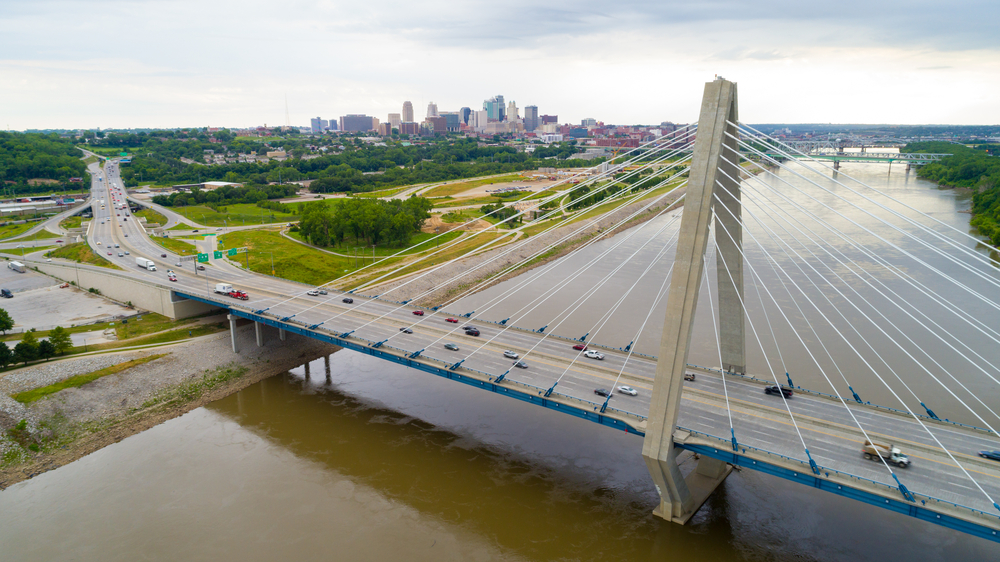
Both chambers of Congress had previously proposed infrastructure bills with roughly $300 billion dedicated to highways and bridges. Despite funding mechanisms not being finalized, the president has expressed support for an infrastructure bill, indicating similar bills may come up again in the near future. On a smaller scale, the Missouri Department of Transportation (MoDOT) received $61.7 million from the CARES Act.

Considering that MoDOT is routinely short on funding for road and bridge maintenance, more money is welcome. However, it won’t solve the long-term problem.

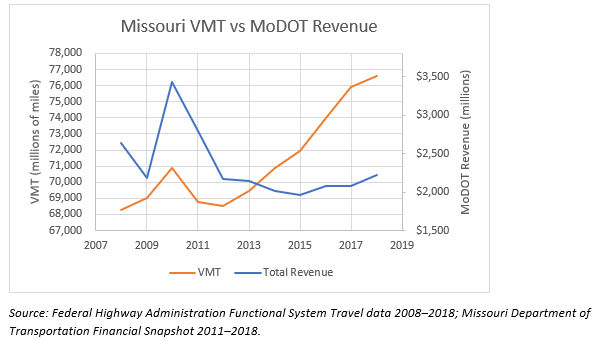
MoDOT faces a $745 million shortfall annually in “high-priority unfunded [road and bridge] transportation needs,” and roads and bridges are vital to Missouri’s economic and physical security.

Overreliance on federal money helped create MoDOT’s budget shortfall. Large federal stimulus packages are infrequent. The last stimulus money from the 2009 stimulus package came and went in a mere two years.

Depending on once-a-decade disaster dollars to adequately fund road and bridge maintenance is a poor strategy.

While additional infrastructure money will likely help, Missouri can help itself more by funding transportation through a self-sustaining method. Show-Me Institute analysts have long advocated for the expansion of user fees—like gas taxes or tolling—as a way to fund road and bridge maintenance. By tying the costs of driving to the costs of upkeep, MoDOT would have a more consistent revenue stream to perform necessary duties, as well as ensuring enough state funds are raised to receive matching federal funds.

Missouri can make itself less dependent on federal funds and provide MoDOT the funds it needs to keep our roads and bridges properly maintained. Potential federal infrastructure spending should not distract us from this goal.  


Immediate Education Legislation Needed for Special Session

Currently, Section 161.670 of the Revised Statutes of Missouri (part of a course access law passed in 2018) requires that parents of students who wish to enroll in the Missouri Course Access Program (MOCAP) request and receive permission from their local school district first. In the first two years after passage of this law, dozens of parents have been denied this permission and some have had to hire attorneys to get it. Districts were reluctant to give up students or funding to virtual education. That was then, this is now. With every public school in the state shut down and every student expected to learn virtually (if at all), we need to make immediate changes.

A scan of school districts across the state has revealed that, during the shutdown, far too many districts provided no coordinated or curated curriculum, and many of those that did simply distributed homework packets. Admittedly, shutting down every public school in Missouri was a massive shock to the system. Teachers were not prepared to completely change their approach to instruction. Many students and teachers lacked the necessary technology to make learning happen. Public education in Missouri has simply drifted into “hold harmless” territory—for teaching, for grades, for attendance, and for funding.

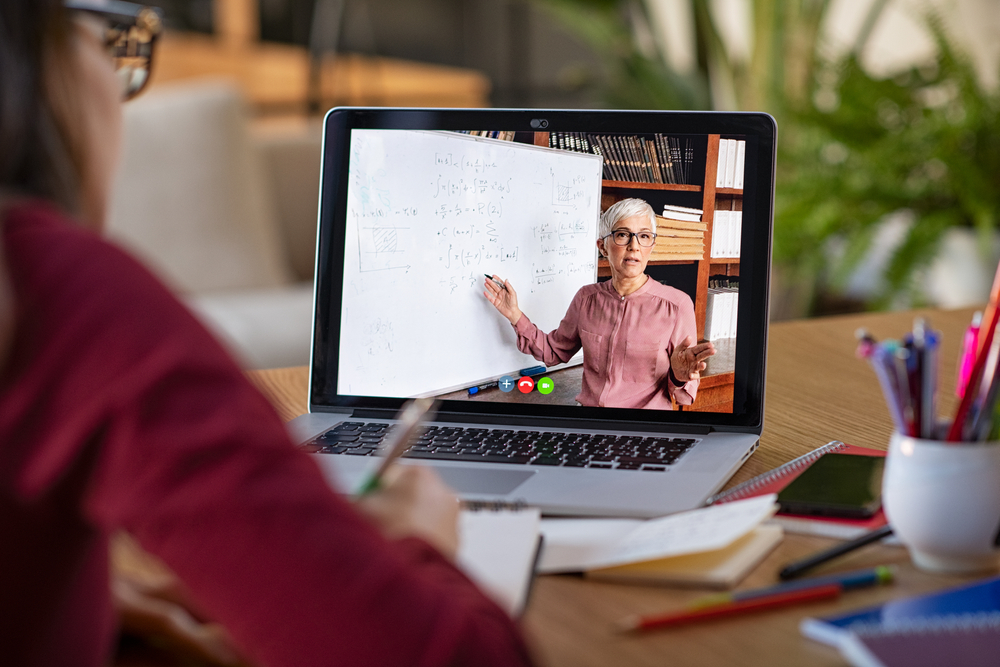
As school districts reopen this fall, parents need to be able to easily and seamlessly access options other than an in-person education at their child’s assigned public school (or whatever each school or teacher is able to provide for an alternate method of instruction). MOCAP has ten approved providers with full-scale virtual coursework already up and running. Any Missouri student who chooses should be able to directly enroll with any of these approved providers, and state funding for that student should directly follow them without going through the district first.

National surveys indicate that a significant percentage of parents plan to continue to have their child learn from home in the fall, which will actually help schools meet the conditions for reopening outlined by the Centers for Disease Control. There is absolutely no reason why Missouri parents should be forced to jump through an extra hoop during this time of crisis to obtain an education for their child.


Embracing Telemedicine Requires Permanent Change

COVID-19 may be changing America’s health care industry forever. As hospitals and providers search for ways to safely treat patients in our new landscape, telemedicine is poised to assume a larger role.

For the past few months, Americans have been asked to stay at home, even in situations where they’d normally go to a doctor. Telemedicine was proposed as a solution to this problem—patients could access the benefits of an in-person medical visit without potentially exposing themselves to the virus. So far, consumers are responding.  Just last week, Blue Cross Blue Shield of Massachusetts reported the demand for telemedicine has skyrocketed, with a 190-fold increase in daily claims and most patients indicating a willingness to use the service again.

Now that consumers and coverage providers recognize the value of telemedicine, the government needs to get out of the way in Missouri. Prior to COVID-19, Missourians faced various barriers to receiving telemedicine services. First, it was limited to doctors already licensed in the state. And second, the doctor was required to physically see the patient in person before they could treat them using telemedicine.

In response to COVID-19, Governor Parson quickly waived those telemedicine requirements. By removing these requirements, Missourians were ensured greater access to care. This move also implicitly acknowledges the negative effects of current law. This past legislative session, Missouri’s policymakers took the strong step of granting license reciprocity to doctors from other states, but hurdles still remain for telemedicine professionals who wish to provide care in our state. Without further action, the currently waived regulations will return once the governor’s emergency declaration expires.

States across the country and health coverage providers alike are warming to telemedicine. Even though our state’s businesses are beginning to reopen, a return to normalcy may not be achieved by many for quite some time. It’s important that those who need to limit their potential exposure to the virus can maintain access to health care services. One of the best ways to do that is to embrace telemedicine and remove the current barriers permanently.


Support Us

The work of the Show-Me Institute would not be possible without the generous support of people who are inspired by the vision of liberty and free enterprise. We hope you will join our efforts and become a Show-Me Institute sponsor.

Donate
Man on Horse Charging