Prop 13 Comes to Missouri

California’s Proposition 13 was enacted in 1978 as a reaction against high property taxes and some dramatic increases in tax assessments year over year. Prop 13 restricted annual increases in the assessed value of property, and state and local politicians have chafed under its restrictions for years—often blaming the proposition for their inability to raise revenue. Taxpayers, however, still support the measure. Now Missouri is considering something similar.

The recent spate of dramatic hikes in assessed value in Jackson County, in which Kansas City sits, is the reason for the renewed legislative interest. In addition to an excess of 14,000 formal appeals filed against Jackson County assessments by property owners, the county has drawn separate lawsuits from the ACLU and Legal Aid of Western Missouri.

As a result of this, there have been several bills introduced in the Missouri legislature that place caps on increases to a property’s assessed value. Several joint resolutions were introduced that would amend the Missouri Constitution along similar lines. One initiative petition would eliminate the ability of the state and localities to collect property taxes altogether.

Writers at the Show-Me Institute have written about problems with property tax assessments for years, going back at least a decade. There are many reasons for the situation at hand, including a determination by the State Tax Commission that assessments in Jackson County were too low. Another may be that taxing jurisdictions are struggling to provide services because economic development policies such as tax-increment financing and property tax abatements divert funds away from taxing jurisdictions and toward wealthy and well-connected developers. Kansas City area library systems have sought to increase their levies in recent years to address this. The Kansas City Public School district is uniquely exempt from having to reduce its levy when assessments go up—it will see an increase in revenue due to the new assessments.

Regardless of the cause for the increased assessments, cities and counties are likely to strongly object to any effort to curtail their ability to collect property taxes. They will talk about how doing so will harm their ability to fund basic services such as public safety and schools. Unfortunately, their practice of diverting tax dollars to private interests undercuts that claim. Local leaders must be dedicated to collecting public funds for public purposes or not collecting them at all—lest they face a Prop 13 of their own.

 

Words Matter

Have you ever seen a word that you use all the time without thinking about it and paused to consider what it actually means? That happened to me recently with the word “accredited.” I think it was because I saw a sign saying that the Metropolitan Police Department of the City of St. Louis is “internationally accredited.” I live in the City of St. Louis and, quite honestly, I was a bit stumped by that sign and what it could possibly signify.

I remember having a similar feeling the first time I saw a “fully accredited” banner hanging on a school. It was in 1998 and my 3rd grader’s school had just completed its very first year of standardized testing in Virginia. I was glad to see that her school was fully accredited, but I really had no context for what that meant. Of course the word is now fully embedded in the public education lexicon and parents are used to seeing it. Yet I’m not sure that it conveys any more real meaning to parents today than it did to me twenty years ago.

That is especially true in Missouri.  The Missouri Department of Elementary and Secondary Education (DESE) has made a decision—or set of decisions—that has resulted in 99 percent of Missouri school districts being fully accredited. If a word applies to everyone in a group, then it loses all meaning in distinguishing between the members of that group.

DESE plans to replace the current system of standards and accountability, MSIP 5, with a new one, MSIP 6. There’s an opportunity for the new system to have words that actually mean something—maybe “not meeting expectations,” or “exceeding expectations.” Better yet, the new system could assign letter grades to schools. Most parents understand what an “A” or a “D” means.

Recently, DESE released a 21-page document describing the planned MSIP 6. Unfortunately, clarity and meaningful words do not seem to be a priority in the new system’s design. It contains statements like (italics mine), “Instructional staff [will] design and use appropriate, meaningful, and rigorous learning tasks for each student,” and “School system and building leaders use an intentional feedback system to improve and refine performance,” and perhaps the most perplexing “Educator teams [will] act reflectively.” This is the system that will be used to determine school quality. There’s nothing wrong with any of these tasks, but how is this going to help a parent (or any other stakeholder) learn anything about the quality of their child’s school?

Thinking about the word “accredited” and how confusing it was to me reminded me of this. The more we use words that obfuscate, the more likely that parents will only be able to rely on their gut or the grapevine to gauge their child’s school. DESE has a responsibility to fix that.


Dear User Fees: What’s Your Greatest Strength?

Show-Me Institute analysts have written for years on the benefits of user fees in funding a transportation system. User fees ensure that the people who use things are the people who pay for those things.

But what about the benefits of different types of user fees themselves? Gas taxes and tolls are the two main transportation user fees, and each has different advantages.

The biggest advantage of a gas tax is that it pays for the upkeep of all roads in the state, whereas tolls only fund the road the toll is located on. In Missouri, any purchase of fuel to drive on any road helps fund the maintenance of all of them. Proportionally, 70% of gasoline taxes fund state highways, while the remaining 30% goes to local and county governments for their own road upkeep.

An additional benefit of a gas tax is that it is already in place in Missouri, in contrast to tolling.

The benefit of tolling is that it matches the amount of road damage a vehicle does to the amount the driver contributes to the road’s upkeep. The heavier the car is (heavier cars do more damage to roads), the higher the toll. Additionally, drivers pay comparable amounts regardless of the fuel economies of their vehicles, since the cost is based on the wear of the car on the road.

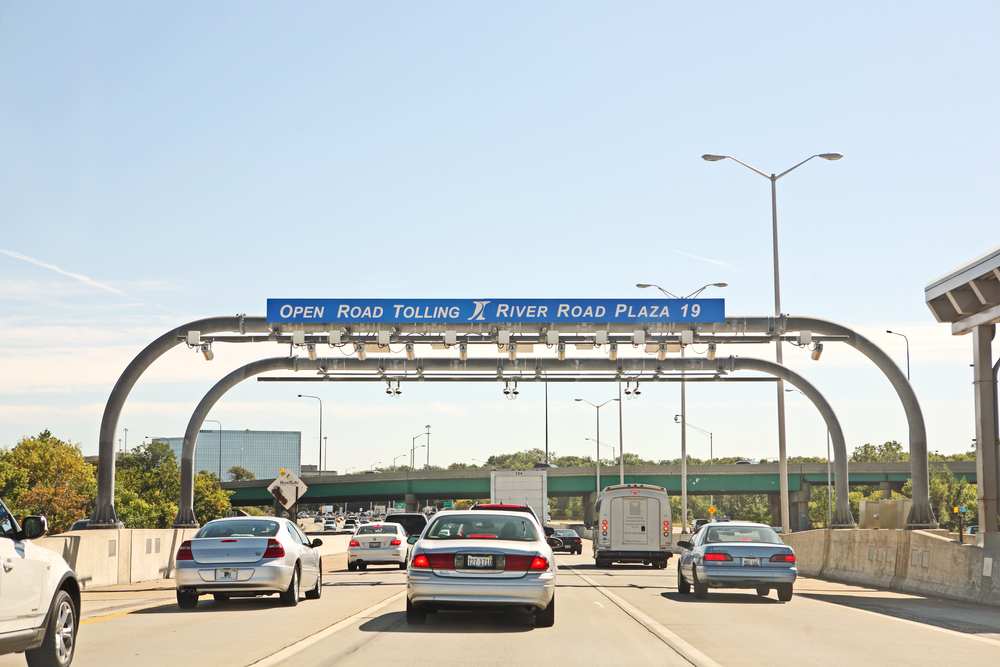
Tolling can also help relieve traffic congestion. Congestion is estimated to cost Missourians up to $575 million per year. Tolling can save time and fuel wasted from idling while also decreasing air pollution. Most congestion pricing programs use electronic tolling, and as some drivers will choose not to pay the fee to drive on a busy road, average road speeds increase leading to clearer road conditions and better use of fuel.

The benefits of user fees are clear. Matching the costs of services to their use is an effective way to make sure our roads and bridges have the funding they need to stay in shape.


Medicaid’s Value Problem

Missouri’s Medicaid program is getting a poor return on each taxpayer dollar, and that is a serious problem. A report commissioned by Missouri’s Department of Social Services concluded as much, stating: “Dollars spent in the program are not well aligned with value received from the delivery system.” As Medicaid costs are expected to rise again in the coming fiscal year, it is imperative that Missouri’s policymakers reckon with the audit’s conclusions and ensure each tax dollar devoted toward the program is being spent wisely.

What’s driving Missouri’s Medicaid value problem? To answer that, it’s helpful to start with the basics and look at who the program is covering and how the cost of care is being paid for. Missouri’s Medicaid program is responsible for the health care costs of more than 850,000 of the state’s most vulnerable residents. The way in which those health care services are provided is called the delivery system. In Missouri, the two primary methods are fee-for-service and managed care delivery systems.

When a Missourian enrolls in Medicaid, their eligibility criterion largely determines which delivery system will be used for their coverage. Individuals classified as aged, blind, or disabled are covered under fee-for-service, while everyone else is enrolled in managed care.

The fee-for-service system works the way it sounds; each time an eligible recipient receives a Medicaid-covered service, the provider of that service is reimbursed by the state at a previously agreed upon rate. Managed care works differently; instead of paying for each individual service, the state pays contracted health insurance companies a monthly rate, and the insurance company then negotiates a rate with providers to reimburse for each service its enrollees receive.

The division of recipients may play an integral role in explaining the existing systemic failure. The current arrangement puts the relatively healthier populations into plans that require monthly payments whether care is provided or not. And the populations with the most complex medical needs  are placed into a system where the state is left deciding rates and reimbursing for each expense.

There’s little evidence to suggest this is the best possible division, or that either of the current systems can increase the value received for each tax dollar spent. Another conclusion from the report mentioned above stated: “. . . methods to pay providers lack incentives to contain costs or enhance quality.” This is another way of saying that reining in Medicaid’s costs or improving the program’s efficiency is unlikely unless policymakers consider reforming the state’s delivery systems.

In other words, the current system is failing in important ways, and that failure cannot be reversed without substantial changes in the way the system is run. In future blogs I’ll expand on the problem and suggest solutions. For now, I’ll ask this question: When will there be a real concentration of effort in Jefferson City to address this problem? Will it receive the attention it deserves in the 2020 legislative session—or will the can be kicked down the road yet another year?


Why Does Missouri Make it So Difficult?

In Missouri, it may seem like school choice is only for Kansas City and St. Louis, since they are the only two districts in the state with charter schools. However, there are areas in the rest of the state where thousands of students could benefit from more educational options. One such area is Springfield. The Springfield Public School (SPS) District and Missouri State University (MSU) are collaborating to open a school of choice for SPS students, an agricultural-focused magnet school. This new school has gained financial and district support, signifying that there is plenty of demand for educational options in the state.

Magnet schools are public schools that have a specialized focus, like STEM or the arts. They will often have admission and retention requirements, such as a minimum test score or GPA for students. Charter schools are another form of public school choice; they are granted autonomy and accept all students who apply. If a magnet school can get millions of dollars and support in Springfield, why does Missouri stifle the growth of charter schools, which could serve students outside of Kansas City and St. Louis?

I bet there have been many other ideas from would-be school leaders across the state on how to create new opportunities for students with an innovative school, but Missouri has been hostile to expanding school choice. Students in Springfield are fortunate enough to soon have access to another option. Unfortunately, many other Missouri students don’t have the chance to pick an education that’s right for them.


Don’t Just Talk the Talk

With all the excitement of the legislative session starting, let’s not forget about the Interim Committee on Tax Credit Efficiency and Reform. It was reported last month that the committee, created last year will continue during the legislative session. Given Missouri’s large, convoluted, and distortionary tax credit programs, it’s great that this committee will continue, provided some real reforms come about.

As summarized in The Missouri Times,

. . . the committee will look at the social and cost analysis benefits of Missouri’s tax credit programs, its return on investments, economic development incentives, and other goals for tax credits…. Additionally, the committee will establish metrics for tax credits to decide whether to continue, expand, or eliminate certain programs.

This sounds like exactly what Missouri needs, but as was said when this committee was created, we need a little less conversation and a little more action. Show-Me Institute researchers have been pointing out problems with  various tax credit programs for years.  These programs distort incentives and give economic power to government officials. Plus, the data often show that the projects don’t deliver their promised return on investment. If an extension of this committee brings about reforms that we desperately need, then I’m all for it. But let’s not waste anyone’s time if we are going to get another report that just sits on a shelf and gathers dust.  


Like Oil and Water

Talking about school choice in Missouri often feels hopeless. A common attack on school choice efforts in Missouri is “Most of our schools are rural and school choice doesn’t work in rural areas.” The first half of that statement is true. Of the 518 school districts in Missouri, 367 (over 70 percent) are considered rural by the U.S. Department of Education. And 130 of those are considered “rural remote,” meaning that the district is more than 25 miles from an urbanized area.

In these districts, there is only one school that serves each grade. The schools also serve as community centers, gyms, and local concert venues. The students may travel long distances on the bus each day. The superintendent probably knows every student and their family. These districts, I’m told, don’t need charter schools or private school choice. For the students in these schools, the same system and curriculum that served their parents and grandparents is fine.

But is it? The world is changing very quickly. Today’s high school graduates need sophisticated skills just to pursue a trade or a career in agriculture. College coursework requires a solid foundation in English and math. Yet many rural high schools don’t offer upper-level coursework in either. 

Choice takes many forms for those who are open to it. In Texas, for example, three remote rural districts have decided to collaborate and form a “Rural Schools Innovation Zone.” Like rural districts in Missouri, the superintendents in these districts don’t want to hear more about consolidation. Rather, they want to give their students the best chance at success. The schools in the zone will share resources and ideas, and students in the zone will have access to any of the pathway programs offered by the three districts, all while remaining separate and distinct school districts. These school districts are innovating by acknowledging the benefit of choices that go beyond what each of the districts offers individually. And, fortunately, they have the support of their school boards.

If we consider the past to be prologue, then we can find confidence that a statement like “That won’t work here” will eventually motivate those who don’t believe it to prove it wrong. In Missouri, that’s going to require finding communities that are open to innovation. I know they’re out there.


Fare Free Public Transit? Not so Fast

A version of this op-ed was published by the Kansas City Star.

Kansas City, Missouri, made news around the country last month with reports that city officials had done away with fares on its municipal bus system. But neither the announcement nor the results the city can expect are as clear-cut as they first seem. The reality is that Kansas City has not adopted a fare-free bus system, nor has it considered the broader implications of doing so. In fact, city leaders have no idea how they will pay for it.

What actually happened: Kansas City’s City Council instructed the city manager to work with transit officials on a policy that would “include a funding request in the next fiscal year budget to make fixed route public transportation fare free within the City.” The city’s next fiscal year does not begin until May 1, 2020.

One reason for all this is the 2.2-mile streetcar the city completed in 2016. Its operations and administration are independent from the bus system and are funded through sales taxes, assessments on property along the route, and additional support from the city’s general fund.

The streetcar, which is free to ride, also receives $2 million from sales taxes meant to fund regular transit. It’s viewed by many as a free party bus for tourists, operating alongside buses that low-income workers must pay to use for trips to work and school.

Advocates of the free-fare transit proposal argue that the move to ditch fares on the bus system would address inequality without risking a drop in ridership that a streetcar fare would cause.

Locally, the idea has been making inroads for a while. Free bus passes became the norm for veterans two years ago, and last year the system offered the same to students. The Authority claims that over the past few years, 23 percent of riders have paid no fare.

Making the entire system free may be attractive to transit advocates, but it’s a move with risks—risks that seemingly haven’t been assessed. This was underscored when, in an interview with local newspaper The Pitch, Kansas City Area Transportation Authority CEO Robert “Robbie” Makinen offered, “Just because nobody else is doing it, that’s not a reason for us not to do it. What’s wrong with trying it? What’s the worst thing that happens? It doesn’t work, and Robbie gets fired.”

But the idea isn’t new, and that’s not the worst that can happen.

Other cities have tried fare-free bus service—and abandoned it. A 2002 study by Jennifer Perone and Joel Volinski of the Center for Urban Transportation Research concluded:

. . . (A) fare-free policy might be appropriate for smaller transit systems in certain communities, but is ill-advised for larger transit systems in major urban areas because experience shows that in larger systems, a tremendous amount of criminal activity, as well as a sharp increase in ridership, caused higher maintenance costs, labor costs, and operational costs and drove away existing riders.

In a 2012 book, “Implementation and Outcomes of Fare-Free Transit Systems,” Volinski detailed a fare-free pilot program in Austin, Texas. Ridership increased by as much as 70 percent, but there were issues of, “overcrowded buses, disruptive passengers, and unhappy bus operators.” The program was discontinued. Denver tried a similar program, saw the same results, and discontinued the effort.

Riders get it. According to a 2019 TransitCenter surveys of passengers around the country, “most low-income bus riders rate lowering fares as less important than improving the quality of the service.” (KCATA is undertaking its own “comprehensive review and redesign of transit service,” which included a survey, but as of this writing, KCATA has not completed the review or shared with me any questionnaire of passengers.)

Then there is the cost of going fare-free, estimated between $8 million and $12 million annually in Kansas City.

Given the ridership increase in other places that have tried it, the transit authority will need to cover not only its current fare box revenue, but also the costs of serving increased demand. During legislative discussion on the resolution, Kansas City Mayor Quinton Lucas suggested returning the $2 million currently diverted to the streetcar. Councilwoman Kathryn Shields offered an amendment, adopted by the Council, that also instructs the city manager also to report how this potential budget outlay will impact other city services.

Again, none of this is known.

Good policies go beyond good intentions—they serve a public need with as few negative consequences as is possible. Our national experience with large-scale, fare-free transit has been a bumpy ride. Kansas City needs to consider all the options and trade-offs before adopting such a significant policy change. Reporting on the matter suggests that this has not yet been done.


Show-Me Chairman Confirmed to Federal Director Role by U.S. Senate

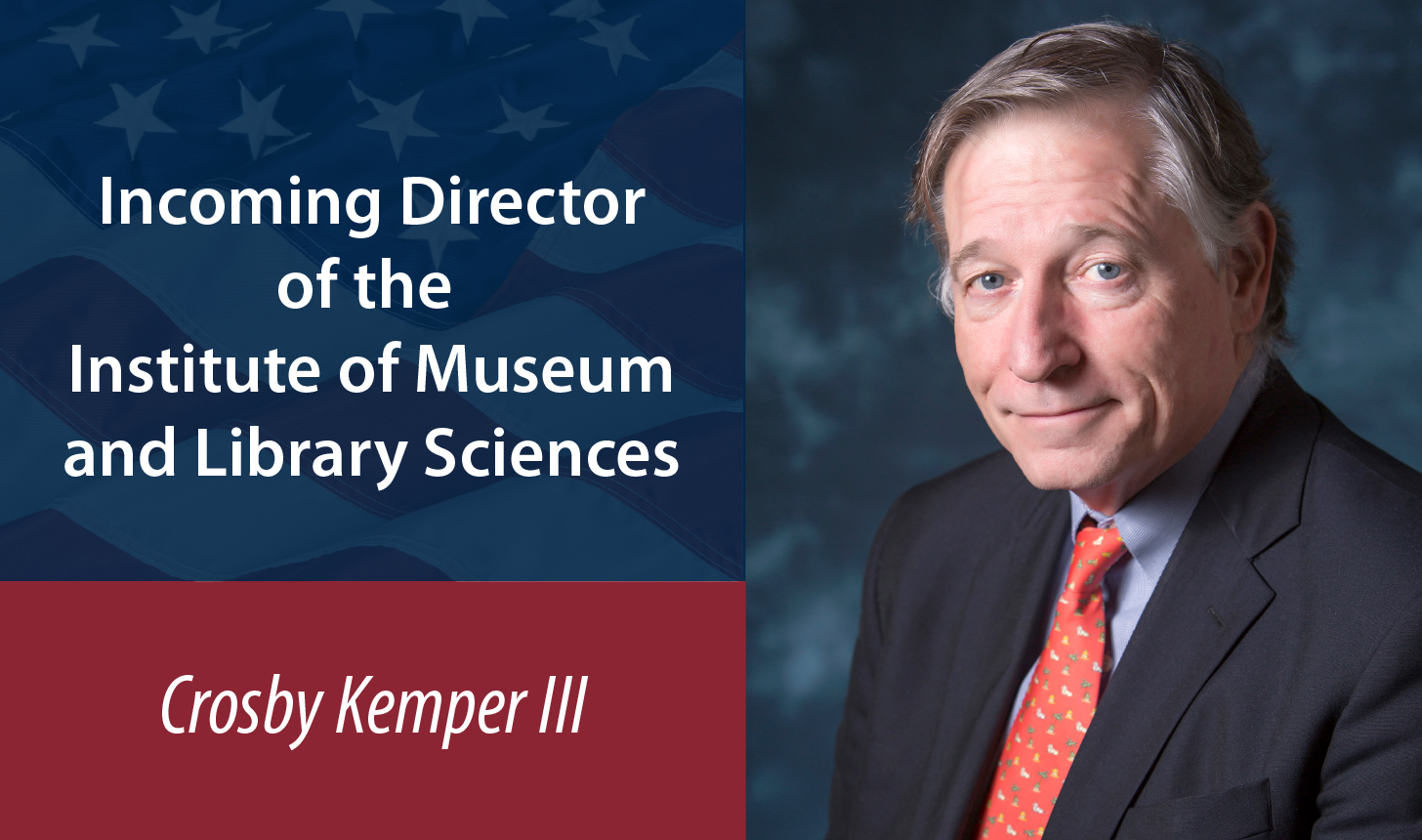
Today, I’m honored to announce that one of the Show-Me Institute’s founders, R. Crosby Kemper III, has been confirmed by the United States Senate to be the next Director of the Institute of Museum and Library Services (“IMLS”). A federal agency established in 1996, the IMLS pursues a mission “to advance, support, and empower America’s museums, libraries, and related organizations through grantmaking, research, and policy development.”

This position requires Crosby to leave the Institute’s board of directors and his role as its chairman—a loss for our organization, but a gain for our country. I will not attempt to capture everything that Crosby means to us, and has meant to us. I will only say that his deep intellect, thoughtful counsel, good humor, and earnest engagement will be missed in the halls of Institute. The IMLS receives a happy warrior for—and tenacious defender of—our country’s educational and research institutions.

Crosby, best of wishes on your new adventure, and know we’ll keep a light on for you here.

Support Us

The work of the Show-Me Institute would not be possible without the generous support of people who are inspired by the vision of liberty and free enterprise. We hope you will join our efforts and become a Show-Me Institute sponsor.

Donate
Man on Horse Charging