

Memorial Day 2020

St. Louis Lawmakers Should Stay Out of Business Decisions
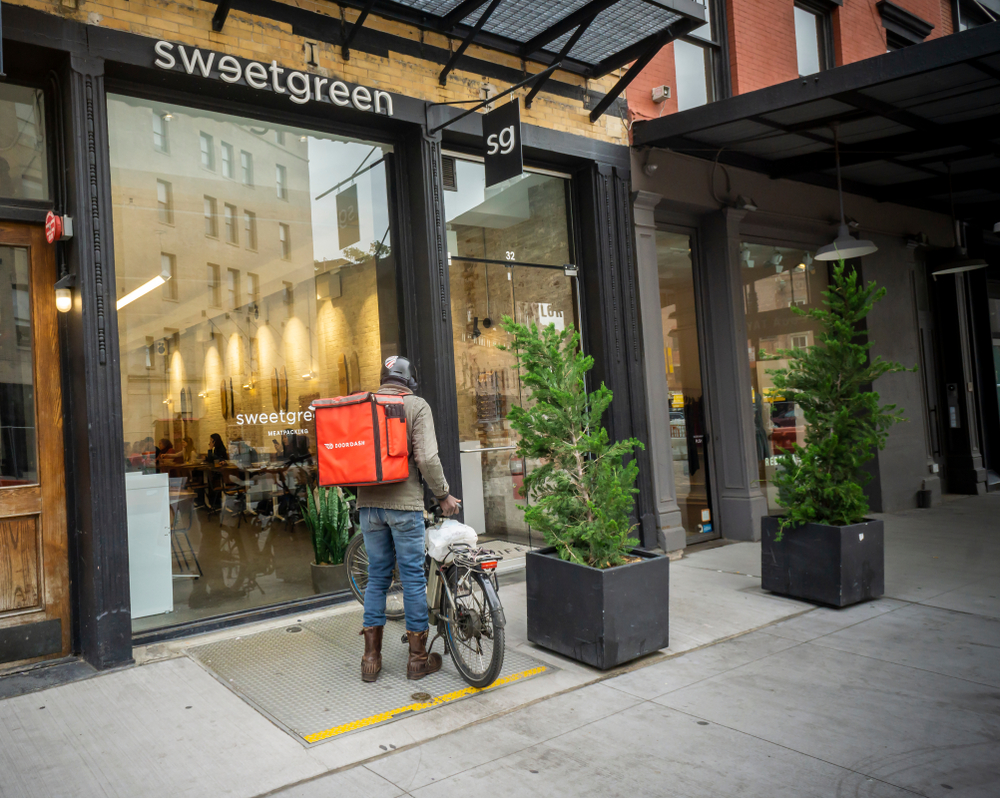
A St. Louis Alderman has submitted a board bill that contains a number of measures relating to food delivery services. The part that seems particularly egregious is a mandate that caps delivery fees that third-party delivery services can charge restaurants in the city at five percent. For those unfamiliar, third-party apps like DoorDash and Postmates will deliver food to customers on behalf of restaurants, but they charge restaurants a delivery fee for the service.
This proposal is an attempt to protect local restaurants by giving them a larger share of revenue earned, but it’s a governmental overstep; government should not be involved in these agreements between private businesses.
This excerpt from a St. Louis Post-Dispatch article highlights two important points:
. . . depending on the contract negotiated between an eatery and an app platform, the platforms sometimes charge anywhere from 25% to 50% per item.
The first point is that the contracts were negotiated between a restaurant and a food delivery service, meaning that the delivery rates were agreed upon by both parties. Neither was forced to comply, and either could have backed out if they deemed the deal harmful for their business. Why mandate different rates when the rates were agreed to voluntarily by all parties involved?
This brings us to the second point from the excerpt: The agreed-upon delivery fees seem to be well above the proposed five-percent cap right now. The current rates, no matter how high, are the product of negotiations in the market. The five-percent cap seems to be an arbitrary number that would allow lawmakers to drastically change a market and pick winners (restaurants) and losers (delivery services).
And what happens if we cap the delivery fee? We would probably see delivery drivers being paid less, and fewer delivery drivers in general. We would also see fewer options for delivery in the City of St. Louis, as it wouldn’t be profitable for delivery services to work with city restaurants. This industry is already struggling mightily when it comes to profit; most food delivery services lose money and the big companies stay afloat due to heavy venture capital investment.
This proposal, if passed, would be a bad move for St. Louis businesses and consumers. If two businesses have agreed to a delivery rate, why do lawmakers need to insert themselves into the situation? Lawmakers should let the market work.
An Incentive Package for Tesla May Not Benefit Joplin

Tesla is in search of a site for a new manufacturing plant, and Joplin has put itself in the running by offering $1 billion in incentives. The website that Joplin created lists the incentives, which includes a tax abatement for 12 years, tax credits, and sales tax exemptions. It seems Tesla would benefit from this deal, but would Joplin?
Measuring the success of economic development packages is challenging because it’s almost impossible to tell if any growth is actually due to the incentive package. Economic growth may have occurred without the incentivized project and new projects can happen without incentives. Research suggests that 75 percent of incentivized firms would have made the same location choice even without the incentive.
On top of that, the incentivized investments don’t always pay off. Tesla plans to build a large factory that could employ up to 7,000 people, but we’ve seen companies fail to live up to promises before (such as with Cerner in Kansas City). There’s really no guarantee that new jobs or infrastructure will come to the city as promised. Even if the jobs or infrastructure do arrive, it still might not be a net positive for the city, given the cost of the incentives. One study found that the costs and benefits of incentive packages are typically the same.
As I’ve previously pointed out, it’s probably not the best time to be giving out incentive packages. Government budgets are expected to be extremely tight due to COVID-19 and the resulting economic shutdown. Why should new, big businesses receive tax breaks while the citizens and businesses suffering through this pandemic in Joplin are left with their full tax burden?
With no guaranteed benefit and potential budget issues looming, offering $1 billion in incentives doesn’t seem like a great idea, and it definitely doesn’t seem like a good deal for Joplin’s citizens.
Safe Students Scholarship

With the current school year already derailed by COVID-19, the best-case scenario for schools is that the 2020–2021 school year proceeds as normal. But there will still be health risks for students as they head back to school and fill classrooms in the fall. Students who live with relatives with health complications or students with their own health conditions will have heightened concerns about catching or spreading the coronavirus when they go back to school. Why not make a Safe Students Scholarship available to these families?
A Safe Students Scholarship could work like a traditional education savings account, where students apply to scholarship-granting organizations for a scholarship and then access their funds through an approved bank account. Families could then purchase things such as tuition for a different school with smaller class sizes or an online education option.
Students and schools could see other benefits if a Safe Student Scholarship law is enacted. A scholarship could provide students with the state portion of their per-pupil funding, and districts would no longer have to pay their share of a student’s funding if the student leaves the district. Cost savings will be essential as school budgets are expected to fall in the aftermath of the coronavirus pandemic. Additionally, if students use the scholarship to take online courses, there would be smaller class sizes in traditional public schools, which would make it safer for students who stay in their assigned school.
The financial hit from the coronavirus will impact family budgets. Many families will no longer be able to afford private school, leaving private schools struggling with finances and enrollment. A Safe Students Scholarship could help private schools weather enrollment declines.
A Safe Students Scholarship could bring important financial and safety benefits to Missouri schools and students. Their availability could help eliminate the need for families to choose between education and health.
Missouri Needs Tax Credit Reform Now More than Ever

As state policymakers scrambled last week to pass a balanced budget, they appeared to miss what was right in front of them. Instead of potentially cutting funds from state priorities such as education, Missouri should stop wasting hundreds of millions of dollars each year on failing tax credit programs.
In 2018, Missouri lost out on nearly $600 million dollars in state revenues due to its numerous tax credit programs. The worst offender was the Low-Income Housing Tax Credit (LIHTC). As I’ve written before, LIHTC has been a historically bad investment for Missouri taxpayers. Not only does less than half of LIHTC spending go toward building affordable housing, Missouri’s program doesn’t even increase the supply of available housing for low-income residents.
Missouri stopped matching federal LIHTCs after 2017, yet developers are still building affordable housing in Missouri. In the two following years, data from the Missouri Housing Development Commission show the number of affordable housing projects has remained largely unchanged. In other words, housing developers have found ways to build the same amount of housing units with half (Missouri previously matched federal LIHTCs on a one to one basis) the government investment. Despite the many claims that Missouri’s portion of the program was necessary to spur investment, our state’s experience is now the perfect example of how one-size-fits-all economic development policy fails to deliver.
Lessons from Missouri’s LIHTC program should also guide our policymaker’s tough budgetary decisions going forward. Scaling back or ending many of Missouri’s tax credit programs won’t necessarily be easy, and it won’t completely fix the state’s ongoing revenue problems, but it’s the right decision for state taxpayers. Many Missourians are currently finding ways to get by with less, and it’s only reasonable to expect their government to do the same. By leaving LIHTC dormant and reforming Missouri’s tax credit programs today, policymakers can improve our state’s financial outlook for years to come.
10! 10. 10?
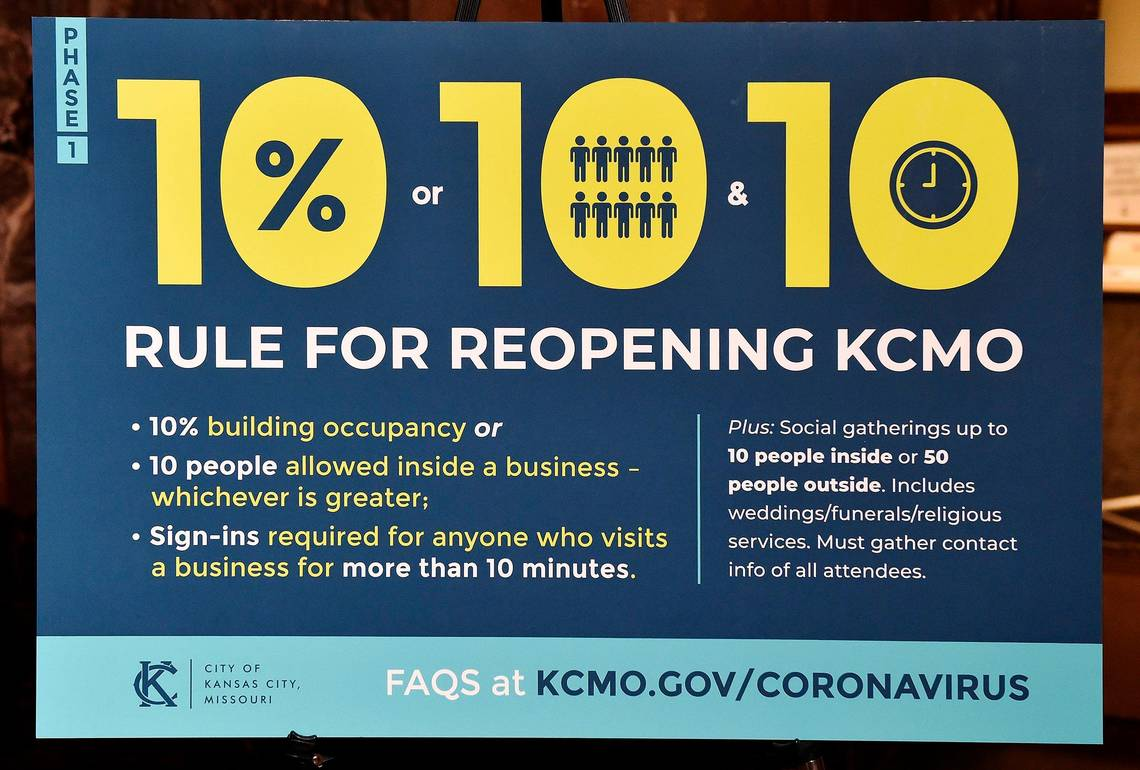
On April 29, Kansas City Mayor Quinton Lucas announced his 10-10-10 plan for reopening the city after the stay at home order ends on May 15. Since then the plan has been subject to revisions and walk-backs and now seems vague and unenforceable. City leaders could have avoided this.
The Kansas City Star reported that smaller businesses previously considered nonessential will be able to open but,
will have to follow the city’s new rules, dubbed “10-10-10,” for the foreseeable future: They must operate at 10% of their normal capacity or have 10 people in the establishment, whatever is greater. That includes the employees needed to run the business.
Businesses or gathering places with more traffic, such as restaurants, libraries, community centers and gyms, will stick to the May 15 opening date but must also follow the new rules.
The plan also requires that “customers who are in a business for more than 10 minutes will have to register their name and contact information.” The requirement of registering names caused an outcry and on May 5 city leadership reversed the rule, making registration merely a recommendation.
Even without a government mandated collection of names, restaurants cannot operate at 10 percent capacity. The mayor apparently had not consulted with restaurant owners before promulgating the plan. Restaurant owners objected, and on May 11, the Star reported that the city again retreated:
In a notice to its members Sunday night that was obtained by The Star, the Greater Kansas City Restaurant Association said it had worked with Lucas to ensure restaurants were subject to a social-distancing requirement rather than a limit on their capacity.
Under the new rules, tables must be spaced 10 feet apart and/or parties must be seated six feet apart — “as measured from back of chair to back of chair.” Workers and patrons who are exhibiting coronavirus symptoms must be turned away.
Of course, essential—and potentially crowded—businesses such as grocery stores are not subject to any parts of the 10-10-10 rule. And the list of what constitutes an essential business seem pretty broad. In his May 4 proclamation, Mayor Lucas wrote (page 5), “Essential Businesses’ include, but are not limited to, for-profit, non-profit, and educational entities, regardless of corporate or entity structure, which provide services in,” twenty-three different subcategories. This includes, “xvii. Businesses that supply other essential business with the support or supplies necessary to operate.” That seems like a pretty big loophole.
Any well-meaning business owner can and should be forgiven for running afoul of these Byzantine rules and standards. It doesn’t help that city leaders imposed impossible regulations on some businesses without bothering to consult with them first. If city leaders want their orders adhered to, they should do a better job drafting them.
What to Do About Medicaid?

The hole Medicaid has blown in Missouri’s budget is about to get bigger. Medicaid’s costs are expected to grow by more than $500 million over the next year. To make things worse, the state projects it will collect significantly fewer tax revenues over the same period due to the COVID-19 crisis. Taken together, policymakers may soon be forced to reform Medicaid.
The COVID-19 crisis is putting tremendous strain on Missouri’s budget. Beyond the health care costs of treating those infected with the virus, the resulting economic fallout has led to more people being eligible for Medicaid. And with businesses closing their doors and fewer people working, Missouri is collecting less in sales and income taxes, which are relied upon to cover Medicaid’s costs.
Growing Medicaid is not a new problem for Missouri, but for years elected officials have found ways of balancing the budget that don’t require major changes to the program. What we don’t know yet is whether Missouri’s experience with COVID-19 will make this time any different.
The federal government has suggested it will offer some additional support to help with state budget woes, supplementing the funding already sent to states through the CARES Act. But those funds are coming with strings attached and there is no guarantee that they will be enough to plug Missouri’s budgetary hole. In fact, the “strings” attached to the CARES Act funding included a prohibition on state Medicaid agencies checking whether people enrolled in the program are even eligible to receive benefits, which could lead to higher future spending. Are policymakers comfortable sitting idly by and hoping the federal aid will be sufficient?
My colleagues and I have written extensively (here, here, and here) about the many ways to improve Medicaid through programmatic reform. And just over a year ago, the state commissioned its own audit that included a list of suggestions that would help control spending. Policymakers have all the resources they need, and reforming Medicaid has never been more urgent. All that is left to do is to act.
Missouri Delivers on License Reciprocity

For nearly a decade now, my colleagues and I have pushed hard to establish unilateral license reciprocity in health care here in Missouri.
In 2012, we wrote about letting health care professionals provide Missourians free care—and facilitating it by accepting their out-of-state licenses. We were strong backers of the Volunteer Health Services Act in 2013, were national advocates for its wide adoption in 2014, and were apoplectic in 2015 that New York would stop licensed out-of-state doctors from providing their citizens much needed care. (New York has a different opinion on the issue now.) In 2016, our concluding lines in “Demand Supply: Why Licensing Reform Matters to Improving American Health Care” were:
[S]tates do not have to wait for [an interstate compact] to emerge and should be willing to accept, unilaterally, the licenses of qualified medical professionals from other states. Indeed, just as several states have passed Volunteer Health Care Services Acts for the needy, states can pass similar legislation that would allow licensed physicians in good standing to provide care to their own residents—no additional licensing required.
And we continued our advocacy. Last year we cheered Arizona for being the first to achieve this watershed reform, and this year we have been on the leading edge promoting supply-side health care that, among other things, would ensure Missourians have maximal access to health care professionals to meet their needs during the coronavirus crisis.
Six weeks ago, Gov. Mike Parson to his credit issued a waiver that established wide reciprocity for health care professionals. And this week, driven by Rep. Derek Grier’s leadership, the legislature passed a permanent reciprocity law for health care professionals—and many, many more licensed professions.
Suffice it to say, I am ecstatic. Congratulations to all who have worked toward this moment, but especially, congratulations to the people of Missouri. At long last, the state is an unambiguous leader on license reform issues, and the benefits of that commitment will ripple through Missouri for years to come.
