Toll Roads, Past and Future

While driving this Easter to spend time with family in Charlotte, North Carolina, I saw the past and future of toll roads. If Missouri implemented tolling, it seems clear to me what type of toll road drivers would prefer.

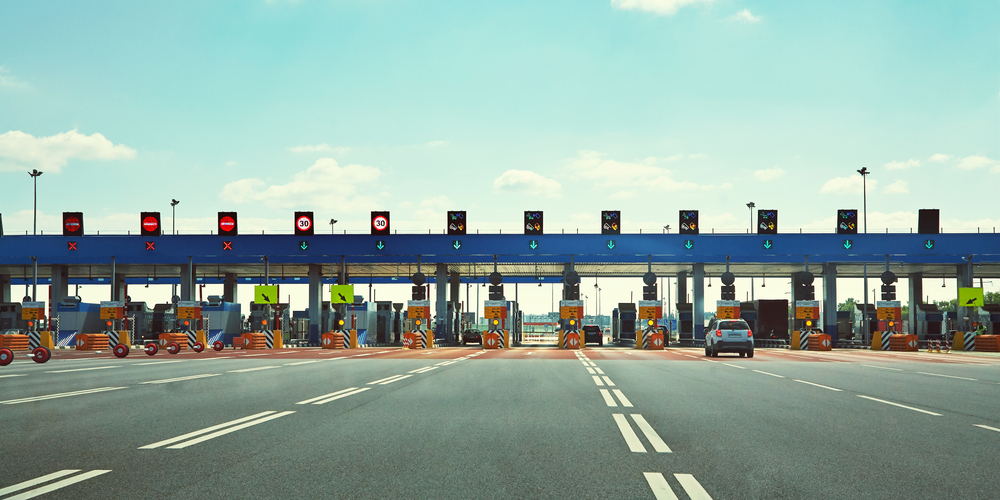
Heading south on the West Virginia Turnpike, I hit all three mainline toll plazas. Each occurrence involved coming to a complete stop as I handed a toll booth worker $4.00 to drive through. No credit cards were accepted, but I was fortunate to have enough cash. Drivers who had an E-ZPass transponder were able to avoid a complete stop, although they still had to slow down to 5 miles per hour.

In North Carolina, the I-77 express lane was quite a contrast. The express lane was the smoothest-paved part of the road, set apart by a light barrier to easily identify which lanes are tolled and which are not. There was no stopping, as most drivers paid via a NC Quick Pass transponder. If you didn’t have a transponder, you would get a bill in the mail based on your license plate registration. Rates were per mile and variable depending on traffic conditions, and if you had three or more people in the car you could travel in the express lane for free.

Most new toll roads have a similar structure to North Carolina’s. The hassles of always needing adequate cash and the stop-and-start nature of old turnpike plazas are avoided. Further, research has shown that toll roads with no stopping are significantly safer than traditional toll plazas regarding fatalities, crashes, and property damage. Even collection costs are between two to four times lower (page 59) for electronic tolling than for traditional (page 12) toll plazas.

Electronic tolling is an innovative way to fund road maintenance in a driver-friendly manner. Missouri also has heavily traveled highways that need rebuilding (page 18), and the president wants to lift the federal prohibition on tolling interstates. Missourians have opposed toll roads in the past, but if they knew how easy modern toll roads are, they might be inclined to change their minds.

 

A Peculiar Solution for Ever-Increasing Water Rates

On June 2, residents of Peculiar, Missouri will vote on the sale of the City of Peculiar utility system to Missouri American Water. The purchase price is to be $16.9 million up front with an additional $300,000 paid out over the next three years. A legal memo describing the deal and the associated resolution is available online here, beginning on page 37.

Missouri American Water, naturally, is supportive of the plan and is confident it can deliver the same services to Peculiar residents they receive now and at a lower rate. A webpage in support of the proposal shows the recent rates in Peculiar compared to other American Water customers across Missouri, including Kansas City neighbors Platte County, Lawson, and St. Joseph. (Incidentally, the Environmental Protection Agency (EPA) claims, “the average American family uses more than 300 gallons of water per day at home” or around  9,000 gallons per month.) 

At a time of increasing water rates in Kansas City, it might be worth considering such a deal here. Kansas Citians already look to private—albeit heavily regulated—companies for their electrical power and natural gas. Why not water too? And if such a sale here would include an upfront payment to the city as well as potentially improved management and lower rates over the long run, city leaders have a responsibility to consider the offer.

All of this hinges on a serious and substantive audit of the Water Department, as Kansas City Mayor Quinton Lucas has called for previously. That is a necessary first step so that taxpayers and any interested buyers know exactly what is at stake. Even without a looming financial crisis, Kansas Citians should be looking to shed costly burdens that can be better and more cheaply provided by others.


National Charter Networks Are Leading Distance Learning Strategies

As of last week, all Missouri schools are closed to in-person classes for the rest of the school year. This means many Missouri educators will attempt to transition to remote learning. But this process hasn’t been smooth for everyone. In particular, there seems to be a gap in remote learning capabilities between traditional public schools and charter schools.

As of now, it is up to individual districts in Missouri to establish their own guidelines for distance-learning plans. Districts can decide how much classwork students need to complete and if teachers or the district create assignments. For districts that didn’t have any online learning components before COVID-19, switching completely online has presented challenges.

Missouri schools aren’t the only ones figuring out distance learning right now. The Center for Reinventing Public Education (CRPE) has created a database for the largest public school districts in the nation and compiled what each has done in response to the coronavirus. CRPE then added 18 national charter school networks, and found that many charter networks are leading examples in how schools can continue to deliver quality instruction remotely to students.

Of the 18 charter networks CRPE examined, many were able to quickly adapt to entirely remote learning despite using different approaches. CRPE found that “half had created comprehensive learning plans with formal curriculum, instruction and progress monitoring.” Some of the charter networks, like Success Academy Charter Schools or Uncommon Schools, are even incorporating synchronous teaching. This is when all students in a class are logged online at the same time and learning from their teacher. In comparison, some Missouri school districts are not grading assignments, perhaps because they are still developing remote learning practices.

Missouri school districts don’t have to reinvent online learning. But they should be learning from other schools that have implemented remote learning successfully, like some of the leading national charter school networks that are leading the way on remote learning.


Stimulus Package Highlights Missed Energy Opportunity

The recent $2 trillion stimulus package included a lot of different ideas to help keep our economy afloat, but one proposal that was rejected deserves a closer look.

A steep decline in oil demand due to the economy being paused and an increase in oil production from a price war between Russia and Saudi Arabia brought oil prices to a twenty-year low. Recently, 23 countries have agreed to reduce global oil production by around 10 percent, but global demand has dropped nearly 30 percent, leaving significant surplus oil in the market. As such, many American oil producers are on the brink of bankruptcy as low prices combined with loan repayment schedules jeopardize an industry vital to the economy and national security.

Extra storage space in America’s Strategic Petroleum Reserve (SPR) could help offset this oil market turbulence.

The SPR is a stockpile of oil that helps protect American oil supplies from shortages or price spikes. Its rainy-day function deters adversaries from using oil as a weapon against America and provides more leverage for American foreign policy. Occasionally, oil from the SPR is sold to raise money for the Department of Energy (DOE), emergencies, or public works programs, although the merits of using the SPR to fund public-works programs are debated.

So how could the SPR be used at this time?

The president suggested purchasing surplus oil to fill the SPR to the top as part of the recent stimulus. Opponents blocked this idea and will likely block a new bill to purchase oil for the SPR independent of a stimulus.

In light of these developments, the DOE is leasing empty space in the SPR for companies to store surplus oil until the market stabilizes. As Congress has decided to reduce the SPR’s size (another debated matter), this would use existing space while costing taxpayers nothing. Several companies have already submitted bids to store oil, with room for more. The world is scrambling to find enough space to store surplus oil, as too much production risks sending prices further into a tailspin.

The move to lease space in the SPR could benefit taxpayers and remove some oil from an oversaturated market.


Some Estimates on the Impact of Covid-19 on Small Business

A working paper by the National Bureau of Economic Research (NBER), authored in part by Dr. Ed Glaeser of Harvard University, asks: How Are Small Businesses Adjusting to Covid-19? The report is brief and is worth reading in its entirety, however here are a few key takeaways from the data:

  • 41.4 percent of businesses reported that they were temporarily closed because of COVID-19. A far smaller number—1.8 percent—reported that they were permanently closed because of the pandemic. By contrast, only 1.3 percent reported that they were temporarily closed for other reasons. 55.4 percent reported that they were still operational.
  • Approximately one-fourth of firms have cash on hand totaling less than one month’s worth of expenses. About one-half of firms have enough cash on hand to cover between one and two months of expenses.
  • More than 64 percent reported that it is very or extremely likely that they would be open on December 31, 2020—which is used as a measure of the probability of being open. A growing literature has found entrepreneurs to be overoptimistic about their prospects

It is completely appropriate for policymakers in Missouri and across the country to debate the efficacy and appropriateness of aid to small businesses. As with aid to municipalities, we do not want to reward bad decision-making with public funds. But as Glaeser and his co-authors point out, the impact of the virus and the public response is great and already with us.

While I am often skeptical of government intervention in the economy, it is difficult to argue that there is no role for government here. After all, even the most ardent Objectivists over at The Atlas Society understand that there we are in unprecedented times. For anyone who wants to consider exactly how unprecedented, this NBER paper is a good start.


Transparency Needed for Coronavirus Stimulus Spending

St Louis County expects to receive $173.5 million from the federal government in the coming weeks to handle expenses related to the coronavirus. While the influx of cash will likely help the county, there are questions about how the money is being handled.

According to the Post-Dispatch, the “administration was moving quickly and unilaterally—without oversight or public notice—to spend upwards of $173.5 million that it expects the federal government to refund.” Further, the county executive is requesting the county council to grant him the ability to transfer funds without councilmembers’ approval.

For instance, the temporary morgue being built in Earth City in anticipation of more coronavirus deaths was constructed with the sole approval of the county executive. Alerting councilmembers and the public, as well as offering justification for its construction, are all standard procedures that were ignored.

It is understandable that in a crisis moves must be made quickly, but they can still be made publicly. As my colleague Patrick Ishmael said recently, if local governments want stimulus money they should be transparent about how that money will be spent.


Should All Cities Automatically Get Federal Help?

It isn’t surprising that mayors across the country are concerned about the impact a largely shuttered economy will have on their local tax revenue and ability to deliver basic services. According to The Philadelphia Inquirer, the National League of Cities partnered with the U.S. Conference of Mayors to survey local officials across the country. The article stated:

Nearly 9 in 10 cities surveyed — from smaller hubs with populations of fewer than 50,000 to the largest metropolitan areas in the country — signaled they expect a revenue shortfall. Among them, more than 1,100 cities are preparing to scale back their public services, the survey found. Almost 600 cities predicted they may have to lay off some government workers amid the crunch. And local leaders in 1,000 cities said the reductions probably would affect their local police departments and other public safety agencies.

Amid this crisis, cities such as Kansas City and St. Louis need to start picking and choosing their priorities. In the face of revenue shortfalls, are convention and visitors’ bureaus really as important as police departments? Are we really going to continue diverting funds away from schools and libraries in order to fund stadiums, entertainment districts, and luxury accommodations? Do existing municipal contracts include force majeure clauses to help cities reorient priorities in a time of unprecedented crisis?

The sponsors of the survey have called for generous federal support for cities, and the Inquirer story goes on to state:

Lawmakers authorized $150 billion in coronavirus aid for states and large cities as part of the broader $2 trillion package that Trump signed into law in March. But that assistance — half of which, Treasury Secretary Steven Mnuchin announced Monday, is now available — comes with restrictions. Even when combined with additional help offered by the U.S. government, many leaders outside the nation’s capital also see it as insufficient to keep their cities afloat financially.

While such support may be necessary, it should not allow cities to escape the consequences of their own bad behavior. Kansas City and St. Louis are high tax cities that also have high per capita public debt. They divert an ever-growing amount of money to private developers to build things that in some cases are clearly not needed.

If cities are to receive federal aid, one hopes that cities with good financial track records are prioritized. Perhaps aid should be tied to ratings of fiscal responsibility before the pandemic such as debt and deferred maintenance. Public funds should not be used to hide, or even reward, previous bad behavior.


An Opinion of Michigan’s Stay-at-Home Order from Someone Stuck in Michigan

Though I’m a St. Louis resident, I have been social distancing in my hometown in Michigan for the past few weeks. Fortunately, the internet and video calls have allowed me to keep working and stay in touch with Missourians. Unfortunately, Michigan is perhaps one of the worst places I could’ve chosen to ride out this pandemic. Detroit has become a COVID-19 hotspot, and as a result Michigan has instituted some restrictions that I believe may be too heavy-handed.

I want to be very clear that I am not taking this global crisis lightly. Michigan has had thousands of cases in the past few weeks, and I’m extremely worried about my family, friends, and others in Michigan. I think these stay-at-home orders are beneficial in the fight against the coronavirus, but I also think there is a balance between trying to ensure safety and trying to excessively control citizens. It seems fair to question whether Michigan has achieved that balance.

The most recent executive order contains what I think are some unnecessary and seemingly arbitrary restrictions on the everyday lives of Michiganders. For example, all public and private gatherings of any size between people who do not live in the same household are prohibited. If you own two residences, you are not allowed to travel between them.. Stores are not allowed to sell goods from the following categories: carpet or flooring, furniture, garden centers, and paint. Businesses are also to refrain from advertising or promoting items that are not groceries, medical supplies, or essential items. Lottery tickets, however, are fine to purchase. The executive order also prohibits of the use of any boats with a motor, which is especially relevant to both industry and citizens in a state surrounded by the Great Lakes.

Most states have stay-at-home orders in place, but Michigan’s order goes much further. Where do we draw the line? Other states are taking safety precautions without completely banning leisure activities and further disrupting businesses

I’m certainly not the only one with this opinion; others argue that Michigan has become an outlier. For the sake of my co-workers and friends still in the Show-Me state, I hope that Missouri does not follow Michigan’s path.


Missouri is Lessening Regulations, and Hopefully It’ll Stick

Many of us are closely following the actions of state government right now, and an important thing to monitor is the state of business rules and regulations. Lawmakers are loosening rules and regulations to ease the burden on businesses, workers, and consumers in this unprecedented time. Relaxing regulations is great, but it raises an important question: If these regulations aren’t necessary now, were they ever necessary?

The Missouri Division of Professional Registration has provided a list of statutes and regulations that it is requesting to be waived due to the COVID-19 crisis. This twelve-page document contains requests from 17 different professional registration boards. The requests are all related to occupational licensing and require the governor’s approval.

Many requests have already been approved. Several licensed occupations, including optometrists and nursing home administrators, are now able to meet their license renewal requirements online, which was not allowed or limited before. Missouri pharmacies are now allowed to use pharmacists and pharmacy technicians that have out-of-state licenses and can seek assistance from out-of-state pharmacies. There has also been a huge reduction in restrictions on health care professionals, making it easier for them to practice and coordinate with others in the field.

The Division of Professional Registration is not alone in looking to change some rules. A few lawmakers requested that the Department of Public Safety waive the restriction on selling mixed drinks to go, and in an executive order, the governor ordered the “suspension of any prohibition of the sale of un-prepared food by restaurants to the public.”

These regulations make it harder for workers to get and keep jobs. But if lifting some of these regulations is helping consumers and businesses during this crisis, we should wonder if they’re necessary when things go back to normal. One can only hope that many of these changes will stick, and we will continue to have fewer business regulations moving forward.


Support Us

The work of the Show-Me Institute would not be possible without the generous support of people who are inspired by the vision of liberty and free enterprise. We hope you will join our efforts and become a Show-Me Institute sponsor.

Donate
Man on Horse Charging