School Start-Date Flexibility: A Short-Term Win for Local Control

The Department of Elementary and Secondary Education (DESE) has provided school districts an opportunity to take back some autonomy over their school calendar. A few weeks ago, I wrote that school districts should have the flexibility to set their own start date this fall, but a 2019 bill mandates the start date be no earlier than 14 calendar days before the first Monday in September.

The good news is that school districts will have that flexibility this year. DESE recently announced that “The Missouri State Board of Education voted to grant exemptions to the school start date law that goes into effect for the 2020–2021 school year, given the unusual and extenuating circumstances COVID 19 has presented.”

This waiver is good news for districts. The start date law, however, is an unnecessary restriction aimed at supporting tourism at the cost of education. A mandated start date makes even less sense this year, given the chaos created by COVID-19.

To acquire a waiver, districts must apply to the State Board of Education. Requirements for waiver eligibility (listed under the “Calendars, Finance and Funding” tab) include showing local support for moving the start date (DESE is vague about exactly what this means), holding a public hearing on moving the start date, demonstrating how this exemption will benefit students and their learning, and explaining how this exemption will minimize the transmission of COVID-19.

If a district’s waiver is granted, districts can create a school calendar based on student needs. However, the waiver is only good for the upcoming school year. Next year and beyond districts will have to follow the start date law. The coronavirus is an extreme example of how this law can create problems for schools, but there are many other potential situations where adjusting the school calendar could be necessary.

While it’s welcome news that districts won’t be mandated to start school on a fixed date this year, the underlying problem remains. The school start date law harms kids and schools in Missouri, and lawmakers should just get rid of it.


 

Three Cheers for the Kansas City Council

The Kansas City Missouri City Council adopted three new ordinances to help restaurants during the pandemic. The ordinances make it easier for restaurants to serve patrons on sidewalks and parking lots, and also renew permission for restaurants to serve mixed drinks for take-out and delivery. While these measures are temporary and require the issuance of city permits, they are a positive sign that city leaders are willing to support the businesses that support the city.

  • Ordinance 200376 refers to the temporary expansion of sidewalk cafés, parklets and street cafés.
  • Ordinance 200377 temporarily suspends parking requirements for restaurants and bars.
  • Ordinance 200378 temporarily suspends the prohibition against delivering alcoholic beverages to or by vehicles.

Kansas City, like municipalities across the country, is going to take a significant hit to the bottom line as a result of efforts to curtail the spread of COVID-19. City leaders have an opportunity to demonstrate that they are willing—even eager—partners with the men and women whose entrepreneurship drives the city economy. The regulations being waived likely caused more heartache than they were worth even in good economic times.

The permitting process should not be used to show favor to certain businesses or parts of the city—but favoritism that has marked more than a decade of city spending and regulation. If sidewalk cafes are good for downtown, they are good for midtown and the northland. Treat everyone equally. And if these policies are good temporarily, they are likely good permanently.

The city’s 10-10-10 plan was a debacle, not least of which is because it demonstrated that regulators had not talked to the businesses they were regulating. These ordinances are more promising. The council should be congratulated for setting aside rules and regulations that hamper growth and drive up costs without improving public safety, and should be encouraged to do so permanently. There is much more to do along these lines, but this is a good start. Slainte!


Don’t Repeat Mistakes from the 2009 Stimulus

Missouri has a rocky history when it comes to transparency and federal relief. A 2011 audit of how Missouri spent 2009 stimulus dollars found poor documentation of how federal funds were spent and state agencies resistant to more stringent measures of transparency.

Ignoring the debatable merits of the bill, the 2009 American Recovery and Reinvestment Act (President Obama’s stimulus package), required reporting on every project down to the subcontractor level and taxpayers were supposed to have near-real-time ability to see how funds were being spent. This act spurred many states to enact increased transparency measures. It is disappointing to learn that Missouri took a step backward at a time when much of the country was moving forward. The auditor noted, “When there’s inadequate documentation, you don’t know if there’s waste, fraud or abuse.”

Has Missouri learned from its mistakes? Some governmental bodies appear to be transparent, if not exercising fiscal restraint, with their emergency spending. The State Treasurer’s Office is publishing CARES Act state government relief fund spending down to the vendor and item purchased. St. Louis County and City both have websites publishing their emergency spending, showing when, where, and on what the money was spent. The county also publishes future committed spending. Close-fisted spending habits have led some to question their emergency priorities, but it’s the transparency portals that inform such questioning. Franklin and Jackson Counties plan to release spending details in the future. However, no other major county or city has yet published such coronavirus-specific spending.

Some state agencies have published the amount of federal money they received but did not specify how they spent or will spend it. A few identified potential categories of expenses—such as the Department of Higher Education, Department of Elementary and Secondary Education, and the Department of Transportation—but did not provide details.

Why aren’t all state agencies and political subdivisions willing to show how they are spending taxpayer funds? Shouldn’t agencies receiving relief funds, i.e., taxpayer money, want to demonstrate that the money is being put to good use? With today’s technology, they can make such data easily accessible, complete, and accurate. If a county or agency is unable to publish this information on its own, it can send the data to the state for publication.

Show-Me Institute analysts have called for government transparency since the first relief funds rolled in. While some appear to be acting transparently, not all are. Isn’t it time for the rest to catch up and show us the money?


A Taxing-District Win for Taxpayers

Though this year’s legislative session was a little different than most, Missourians did get some legislative wins. A provision in House Bill 1854 is one of those wins. Amongst various other things (some good and some not so good), the bill includes important reforms for community improvement districts (CIDs) and transportation development districts (TDDs).

Show-Me Institute researchers have pointed out numerous problems with these small taxing districts. One big problem is that many of these taxing districts were not subject to a broad-based, representative vote for approval. Previously, these districts could impose a tax on purchases within the district if the tax were approved by voters within the district. However, these districts can be so small that they sometimes only contain one commercial building, which means that a tax could be approved by one commercial landowner’s vote. It’s sometimes the case that these taxing districts are enacted through private interest and increase costs for taxpayers without their permission.

The new legislation attempts to fix that problem, adopting a policy solution that Show-Me researchers have previously suggested. The bill requires that new taxes created by CIDs or TDDs be approved by the majority of the voters within the municipality that contains the taxing district, not just the voters within the taxing district.

This legislation gives voters more of a say when it comes to tax increases and could also increase transparency by bringing tax increases to the attention of the public. If the costs of projects funded by CIDs and TDDs are going to be externalized to taxpayers, it’s only fair that taxpayers get a say in the process. This law gives taxpayers more representation and could help slow the growth of special-taxing districts in Missouri—and that’s a clear win for taxpayers.


St. Louis Lawmakers Should Stay Out of Business Decisions

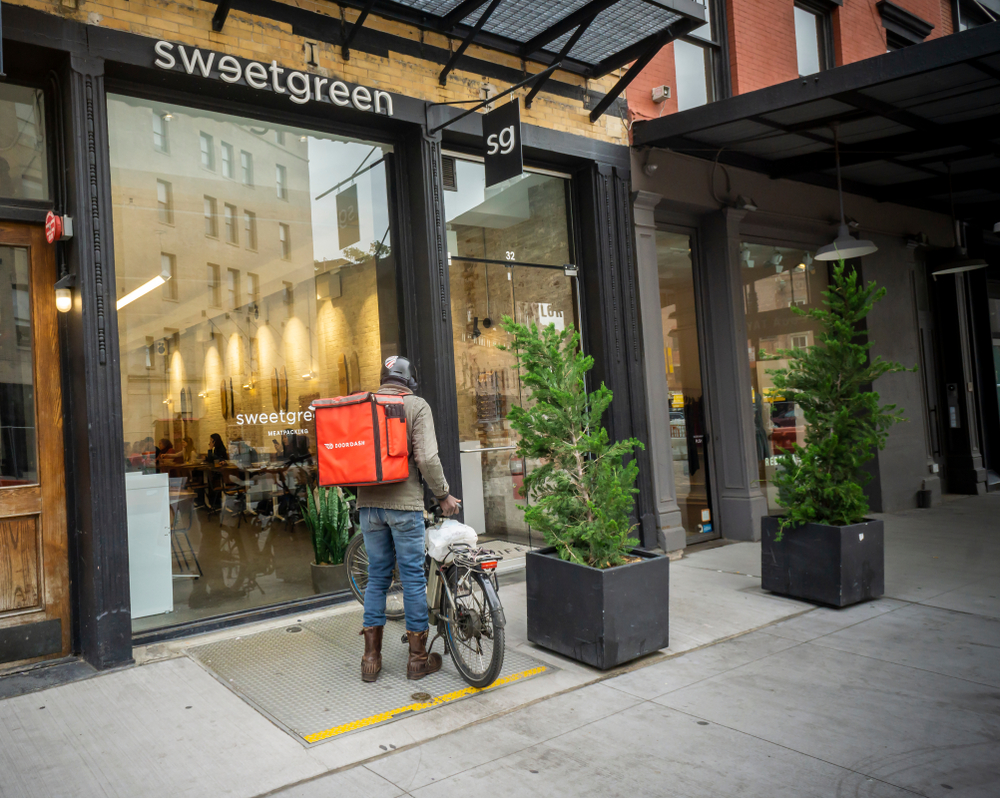
A St. Louis Alderman has submitted a board bill that contains a number of measures relating to food delivery services. The part that seems particularly egregious is a mandate that caps delivery fees that third-party delivery services can charge restaurants in the city at five percent. For those unfamiliar, third-party apps like DoorDash and Postmates will deliver food to customers on behalf of restaurants, but they charge restaurants a delivery fee for the service. 

This proposal is an attempt to protect local restaurants by giving them a larger share of revenue earned, but it’s a governmental overstep; government should not be involved in these agreements between private businesses.

This excerpt from a St. Louis Post-Dispatch article highlights two important points:

 . . . depending on the contract negotiated between an eatery and an app platform, the platforms sometimes charge anywhere from 25% to 50% per item.

The first point is that the contracts were negotiated between a restaurant and a food delivery service, meaning that the delivery rates were agreed upon by both parties. Neither was forced to comply, and either could have backed out if they deemed the deal harmful for their business. Why mandate different rates when the rates were agreed to voluntarily by all parties involved?

This brings us to the second point from the excerpt: The agreed-upon delivery fees seem to be well above the proposed five-percent cap right now. The current rates, no matter how high, are the product of negotiations in the market. The five-percent cap seems to be an arbitrary number that would allow lawmakers to drastically change a market and pick winners (restaurants) and losers (delivery services).  

And what happens if we cap the delivery fee? We would probably see delivery drivers being paid less, and fewer delivery drivers in general. We would also see fewer options for delivery in the City of St. Louis, as it wouldn’t be profitable for delivery services to work with city restaurants. This industry is already struggling mightily when it comes to profit; most food delivery services lose money and the big companies stay afloat due to heavy venture capital investment.

This proposal, if passed, would be a bad move for St. Louis businesses and consumers. If two businesses have agreed to a delivery rate, why do lawmakers need to insert themselves into the situation? Lawmakers should let the market work.


An Incentive Package for Tesla May Not Benefit Joplin

Tesla is in search of a site for a new manufacturing plant, and Joplin has put itself in the running by offering $1 billion in incentives. The website that Joplin created lists the incentives, which includes a tax abatement for 12 years, tax credits, and sales tax exemptions. It seems Tesla would benefit from this deal, but would Joplin?

Measuring the success of economic development packages is challenging because it’s almost impossible to tell if any growth is actually due to the incentive package. Economic growth may have occurred without the incentivized project and new projects can happen without incentives. Research suggests that 75 percent of incentivized firms would have made the same location choice even without the incentive.

On top of that, the incentivized investments don’t always pay off. Tesla plans to build a large factory that could employ up to 7,000 people, but we’ve seen companies fail to live up to promises before (such as with Cerner in Kansas City). There’s really no guarantee that new jobs or infrastructure will come to the city as promised. Even if the jobs or infrastructure do arrive, it still might not be a net positive for the city, given the cost of the incentives. One study found that the costs and benefits of incentive packages are typically the same.

As I’ve previously pointed out, it’s probably not the best time to be giving out incentive packages. Government budgets are expected to be extremely tight due to COVID-19 and the resulting economic shutdown. Why should new, big businesses receive tax breaks while the citizens and businesses suffering through this pandemic in Joplin are left with their full tax burden?

With no guaranteed benefit and potential budget issues looming, offering $1 billion in incentives doesn’t seem like a great idea, and it definitely doesn’t seem like a good deal for Joplin’s citizens.


Support Us

The work of the Show-Me Institute would not be possible without the generous support of people who are inspired by the vision of liberty and free enterprise. We hope you will join our efforts and become a Show-Me Institute sponsor.

Donate
Man on Horse Charging