Living in Chiefs Kingdom Doesn’t Make You Kansas City’s Peasant

While 2020 has been a year of often-obscured bright spots, the Kansas City Chiefs have stood apart as a fairly enduring point of municipal pride for Kansas City, the capital of the team’s colloquial and regional “Kingdom” of supporters. Starting the year with a Super Bowl win and ending it with a solid regular season certainly tends to raise a city’s spirits, and if you’re a restaurant or bar in Chiefs Kingdom, the Chiefs’ strong showing during the coronavirus pandemic has certainly been a welcome relief for business.

But that hasn’t kept Kansas City and other local government from bah-humbugging it, flying the banner of coronavirus prevention as it dumps coal in the stockings of local proprietors in the food service industry. In November, city officials shut down The Corner Bar and Grill in the historic 18th & Vine District during a Chiefs game when a “field supervisor noted multiple violations of the mask and social distancing rules” set out by the mayor. In fact, until relatively recently, Kansas City proper was requiring all bars and restaurants to not only close by 10 p.m. to mitigate the spread of COVID-19—because it’s, what, not communicable during the day?—but force all of the patrons out by that time, or else be sanctioned by the city.

The Corner Bar’s closure and the city’s draconian time restrictions meant that when the Chiefs played the Denver Broncos for the league’s Sunday night game on Dec. 6, Kansas City bars were forced to turn patrons away due to capacity limitations and to warn patrons who were allowed inside that they’d be kicked out of the bar before the late game had finished. This isn’t hearsay either; this happened to me. However, not all places of imbibing and engorging for the game were closed. I eventually found myself at, of all places, a local casino that is not only open 24 hours a day, 7 days a week, but whose social distancing norms are, shall we say, necessarily loose.

Having the right to leisurely eat, drink, smoke and gamble at 10:30 p.m. on a Sunday from the comfort of a barstool in the middle of a pandemic would feel a lot more liberating if you do these things at any establishment of one’s choosing, pandemic or not. But on this Sunday night, the patrons of the Argosy Casino had acquired an immunity to coronavirus (or, rather, to government-imposed coronavirus restrictions) that the small businesses and patrons in downtown Kansas City had not yet achieved. Shortly after that weekend, Kansas City officials “clarified” that the city’s bar and restaurant patrons could now remain in their seats and finish their meals, even past 10 p.m., but couldn’t order food or drink after that hour and had to be out of the building by 11 p.m.

It’s tempting to accept the clarification of mandated closure times as an improvement, and in technical terms, it is. After all, requiring establishments to close in the middle of a sports event is bad for business. But local officials are merely returning rights to taxpayers that I believe should never have been taken to begin with and where in other local businesses like casinos, the same rules aren’t being applied. That’s before addressing whether these new rules should be applied at all, and on what actual scientific basis they’re being pursued.

But I’ve said this before and I must say it again, especially now that we’re close to the 2021 legislative session: If a rule is good enough for big businesses, it’s good enough for the small ones too. That applies to all of “Chiefs Kingdom,” both in Kansas City itself and outside it. If casino patrons can live it up safely and watch the Chiefs beat the hated Broncos late at night, so too can supporters of local bars. If Chiefs fans can socially distance at Arrowhead, so too can fans of Blue Springs High School. And in the coming weeks, state legislators must start the process of reining in the excesses of local governments. Kansas Citians may live in Chiefs Kingdom, but they aren’t the subjects of their elected officials.

New Report on Federal Relief Funds in Missouri

Are Missouri politicians the rare breed that don’t spend money when it’s handed to them . . . or are they on the verge of a year-end shopping spree?

The Missouri state government has $1.5 billion leftover from CARES Act federal relief funds and must spend it by December 31 or lose the money, despite scores of individuals and business owners that still need help. The Governor plans to spend $1.3 billion on measures such as personal protection equipment, school lunch programs, and unemployment insurance, among others.

It’s important to note that these funds have several strings attached. The money must be spent on expenses incurred due to COVID-19—it can’t just be used to fill unrelated budget gaps.

According to a new report from the state auditor, the Missouri state government had received a cumulative total of a little over $3 billion in federal relief funds through the end of October. County governments also received relief funds. Jackson County and St. Louis County received $123 million and $173 million, respectively, directly from the federal government due to meeting population requirements. The Missouri Legislature also chose to send $521 million to the remaining counties and St. Louis City, based on population proportions.

Of this combined $817 million sent to counties, roughly $543 million remains unspent, not including planned purchases. This is in addition to the state government’s remaining $1.5 billion.

Why hasn’t the money been spent, and what should be done with it?

If it really is the case that the money isn’t needed, then the funds should be returned to the federal government, and our state and municipal leaders should be commended for declining to help themselves to taxpayer money.

However, if it is needed, it should be spent wisely. For example, some money could be used to support businesses that struggled or closed during state and county-mandated shutdowns. Jefferson City imposed a statewide lockdown from early April to early May, and many counties continued with further lockdowns. Unemployment benefits for affected workers may well be appropriate, but they should be accompanied by relief to the business owners who were deprived of the opportunity to operate (and to employ those workers) for significant parts of the year.

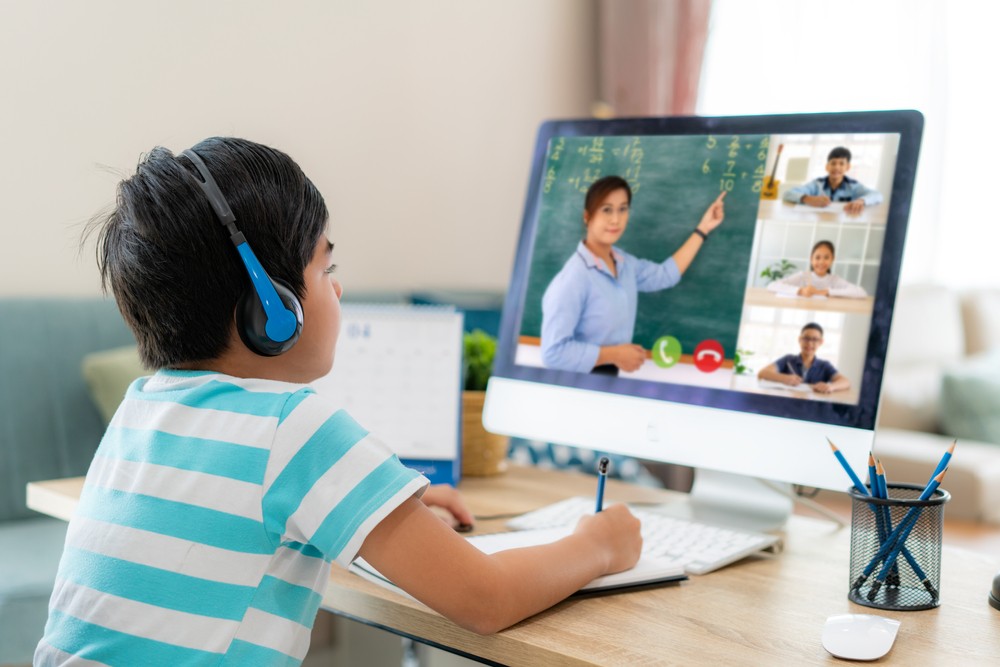
Parents of school-aged children also deserve consideration. The pandemic has led to school closures and a switch to distance learning that caught many if not most school districts unprepared. Statewide, public school enrollment is down by nearly 25,000 students this year as parents struggle to find alternatives to their assigned public schools for their children. These parents would be facing a daunting task under any circumstances, but consider the parents whose incomes have been reduced by pandemic-related closures and who are also trying desperately to keep their children from losing a year of education. Shouldn’t some of the federal relief money be used to help them pay for tutoring, private-school tuition, or other resources?

Finally, policymakers should keep in mind that the challenging and complicated process of the COVID-19 vaccine rollout is now ramping up. It’s not going to be easy, and without a solid plan for vaccine distribution, it’s unlikely to go well. Does Missouri have a plan? If so, what kinds of resources will be needed to carry it out?

It’s hard to say what would be the very best use of the still-unspent portion of the federal relief money because of the number of variables in play. But if we can’t spend it in a way that provides meaningful help to pandemic-affected businesses and workers—if we can’t use it to help educate children whose school districts have let them down—and if we can’t use it to make the vaccine rollout as fast and effective as possible—then we should give it back to the federal government. It would be both injurious and insulting to Missourians who have suffered through months of this pandemic if their elected officials leave nearly two billion dollars of money unspent until the final weeks of the year only to squander it out of fear of leaving it on the table.

In-Person Learning during the Pandemic (Part 2 of 2)

In my last post, I explained why school districts have had such a hard time making adjustments to accommodate in-person learning in light of COVID-19—their organizational structures are simply not set up for it. There is, of course, an additional related factor that I did not mention in that post: incentives. School districts have little to gain by changing the way they operate, and they have little to fear if they stay the course.

Let’s think about this for a minute. What would encourage a business or a school to completely rethink how they are doing things? In business, it would likely be profit. If they could make more money, especially in the long-run, a business owner might be inclined to reorganize and restructure. Notice, two things here: First, this new model would have to be profitable and, second, it would have to be profitable for years to come. Neither of these is true for schools when it comes to COVID-19.

In Missouri and many other states, public school districts face very little financial pressure to make adjustments right now. They are not being penalized when students leave because the financial structures are set up to protect them from these sorts of dips in enrollment. Every student could leave a district and it would be guaranteed the same level of funding that it received last year. Moreover, few parents even have the option to leave a school. Not every child in Missouri has a viable alternative to their assigned public school.

Moreover, public school leaders are doubtful that COVID-19 will continue to shape our school lives for years to come. They are probably right about that. Vaccines are quickly rolling out and, hopefully, the fears of the coronavirus will soon be behind us. As educators often say, “This too shall pass.” Why would a school district, with no financial incentive, make radical adjustments to its schools when they will likely go back to usual next year? The short answer is, it wouldn’t.

So what is the lesson we should learn from all of this? There are plenty. We could talk about how school funding could be changed so that it follows students, or we could talk about how collective bargaining agreements need to have emergency clauses. But the main lesson, I think, is much simpler—students need educational options. Every child, in every school district, should have at least one viable alternative to their assigned public school. Just because school districts cannot adapt to meet the needs of all students, it doesn’t mean our state policy shouldn’t.

The Plan Without a Plan

Greater St. Louis, Inc. recently came out with a draft of its STL 2030 Jobs Plan, which is described as a plan “to create a significant number of quality jobs for the entire St. Louis metropolitan area.” But for a 93-page document, it really doesn’t say much. While there’s plenty of buzz words and mentions of “inclusive growth,” the plans discussed are very light on details, and there’s little explanation for how these plans will actually achieve the stated goals of Greater St. Louis, Inc. Additionally, no measurable metrics are identified that tell us how success will be measured. Just as important, it’s unclear how these things will be funded.

If the numerous initiatives introduced in this plan are privately funded, great! Individuals and businesses are free to invest in these initiatives if they deem them worthwhile investments. However, if this plan calls for public dollars, taxpayers should be wary. What is the plan for funding initiatives like the Brickline Greenway or lofty goals like an “entrepreneurial surge?” There is some mention of “public capital” and “sizable investments” in various organizations, but taxpayers ought to have a clearer explanation, especially if their tax dollars will be diverted to these projects.

Spending taxpayer dollars on vague endeavors is not the solution to St. Louis’s woes. The creators of this plan claim it will help St. Louis’s economy, yet there is no mention of things that research shows have positive effects on a city’s economy, like lowering taxes or lessening regulations. Recent population estimates show a decline in both St. Louis City and County, continuing a trend that’s been going on for years. St. Louis needs real policy reforms to pull the city out of its slump and the STL 2030 Jobs Plan simply doesn’t deliver that.

Now Is Not the Time for Higher Taxes

With Missouri’s next legislative session set to begin in a few weeks, it’s time to start discussing some of the policies that may be up for consideration.

One such topic is the internet sales tax. Ever since the Supreme Court handed down its Wayfair decision, states across the country have been adjusting their laws to allow for the collection of internet sales taxes from businesses that don’t have a physical presence in the state. The issue has gained some traction in Missouri over the past few years, but the legislature has yet to act.

Before using the internet sales tax as a new stream of revenue, here are a few things policymakers should consider:

  • Revenue Neutral – Raising taxes on Missourians during a once-in-a-generation pandemic should be a non-starter. To ensure the overall tax burden of Missourians stays the same, the internet sales tax should have a mechanism to make it revenue neutral in perpetuity. To balance the increased sales tax, the legislature should agree to lower another tax (corporate, income, sales, etc.) at a rate corresponding to the projections for internet sales tax collections.
  • Accountable – If the legislature wants another source of revenue, it should include measures that ensure the funds are collected accountably. Instead of simply adding to the billions collected each year in sales and use taxes, these new funds should be tracked separately. Doing so would allow Missourians the opportunity to track how much money is being raised as a result of the legislation, and also help ensure the move remains revenue neutral by seeing how other taxes will be adjusted each year accordingly.
  • Transparent – In such trying economic times, it is more important than ever that taxpayers know where their tax dollars are being spent. Any government that wants to begin collecting a new tax should be required to regularly publish its transaction data. My colleagues have been writing about the need for checkbook transparency for years, and any effort to raise taxes should include this policy as a precondition.

In the coming months, discussions about Wayfair will likely begin again, and supporters of small, responsible government need to pay attention. Collecting an internet sales tax can be done in a responsible way, but under no circumstances should the budgetary problems of today be used to justify raising taxes on Missourians for years to come.

Whole Foods CEO Speaks on Markets

Whole Foods Market co-founder and CEO John Mackey recently “spoke up to defend free markets,” as a Wall Street Journal article puts it. Mackey recently spoke to the president of American Enterprise Institute to promote his new book. While I don’t claim to be an expert on the company or the CEO, there were some great free-market points in this interview.

Mackey spoke highly of capitalism, saying, “We can’t throw out capitalism and replace it with socialism—that’ll be a disaster! Socialism has been tried 42 times in the last 100 years and 42 failures. It doesn’t work.” Mackey believes that capitalism is “the greatest thing that humanity’s ever done,” crediting capitalism with increases in life expectancy, earnings, and literacy rates. Mackey recognizes that it’s entrepreneurs who have taken scientific discoveries and operationalized them to make our lives better. He points out that “businesspeople are not the villains of the story; they’re the heroes of the story. The entrepreneurs are the ones that create great progress.”

While noting that society needs rules and regulations, he says, “[Y]ou can overly regulate business so it’s hard to do business and then the whole society becomes less wealthy and less prosperous.” This is a point often made by Show-Me Institute researchers; burdensome regulations make it harder to work and make a living, which can have negative effects on economic growth.

I can’t speak to all the actions of Whole Foods or other interviews by Mackey, but it was certainly refreshing and interesting to hear the CEO of a major company supporting markets in this instance. I tend to agree with Mackey’s statements, but you can listen here and decide for yourself.

We Need Actions, Not Words

Greater St. Louis Inc. has just released the results of its year of discussions with community members about how to get the St. Louis region back on track. The STL 2030 Jobs Plan certainly has lofty goals. The authors claim to have created a road map to make St. Louis a nationally recognized leader in inclusive job growth through five definitive actions.

The problem is that the report quickly glosses past their acknowledgment of “decades of economic underperformance, population stagnation and racial division” to a future of growth and expansion in a mere nine years. And the path to achieving this miracle is less than clear. The report is peppered with buzz words, but short on detail.

As someone who spends time studying education policy and results across the state of Missouri, I’m very curious to know how this group plans to turn a school system in which just 18.5 percent of students score Proficient or above in math into a “talent engine.” The commission wants to ensure “that every student receives quality STEM education and exposure to various occupations beginning in pre-K and continuing through high school”? What does quality STEM education look like and who’s going to teach it? And don’t we have quite a long way to go there, given that the average high school ACT score is currently 16.6?

Action item number four is “Become a talent magnet and engine,” and that’s the only part of the plan that mentions education. “Successful” programs at local community colleges and universities are identified, but fewer than 60 percent of SLPS graduates enroll in college and the report acknowledges their dismal completion rates.

Not to be a wet blanket, but St. Louis is not going to be a talent engine or magnet until we figure out how to better educate the 82 percent of students who are not able to do math at grade level. All the jargon and buzzwords in the world won’t help a district with a mobility rate (a measure of how many kids joined or left a district in a given year) of over 46 percent. Turning this ship around will be difficult and will require big ideas and open-minded thinking.

St. Louis already has quite a few high-performing charter schools, but we could use more. There are existing charter school networks with proven track records of success in STEM education for disadvantaged students. The Denver School for Science and Technology (DSST) network, for example, serves nearly 7,000 students across nine middle schools and six high schools. Just 15 percent of DSST students are white and over 70 percent qualify for free or reduced-price lunch. But here are the numbers that matter: DSST has had 100 percent college acceptance for its high school seniors for the last twelve years in a row. Its average SAT score of 1092 is higher than the national average of 1059. And two-thirds of its graduates become first-generation college students.

DSST is just one example. Cities like Denver that encourage strong portfolios of education options for their students become growth engines. Families want to stay and raise their children in these cities. Putting STEM materials in front of students who are stuck in schools that can’t teach them math isn’t going to cut it. Every parent in the St. Louis region should have several publicly funded options for educating their children—traditional public schools, charter public schools, private schools, or homeschooling. A robust system of choice should be our goal, not waving a wand over the existing system and imagining it will simply transform itself.

Support Us

The work of the Show-Me Institute would not be possible without the generous support of people who are inspired by the vision of liberty and free enterprise. We hope you will join our efforts and become a Show-Me Institute sponsor.

Donate
Man on Horse Charging