Whole Foods CEO Speaks on Markets

Whole Foods Market co-founder and CEO John Mackey recently “spoke up to defend free markets,” as a Wall Street Journal article puts it. Mackey recently spoke to the president of American Enterprise Institute to promote his new book. While I don’t claim to be an expert on the company or the CEO, there were some great free-market points in this interview.

Mackey spoke highly of capitalism, saying, “We can’t throw out capitalism and replace it with socialism—that’ll be a disaster! Socialism has been tried 42 times in the last 100 years and 42 failures. It doesn’t work.” Mackey believes that capitalism is “the greatest thing that humanity’s ever done,” crediting capitalism with increases in life expectancy, earnings, and literacy rates. Mackey recognizes that it’s entrepreneurs who have taken scientific discoveries and operationalized them to make our lives better. He points out that “businesspeople are not the villains of the story; they’re the heroes of the story. The entrepreneurs are the ones that create great progress.”

While noting that society needs rules and regulations, he says, “[Y]ou can overly regulate business so it’s hard to do business and then the whole society becomes less wealthy and less prosperous.” This is a point often made by Show-Me Institute researchers; burdensome regulations make it harder to work and make a living, which can have negative effects on economic growth.

I can’t speak to all the actions of Whole Foods or other interviews by Mackey, but it was certainly refreshing and interesting to hear the CEO of a major company supporting markets in this instance. I tend to agree with Mackey’s statements, but you can listen here and decide for yourself.

We Need Actions, Not Words

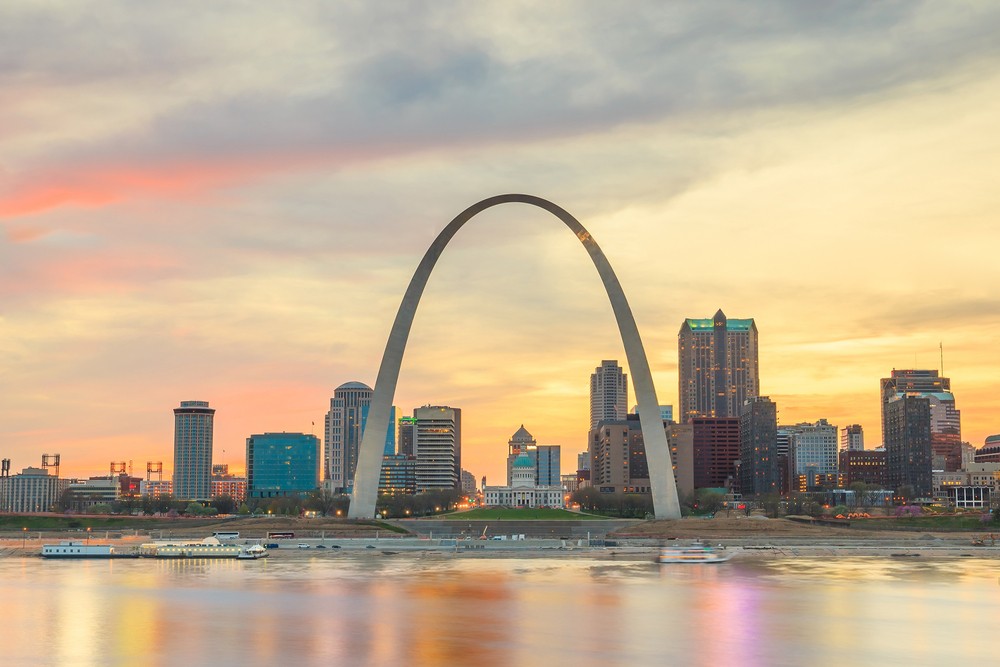
Greater St. Louis Inc. has just released the results of its year of discussions with community members about how to get the St. Louis region back on track. The STL 2030 Jobs Plan certainly has lofty goals. The authors claim to have created a road map to make St. Louis a nationally recognized leader in inclusive job growth through five definitive actions.

The problem is that the report quickly glosses past their acknowledgment of “decades of economic underperformance, population stagnation and racial division” to a future of growth and expansion in a mere nine years. And the path to achieving this miracle is less than clear. The report is peppered with buzz words, but short on detail.

As someone who spends time studying education policy and results across the state of Missouri, I’m very curious to know how this group plans to turn a school system in which just 18.5 percent of students score Proficient or above in math into a “talent engine.” The commission wants to ensure “that every student receives quality STEM education and exposure to various occupations beginning in pre-K and continuing through high school”? What does quality STEM education look like and who’s going to teach it? And don’t we have quite a long way to go there, given that the average high school ACT score is currently 16.6?

Action item number four is “Become a talent magnet and engine,” and that’s the only part of the plan that mentions education. “Successful” programs at local community colleges and universities are identified, but fewer than 60 percent of SLPS graduates enroll in college and the report acknowledges their dismal completion rates.

Not to be a wet blanket, but St. Louis is not going to be a talent engine or magnet until we figure out how to better educate the 82 percent of students who are not able to do math at grade level. All the jargon and buzzwords in the world won’t help a district with a mobility rate (a measure of how many kids joined or left a district in a given year) of over 46 percent. Turning this ship around will be difficult and will require big ideas and open-minded thinking.

St. Louis already has quite a few high-performing charter schools, but we could use more. There are existing charter school networks with proven track records of success in STEM education for disadvantaged students. The Denver School for Science and Technology (DSST) network, for example, serves nearly 7,000 students across nine middle schools and six high schools. Just 15 percent of DSST students are white and over 70 percent qualify for free or reduced-price lunch. But here are the numbers that matter: DSST has had 100 percent college acceptance for its high school seniors for the last twelve years in a row. Its average SAT score of 1092 is higher than the national average of 1059. And two-thirds of its graduates become first-generation college students.

DSST is just one example. Cities like Denver that encourage strong portfolios of education options for their students become growth engines. Families want to stay and raise their children in these cities. Putting STEM materials in front of students who are stuck in schools that can’t teach them math isn’t going to cut it. Every parent in the St. Louis region should have several publicly funded options for educating their children—traditional public schools, charter public schools, private schools, or homeschooling. A robust system of choice should be our goal, not waving a wand over the existing system and imagining it will simply transform itself.

Where Are the Kindergartners?

A version of this commentary appeared in the St. Louis Post-Dispatch on December 8, 2020.

According to enrollment counts taken this fall, there are about 6,000 fewer kindergartners enrolled in Missouri public schools this year than there were last year and about 9,000 fewer pre-kindergartners. That’s a ten-percent drop for kindergarten and a 30-percent drop for pre-K. Where have they gone? According to a recent article, the Missouri Department of Elementary and Secondary Education (DESE) is “exploring” whether they are being homeschooled, have switched to a private school, or just didn’t enroll. It’s important to figure out where these children are, who is footing the bill for their education this year, and whether they’re likely to ever be public school students.

Similar to what has been reported across dozens of states, public school enrollment across all grades in Missouri is down. There are almost 25,000 students missing this year, and most of them are the youngest kids. It’s not surprising that in a year when districts are changing how and where they’re delivering education, sometimes multiple times, frustrated parents are attempting to take control and make their own calls about their children’s education. According to a national analysis by NPR, parents are passing on public school pre-K and kindergarten this year because they just don’t think virtual instruction is right for very young children. Equally, even if in-person learning is offered, they didn’t like the idea of their little ones starting school in the “weird” environment of masks and social distancing. As a result, they’re choosing to either homeschool, find a private school, or get together with friends and neighbors to create their own “micro school.”

It’s important to ask: If these children are beginning their elementary school experience somewhere else, then what is the likelihood that they will return to their assigned public school once things return to normal? Doesn’t it seem likely that some percentage of these parents will make their choice permanent?

In addition to having a better understanding of how and where Missouri students are receiving education this year, we also need to know where these children are because they come (or go) with dollars attached. The state of Missouri allocates roughly $6,500 for each public-school student, with additions for low-income students, students with disabilities, and students who are learning English as a second language. This is known as the “state adequacy target,” as it is the amount considered “adequate” to provide a high-quality education. What amount is adequate to educate students who aren’t even enrolled?

Enrollment counts and attendance rates, which are used to determine state funding, are probably a little crazy this year. But districts have an out. Missouri law allows districts to use the highest of the last two years’ enrollment numbers. And this year only, they can assume an attendance rate of 94 percent. There are countless stories about the difficulty of taking attendance this year, but the assumption that the attendance is actually 94 percent is ridiculous. In terms of the bottom line, the state could potentially spend over $100 million per year for the next two years on 15,000 students who were never enrolled in a public school. To reiterate, children who were never public-school students may be counted as such and funded as such until the 2022–23 school year.

While the state of Missouri will be sending millions of dollars to districts for students they never educated, parents are scrambling to figure out education solutions that work for their families and, in many cases, how to pay for them. They deserve a little relief. One free option for parents would be to enroll in the Missouri virtual program, MOCAP, which should be seamless this year and not require district permission. Equally, all parents, regardless of their income, should be able to create learning pods with neighbors and friends, and they should be able to access a portion of their state education funding to do so. Finally, some states, such as Oklahoma, are helping parents who are struggling financially cover private school tuition. Missouri should do the same.

One outcome of the COVID-19 pandemic is that State education funds are being misdirected to districts for thousands of students who were never enrolled, while parents are paying out of pocket for their children’s education. It’s time for bold action to help every Missouri student access an education environment that works for them and their family, not just the ones who can afford to pay for it on their own.

The Cost of Not Maintaining the Roads

Readers of this blog have seen me write before about the Missouri Department of Transportation’s (MoDOT) estimate that roughly $745 million in high-priority road and bridge transportation needs go unfunded each year.

But if generating an extra $745 million in revenue is what it would cost to keep our roads in good shape, what is it costing Missourians not to do so?

There are a few ways to look at this. From a road maintenance perspective, delaying needed road repairs results in paying more to fix them in the future. This is because road quality decays faster each year it is left untouched. A study from the Cornell Local Roads Program found that $1 spent to keep a road in good condition can save spending $4 to $5 in future repair costs (page 30). Other estimates put this ratio even higher at $1 now versus $5 to $15 later.

From a driver’s point of view, delaying road repairs results in drivers paying more money to take care of their cars. Roads in poor, mediocre, or fair condition present problems to drivers through potholes, rutting, or rough surface quality. The drivers, in turn, pay the price for this through additional vehicle repair costs, increased fuel consumption, and increased tire wear. MoDOT estimates that Missouri’s current road conditions cost an average driver $59 per month, and all drivers statewide $3 billion per year. While the methods for calculating these numbers may be debatable, what is not in question is that rough roads cost drivers money.

Delaying needed repairs on Missouri’s roads is a costly proposition. Kicking the can down the road may be the easiest decision, but it’s Missourians who end up paying both now and later.

Missouri Shouldn’t Make Arizona’s Tax Mistake

Arizona voters recently approved a proposition to impose a 3.5 percent surtax on high-income individuals and joint filers to increase education funding. This measure will raise the top income tax rate from 4.5 percent to 8 percent, which changes Arizona’s top rate from the fifth lowest in the nation to the eighth highest. Voters were clearly supportive of the education initiative, but funding it by way of an income tax increase may set the stage for bigger problems in the future. People have been moving to Arizona to escape high-tax states in recent years, but economists say that this may change due to this income tax increase.

Economists Arthur Laffer, Stephen Moore, and Erwin Antoni predict that this tax increase will mean the migration of 700,000 fewer people, 237,000 fewer jobs created, and a $25.5 billion reduction in personal income growth in Arizona over the next 10 years. These predictions are staggering, and while they are predictions, any negative effects even close to these would be detrimental to Arizona’s economy.

Despite the evidence of the negative effects of income taxes, especially relative to other forms of taxation, old habits die hard. State and local revenues are expected to take a hit from the pandemic and economic shutdown, so income tax increases may be on the minds of many lawmakers. In Missouri, we’re already seeing localities toying with the idea of tax increases (though not necessarily income tax increases). Income tax increases have very real economic consequences and our state cannot afford them. In this case, Missouri shouldn’t follow in Arizona’s footsteps.

The Problem with Regulatory Capture

Earlier this year, Missouri took a huge step forward by allowing licensing reciprocity. But there are still problems with occupational licensing. Many of Missouri’s occupational licensing boards, such as the Cosmetology and Barber Licensing Board, are dominated by license holders, meaning that the regulators are also the ones being regulated. Economists call this regulatory capture, and a “captured” agency can negatively affect the industry and consumers.

Missouri’s Cosmetology and Barber Licensing Board is designed to consist of 11 members (though there are only 9 currently): 7 members who hold either a cosmetology or barber license (only 5 currently), 2 members who own accredited cosmetology or barber schools, and 2 members of the public. With these numbers, this board is dominated by license holders, and they have the influence to make one of two things happen: They could relax regulations and make things easier for themselves as licensed workers, or they could make regulations stricter and make it harder for others to enter into the industry. More often, we see the latter occurring because license holders don’t want more licensed workers in the market—that’s just more people competing with them for customers. And stricter regulations can translate into fewer options and higher prices for consumers.

Of course, those in the industry have specific knowledge, which could be helpful in creating rules and regulations for a given industry. However, it’s difficult to reconcile this with the fact that those in the industry have direct self-interest in keeping the barriers to entry high.

If regulators are creating and enforcing regulations based on their interest and not the interest of the public, we have a problem. This isn’t to say that this is definitively happening with the Cosmetology and Barber Licensing Board, but the incentive is there. Occupational licensing puts a burden on workers and consumers, and if there are additional problems such as regulatory capture, Missourians may be burdened even more. It may be time to rethink some aspects of occupational licensing, such as the structure of the boards or if these occupations need to be licensed at all.

Support Us

The work of the Show-Me Institute would not be possible without the generous support of people who are inspired by the vision of liberty and free enterprise. We hope you will join our efforts and become a Show-Me Institute sponsor.

Donate
Man on Horse Charging