
Susan Pendergrass, Patrick Ishmael and David Stokes discuss the end of the Missouri legislative session, the “pass it now, fix it later” approach of some policymakers, Mayor Jones’ approach to corporate welfare in St. Louis and the latest on a nearly $43 million change to the KCPD budget.
Missouri’s Health Facilities Review Committee Shouldn’t Exist

With all the drama of the past year of pandemic policymaking, one of the health care-related policy reforms that didn’t get a great deal of attention in Missouri was the potential abolishment of Certificate of Need, or CON. CON laws allow the government to decide whether a variety of health care facilities can upgrade their equipment or even operate at all, and it gives a platform to incumbent providers to advocate against new entrants to the market.
Bizarre, right? I thought so and wrote a whole paper about it. The good news is CON laws are falling out of favor across the country, and there are rumblings in the Missouri Legislature that CON elimination could be a major priority in 2022. The bad news is it isn’t 2022 yet.
In the meantime, the old and broken system lingers, and as The Missouri Times reported this week, seasoned health care providers who want to serve Missourians (or just serve them better) are still having to go hat in hand to beg the government to let them offer care for people. Indeed, the Health Facilities Review Committee (HFRC), which grants or denies certificates, was back at work, and the absurdity of the system was once again front and center.
Among the lowlights, an hour-long debate over a pair of proposed senior living facilities in St. Charles County stands out. Opponents argued that the new facilities would pressure existing providers to find quality employees, presumably because the newer facilities would pay better and would, of course, be newer. (“Competition for staff” is a common objection at these hearings.) Opponents also argued that a lot of certificates of need had already been issued in the region, but the holders of many of those certificates haven’t opened facilities yet and thus a certificate shouldn’t be issued here.
In other words, opponents wanted the application denied not because there were too many facilities serving St. Charles County, but because there were too many certificates. What nonsense.
And then there are the applications to add or upgrade existing equipment.
Barnes-Jewish in St. Peters needed to ask the HFRC for permission “to replace its cardiac catheterization lab where doctors work to restore blood flow after a stroke” with a new $2.8 million investment. It was approved. A cancer center in North Kansas City was approved for a “$2 million replacement for its PET/CT system which administrators said was lacking.” It was approved. A Kansas City area provider wanted to add a $2.6 million MRI unit. Approved. Obviously.
Again, why is the state involved in this at all?
The idea that the government has any business interfering with qualified health providers creating or upgrading facilities is absurd and counterproductive to the public interest. I’m hopeful that next year will be the year that CON requirements are finally eliminated in Missouri. It’d be a great thing for providers and patients alike.
Missouri Has A Productive Legislative Session, With More to Come

As the clock ticked down in the last week of Missouri’s regular legislative session, there was growing concern about what would actually get done this year. From education reform to tax reform and everything in between, the expectation among veteran observers was that rather than a lot of bills passing alone on their merits, bills instead would be amended into a handful of mega bills—Christmas trees adorned with dozens of legislative ornaments.
Late session negotiation and consolidation is a hallmark of Missouri’s legislative culture, but in 2021, policymakers adopted this logrolling approach to a historic extent. The legislature regularly passes more than 100 bills each regular session, but according to Legiscan, it passed a total of only 24 bills this year—less than half of the 49 passed in last year’s pandemic-shortened session, and less than a third of the previous decade low of 89 in 2017.
To be sure, the number of bills “truly agreed to and finally passed” can conceal the full extent of the policy changes made in a given legislative year. But given the frequency of filibusters in the Missouri Senate, passing so few bills and waiting until so late in the session to do so is an enormous gamble. But this year, the gamble paid off.
Policymakers delivered a surprising number of strong victories for Missouri this year. We’ve talked about some of those already, including wins for education savings accounts, local checkbook transparency, occupational licensing reform, and deregulation. The session saw strong pushback against implementing Medicaid expansion in Missouri, and while the battle is likely headed to court, the bad policy and the legislative history of that initiative remain unchanged. Medicaid expansion was never going to be free, and supporters should have been straight with voters about that from the beginning. We’ll see what the courts do in the year ahead.
But I haven’t talked, at least on the blog, about several other successes from the session that I’ve supported in the past but maybe haven’t discussed recently. For one, the legislature finally passed an internet sales tax—and by “finally” I mostly mean that policymakers have been saying they’d do it for a long time. Fortunately, they also passed it in a revenue-neutral way, which I have long supported. As I wrote in 2018:
Researchers at the Show-Me Institute have long-supported low tax rates with a broad base, and sales taxes are less destructive to growth than income taxes. But as the sales tax base broadens, another tax should contract to ensure the government isn’t growing and treating taxpayers like a piggybank. In fact, the tax reform bill passed earlier this year originally included a provision that would have created an Internet sales tax in the state, but also simultaneously reduced state income taxes. That revenue-neutral approach is not just good governance—it is good policy that shifts the state’s reliance away from growth-destroying income taxes. [Emphasis mine]
Indeed, the sales-tax-increase-for-income-tax-decrease was the approach the legislature ultimately took. It also wasn’t the only tax-related change this year. The legislature also tightened the definition of blight and limited where tax-increment financing could be meted out. It passed a higher gas tax, which is an appropriate way to fund infrastructure investments— the gas tax in Missouri has been frozen since the 1990s and hasn’t kept pace with inflation. Time will tell whether there is a process foul under the Hancock Amendment in the way this tax was enacted.
And there was more. The legislature added some guard rails to the ability of local governments to impose draconian lockdown orders, which I came out against early in the pandemic. The legislature passed the Second Amendment Preservation Act, which reaffirms that the federal government cannot commandeer state officials to do the federal government’s will—perhaps an academic point on the surface, but a substantive reform at its core. And while it didn’t pass, the legislature discussed barring Critical Race Theory in the classroom, a subject I haven’t talked about much here but is emerging as an important issue of not only curriculum but government transparency.
Those are just some of the highlights from the session, and there are many more items that we can, and will, talk about in the months ahead. There were items left undone, including comprehensive tax credit reform, deeper TIF reform, and making more of the COVID regulatory relief orders permanent, though there’s still time to do that. And of course, there will likely be three special sessions coming—one on elections, one on Medicaid provider taxes, and one on redistricting after the census releases its final decennial numbers. Mark your calendars for those.
More remains to be done, and hopefully more will be done. But to be fair, this was a pretty good start.
Missouri Can Take a Lesson From Florida’s Toll Roads

I recently spent time in Florida, which included driving from Miami down to the Florida Keys. Along the way, I traveled on several toll roads which are part of Florida’s expansive turnpike system. If Missouri wanted to implement toll roads, Florida’s system serves as a reminder to Missourians that electronic tolling is eminently possible and can raise money from drivers to keep roads in good condition.
Every toll road I drove on was tolled 100 percent electronically—there was no option to pay with cash. My rental car was equipped with a transponder that registered with overhead sensors when driving through a checkpoint. Cars that didn’t have a transponder would have their license plate photographed and a bill sent to them in the mail. Drivers without transponders paid higher rates to reflect the higher administrative costs of physically mailing bills rather than deducting money from an online account.
Toll rates vary by vehicle type and number of axles. The more axles on your vehicle, the higher the toll. Rates also vary by the location of the road. The higher the cost of maintaining the road, the more drivers pay for its use. And while I did not use it on my trip, the Florida Turnpike’s website has an online map that lets drivers calculate the cost of tolls on their trip based on the exact route they plan to take.
Florida’s all-electronic toll roads are the future of tolling. Drivers don’t need to stop and start at every checkpoint, nor do they need to constantly remember to carry cash. Missouri has heavily traveled highways that need rebuilding (page 18), and tolling is a responsible way to raise the money needed to get them back in good shape. It wouldn’t be easy to establish toll roads in Missouri. There are a number of legal hurdles that would make implementing tolling in Missouri a challenge, and voters have been reluctant to accept their use.
But if Missourians knew how easy it is to drive on modern toll roads, they might be willing to give tolling a shot.
A Win for Restaurants and Cocktail Enthusiasts

Senate Bill 126 has passed the legislature and will permanently allow restaurants to serve to-go cocktails if signed by the governor. During the height of the pandemic, the state waived the regulation that prohibited to-go cocktails to allow restaurants more opportunities to serve customers. This was a lifeline for many restaurants and was hugely popular with customers.
When regulations such as this one were originally waived, I (and many others) hoped these waivers would become permanent. If these regulations weren’t necessary during the pandemic, are they necessary during normal times? What is the harm in allowing restaurants to serve packaged, tamper-proof to-go cocktails? It doesn’t seem any different than buying a canned cocktail or the ingredients for a cocktail at a liquor store.
Luckily, the legislature is siding with restaurants and customers. If signed, this bill would allow restaurants more freedom to do business and please customers as they see fit.
More Evidence of Failures of CIDs

The two sure things in life are said to be death and taxes. I might add a third (admittedly related to the latter): When special taxing districts such as community improvement districts (CIDs) or transportation development districts (TDDs) face an audit, they fail it.
Numerous state audits over the past decades have identified the shortcomings of these districts. Now, the Kansas City Auditor has reviewed the use of CIDs in Kansas City and found many of the same issues. Show-Me Institute analysts have written about the problems with CIDs and TDDs for years. Common problems with these special taxing districts include financial abuses, lack of transparency, egregious boundary drawing to avoid voter participation, and much more.
The recent audit of CIDs in KC found many of the same things. From the article in the Kansas City Star (emphasis added):
In recent years, however, several CIDs have been created to benefit a single property owner or developer. In 2016, for example, the Intercontinental Hotel at the Country Club Plaza created a CID for itself to raise taxes earmarked to pay for upkeep of deterioration that the ritzy hotel argued had created blighted conditions. A similar CID was approved for the Romanelli Shopping Center in Waldo in 2019.
Both were criticized for using taxes to subsidize property maintenance. More than half of the existing CIDs in Kansas City benefit a single owner or developer, as opposed to community-based districts like those covering Westport or downtown.
The audit also noted that several CIDs — more than a third — have not submitted their annual budgets to City Hall, a requirement under Missouri law.
Legislation just passed by the state legislature makes some modest reforms to CIDs. These reforms include mandating annual financial reports, competitive bids for contracts, and requiring at least one independent board member. Hopefully, the governor will sign it. But we need to go much further and ensure these taxing districts cannot abuse the public trust for private gain, which is all many of them are good for. (Yes, there are exceptions to that.)
We need far more voter involvement, stricter reporting requirements, tougher limits on which expenditures are allowed, and total tax caps, just to name a few potential improvements. The single most important thing we need is a requirement that a full city (or county, for unincorporated areas) vote to approve all new CIDs and TDDs. Absent greater reform, these special taxing districts will continue to just be the great Missouri tax-and-spend deception.
Synchronicity in Warson Woods and Glendale

The city of Warson Woods in St. Louis County is considering contracting with the neighboring city of Glendale for police services. You might think that a government contract between two similar suburbs would be a routine thing for local officials to consider. Well, think again.
Some people in Warson Woods are up in arms over this proposal. It’s their city and their taxes, and they have every right to be concerned and ask tough questions. But the reaction, in my opinion, does seem out of line relative to the proposal. Warson Woods would not be taken over by some giant organization. The city would go from being served by a department of 6 total officers to being served by a combined department of about 15 officers, including all of the Warson Woods policemen. If you want to know the names of your local police (a perfectly worthy aim), you can still do that.
The proposed contract is estimated to save around $2 million over the next ten years. That is a lot of money for a city like Warson Woods. Warson Woods leaders have put together a committee to investigate the proposal from Glendale, and I hope it gets the careful consideration it deserves.
The people of this region have made it clear that most people don’t want some massive government consolidation. But nobody should reject out-of-hand smart changes to our government structure in St. Louis County. The idea that contracting with a neighboring city for police services to save tax money and improve services (more frequently having multiple officers on patrol will improve service) is somehow radical is unfortunate. It is, in fact, quite common. Warson Woods itself has contracted with Glendale for fire services for decades. The small, neighboring suburb of Oakland contracts with Kirkwood for police services. Nearby Frontenac patrols three other smaller communities adjacent to Frontenac: Westwood, Huntleigh, and Crystal Lake Park. I have honestly never heard anyone in Westwood (which is really a country club with a city attached to it, like Prussia) or Oakland say, “Things are great here, but it would be better if we just had our own police department. Those guys from Kirkwood and Frontenac just aren’t cutting it.”
I wish the committee investigating the proposal all the best. Few may want a massive overhaul of local government in St. Louis, but that doesn’t mean there should be knee-jerk opposition to smart, narrowly defined changes that save tax dollars and improve public services at the same time.
Remember This: The Charter School Destruction Playbook

Imagine you wanted to open a new restaurant, but in order to do so, every restaurant in a five-mile radius had to vote to allow you to do so. Not only that; imagine if you had to pre-emptively prove that your opening would not harm the bottom line of any of those other restaurants. Now imagine if you were already open and the law changed to require you to now answer to all the other restaurants in the area, even though you have been successfully operating for more than a decade.
That is what was proposed in Senate Bill 315 this year. Luckily, it did not make much progress, but it exists as an important historical artifact that school choice supporters should remember, as its various planks are sure to emerge in the future.
Under the bill, charter schools, which can now be authorized by universities and the Missouri Public Charter School Commission, would only be authorized by local public school districts. In order to operate, charter schools would have to prove not only that they would meet the needs of their students (which they must do now) but that they “meet those needs in a manner that improves the local public school system.” What’s more, all existing charter school contracts would transfer to local school boards once they expire, so not only new charter schools but all existing charter schools would come under local district control.
The whole point of charter schools is to offer students a public education separated from the local school district’s oversight. If folks wanted to send their kids to a district school, they would send their kids to a district school. This bill would be the death knell for alternative forms of public education and a slap in the face to the more than 25,000 children and their families who have chosen charter schools.
Public school districts struggle enough to manage their own schools. Why on earth do we think they could take over the management of Missouri’s 66 charter schools? If the Kansas City and St. Louis districts were knocking it out of the park, you could understand the argument for giving them more influence over charter schools. They are not knocking it out of the park. How about we encourage them to get their houses in order before taking over any other schools?
The key to understanding this bill is following the money. Let’s look at the bill description text: “Charter schools may be authorized or expanded only after a district has assessed the impact of the proposed charter school on local public school resources, programs and services, and other elements set forth in the act.” As Hamlet said, there’s the rub. This bill is not about what is best for kids; it is about preventing per-pupil funding from following them to the schools that actually educate them. It is about protecting school district coffers.
Rather than work to provide a better education for students, districts are trying to snuff out their competition. It is shameful and wrong.
They didn’t succeed this year, but supporters of charter schools must remain vigilant because their opponents have shown their intent.
Live Event! Media Matters: The Impact of Storytelling on Culture

Join us on Monday, June 14 (Flag Day) for an in-person presentation by Lee Habeeb on The Impact of Storytelling on Culture.
Lee Habeeb is the CEO and founder of the non-profit radio network American Private Radio and the on-air radio host of Our American Stories.
Event Details
NOTE: If you are not fully vaccinated, in accordance with CDC guidelines and St. Louis City Emergency Order 19, please wear a mask and observe social distancing.
Where: 5297 Washington Place | Saint Louis, MO 63108
When: Monday, June 14
Reception@5:30 pm
Presentation@6:00 pm
Click Here to Register
About Our American Stories
https://www.youtube.com/watch?v=Eo_vp16jmS4&t=1s
Download the Our American Stories podcast on Itunes, Google Play, Spotify, or wherever you find your podcasts, and visit ouramericanstories.com to find an affiliate station near you.
About Our Speaker
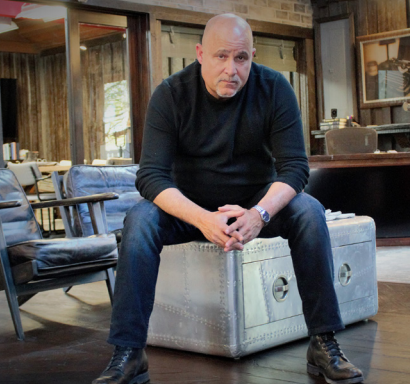 Lee Habeeb got his start in radio co-creating The Laura Ingraham Show, which launched in 2001. By 2007, it was the #1 show in America in its time slot. He moved to Salem Media Group, where he serves as VP of Content, overseeing shows hosted by some of conservativism’s greats: Bill Bennett, Dennis Prager, Hugh Hewitt, Larry Elder, and Eric Metaxas. Habeeb also writes a weekly column at Newsweek.
