Remember This: The Charter School Destruction Playbook

Imagine you wanted to open a new restaurant, but in order to do so, every restaurant in a five-mile radius had to vote to allow you to do so. Not only that; imagine if you had to pre-emptively prove that your opening would not harm the bottom line of any of those other restaurants. Now imagine if you were already open and the law changed to require you to now answer to all the other restaurants in the area, even though you have been successfully operating for more than a decade.

That is what was proposed in Senate Bill 315 this year. Luckily, it did not make much progress, but it exists as an important historical artifact that school choice supporters should remember, as its various planks are sure to emerge in the future.

Under the bill, charter schools, which can now be authorized by universities and the Missouri Public Charter School Commission, would only be authorized by local public school districts. In order to operate, charter schools would have to prove not only that they would meet the needs of their students (which they must do now) but that they “meet those needs in a manner that improves the local public school system.” What’s more, all existing charter school contracts would transfer to local school boards once they expire, so not only new charter schools but all existing charter schools would come under local district control.

The whole point of charter schools is to offer students a public education separated from the local school district’s oversight. If folks wanted to send their kids to a district school, they would send their kids to a district school. This bill would be the death knell for alternative forms of public education and a slap in the face to the more than 25,000 children and their families who have chosen charter schools.

Public school districts struggle enough to manage their own schools. Why on earth do we think they could take over the management of Missouri’s 66 charter schools? If the Kansas City and St. Louis districts were knocking it out of the park, you could understand the argument for giving them more influence over charter schools. They are not knocking it out of the park. How about we encourage them to get their houses in order before taking over any other schools?

The key to understanding this bill is following the money. Let’s look at the bill description text: “Charter schools may be authorized or expanded only after a district has assessed the impact of the proposed charter school on local public school resources, programs and services, and other elements set forth in the act.” As Hamlet said, there’s the rub. This bill is not about what is best for kids; it is about preventing per-pupil funding from following them to the schools that actually educate them. It is about protecting school district coffers.

Rather than work to provide a better education for students, districts are trying to snuff out their competition. It is shameful and wrong.

They didn’t succeed this year, but supporters of charter schools must remain vigilant because their opponents have shown their intent.

Live Event! Media Matters: The Impact of Storytelling on Culture

Join us on Monday, June 14 (Flag Day) for an in-person presentation by Lee Habeeb on The Impact of Storytelling on Culture.

Lee Habeeb is the CEO and founder of the non-profit radio network American Private Radio and the on-air radio host of Our American Stories.

Event Details

NOTE:  If you are not fully vaccinated, in accordance with CDC guidelines and St. Louis City Emergency Order 19, please wear a mask and observe social distancing.

Where: 5297 Washington Place | Saint Louis, MO 63108

When: Monday, June 14 

Reception@5:30 pm

Presentation@6:00 pm

Click Here to Register

About Our American Stories

https://www.youtube.com/watch?v=Eo_vp16jmS4&t=1s

Download the Our American Stories podcast on Itunes, Google Play, Spotify, or wherever you find your podcasts, and visit ouramericanstories.com to find an affiliate station near you.

About Our Speaker

Lee Habeeb got his start in radio co-creating The Laura Ingraham Show, which launched in 2001. By 2007, it was the #1 show in America in its time slot. He moved to Salem Media Group, where he serves as VP of Content, overseeing shows hosted by some of conservativism’s greats: Bill Bennett, Dennis Prager, Hugh Hewitt, Larry Elder, and Eric Metaxas. Habeeb also writes a weekly column at Newsweek.

Setting the Record Straight About Missouri’s New ESA Program

Earlier this week, Susan Pendergrass wrote a blog post addressing some of the criticisms levied by The Kansas City Star editorial board about a bill that creates an Empowerment Scholarship Accounts (ESA) program in Missouri:

Big shock—now that the Missouri legislature has finally created a program to give school choice to students from low-income families and students with disabilities, the misinformation campaign against the program has begun. Case in point: The Kansas City Star editorial board has fired a first shot at the Empowerment Scholarship Account program, and it has gone wide.

On May 19, Show-Me Institute Senior Fellow of Education Policy Michael Q. McShane joined The Pete Mundo Morning Show to set the record straight about Missouri’s new, yet to be signed into law, ESA program.

Listen Here

Is Medicaid Expansion Going to Court?

Missouri will not be implementing Medicaid expansion on July 1st, and the question of when it eventually happens, or if it happens at all, appears destined for the courts.

In August, Missouri voters approved Medicaid expansion through a constitutional amendment. Recently, Missouri’s legislature passed next year’s budget sans funding for Medicaid expansion. As I wrote more than a month ago, the state’s general assembly had real reasons for deciding against funding expansion. Medicaid expansion represents a significant growth in future spending obligations for the state’s budget. Despite claims to the contrary, expansion was set to cost more than $1.5 billion next year, with approximately $100 million coming from state sales and income taxes that would normally go toward other programs.

Missouri’s constitution gives the legislature the sole responsibility of authorizing state spending. Further, it states that constitutional amendments cannot impose new costs without outlining how that cost would be paid for. Since the amendment approved by voters last August has proven to have an enormous price tag, and included no funding mechanism, the legislature decided not funding expansion was a constitutionally valid option.

After the budget was approved, several legislators noted the constitutional amendment still requires eligibility guidelines to be expanded on July 1st, regardless of whether there is funding to cover the cost. Recently, the state’s Medicaid agency began laying the regulatory groundwork for eligibility expansion. But last Thursday, Governor Parson tore up that groundwork and withdrew the proposed changes that would expand eligibility on July 1st. In the statement announcing withdrawal, the governor’s cited reason was the lack of budgeted funding.

Heading into the new state fiscal year, there’s only one thing about Medicaid expansion that’s certain: it will not be happening in Missouri on July 1st. Expansion advocates aren’t going to just sit back and let this go, which is why a legal challenge appears imminent. It’s likely the next step is for someone to be denied coverage who would have qualified under the approved constitutional amendment after July 1st, which will prompt a lawsuit and send the issue to the courts. Judges will have to decide not only whether an amendment can compel the legislature to appropriate funds, but also if eligibility must be expanded absent any funding.

It’s important Missourians take notice of how this situation plays out over the next few months because it could significantly impact the future of our state. Potential judicial action could affect the state’s initiative petition process, the health coverage status for thousands of Missourians, and the allocation of billions in future state revenue.

SMI Podcast: A Playbook for Public Safety with Hannah E. Meyers

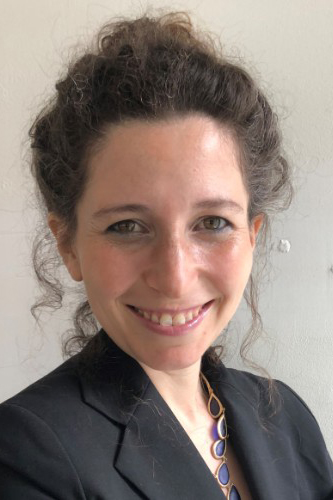
On this episode of the podcast, Susan Pendergrass is joined by Hannah E. Meyers. They discuss what cities can do to prioritize the public safety of their citizens.

Hannah E. Meyers is director of the policing and public safety initiative at the Manhattan Institute. Most recently, she managed corporate and private investigation teams for an international firm and directed research strategy for a counter-extremism NGO. She served for five years with the Intelligence Bureau of the New York City Police Department, partnering with detectives on counterterrorism investigations and bringing one of the first state-level terrorism cases to prosecution. During her time at NYPD, she also supervised an intelligence analysis team and was seconded to the FBI. Earlier in her career, Hannah did think tank research pertaining to terrorism and human rights, was a contributing writer on a variety of topics and served as deputy director of policy for a New York State gubernatorial nominee.

Download A Public Safety and Policing Plan for NYC’s Next Mayor

More ways to listen

Click Here  to Listen on Apple podcasts


Movement on Occupational Licensing Legislation

House Bill 273, a collection of occupational licensing measures, has passed the Missouri Legislature and is waiting to be signed by the governor. I’d like to highlight a few parts of this legislation that increase Missourians’ access to jobs.

One part of this bill prohibits the Division of Professional Registration (which oversees licensed occupations) from requiring a license if a worker is only engaged in shampooing under the supervision of a licensed cosmetologist or barber. (Seem overly complicated? Welcome to the world of occupational licensing.) This seems obvious—of course someone who is just going to be shampooing hair should not have to complete the hundreds of hours of training and pay the fees required to be a fully licensed cosmetologist in Missouri. This measure will significantly reduce the price of becoming a shampooer and make it much easier for salons and barbershops to hire shampooers.

This legislation also adopts the Occupational Therapy Licensure Compact, which provides mutual recognition of occupational therapy licenses from other states within the compact. This will make it easier for licensed occupational therapists to relocate and continue working. However, Missouri adopted universal licensing reciprocity last year, which is a larger step than an individual compact, at least for people moving into Missouri. On the other hand, this compact should make it easier for Missouri occupational therapists to work in other states within the compact. Time will tell whether this provision will make the relocation and licensing process easier and more beneficial for Missourians.

Ultimately, occupational licensing is the government giving you permission to do your job. It’s a lot of red tape that increases costs and hardships for workers and consumers. Missouri made a great leap forward last year with universal licensing reciprocity. This year it seems we are only getting small steps, but if (and that’s a big if with some of these measures) we are moving in the right direction, it’s a win for Missourians.

Here’s A Crazy Idea: Tax Yourself.

Versions of this commentary were published in the Springfield News-Leader and the Columbia Tribune.

Longtime United States Senator and Chairman of the Senate Finance Committee Russell Long of Louisiana used to say, “Don’t tax you, don’t tax me, tax that man behind the tree.” Long knew that everyone’s favorite tax was the tax that forced someone else to pay for something. We all want services from the government. The problem there (actually, there are many problems there, but let’s focus on the tax issue) is that we have to pay for those services with taxes. Like many other politicians, Long realized that what we really want is to have other people, the “outsiders,” pay for our public services.

Local governments in Missouri have excelled at this practice for many years. It was here in Missouri that local governments took it to its most extreme form in Mack’s Creek, St. George, and many other places by funding their city governments with reprehensible fine and ticketing practices. Ferguson got much of the attention for these actions after the riots, but, in fact, they were a fairly normal Missouri city when it came to using fines and tickets to fund their city’s operations. After the violence in Ferguson, the state passed beneficial legislation that finally limited this practice, and our entire state is better off for that change.

But local governments still focus on raising revenues by taxing outsiders. Voters in Kansas City and St. Louis just approved keeping the earnings tax, which includes taxing people who don’t live in those cities and can’t vote on the issue. Who wouldn’t want to tax someone else who is only in the city for limited periods, uses fewer public services, and has no say in the matter? Branson did the exact same thing earlier this month when voters passed proposals to pay for important infrastructure improvements entirely with new hotel and restaurant sales taxes.

Welcome, stranger, thanks for visiting.

A more common practice is the use of special taxing districts such as transportation development districts (TDDs) and community improvement districts (CIDs) to fund local services. Such districts have exploded in recent years, going from a combined 86 in 2004 to 732 in 2020. Special taxing districts can use property taxes, sales taxes, or direct user fees like tolls for their projects. While a couple of the most well-regarded of these tax districts do use property taxes or tolls to fund their operations, I’ll let you guess which tax most of them use. That’s right, the sales tax.

In a 2017 audit, Missouri state auditor Nicole Galloway cited numerous TDDs and CIDs for financial and management abuses. In Springfield, she detailed how the College Station TDD failed to notify shoppers of the tax and failed to include area residents on the TDD board. In Waldo (in Kansas City) multiple CIDs are layered on top of each other, creating high taxes for shoppers that benefit business owners, not the general public. In Southeast Missouri, the Black Mountain CID in Van Buren was caught using the CID’s tax money to make private loans, pay private debts, and fund private expenditures. In Mid-Missouri, the Stoneridge TDD in Jefferson City granted a no-bid contract submitted after the supposed deadline to a board member’s company, while the Rock Bridge TDD in Columbia collected sales taxes from businesses outside the district. Missouri needs tighter limitations on the use of TDDs and CIDs, or they will continue to be abused around the state.

There are benefits to funding government with consumption taxes. This is not an anti-sales tax piece, generally speaking. What I want to argue against is the exploitation of the idea that those shoppers, workers, or visitors who briefly appear in your city need to pay their “fair share” of the local tax burden. “Free rider” is a term for people who use public services without paying the costs. Good public policy should work to limit free riding where possible. But is a person who shops in your city really a free rider who must, in the interest of fairness, pay another half-cent sales tax on the goods that they buy? I don’t think they are, even in tourist havens like Branson or Lake of the Ozarks.

Those shoppers are already paying gas taxes, and a portion of the gas tax gets sent straight to cities for their local roads. Beyond the gas taxes, shoppers and other visitors will generally travel major state and county roads to get to their local shopping destinations. Those malls, shopping centers, grocery stores, etc., are rarely located on streets maintained by city governments.

Those businesses that employees work for or shoppers patronize are already paying commercial property taxes (which are assessed at higher rates than homes) to the city. They pay business license fees to the city, so I might ask what the purpose of a business license is if not to allow employees and customers to come to your place of business? Arguments for raising new taxes, including through measures like TDDs and CIDs, frequently leave out any discussion of all of the other taxes and fees that are currently being paid.

Another issue with funding as much of your local government as you can with a sales tax directed at outsiders is that doing so makes things the government wants look like things the government needs. Do you think that Missouri’s nascent and inexplicable enthusiasm for new trolleys and streetcars would be happening if property owners and trolley users (the few there are) were paying the entire cost? Of course not. The Loop Trolley is entirely funded by outsiders via local sales taxes and federal tax dollars. The Kansas City Streetcar is significantly funded by federal tax dollars and a local TDD, although—to give credit where due—some of the operating funds come from local property taxes. The ability to export most or all of the cost of a new government project onto people who don’t vote on it makes it much more likely that government will engage in activities with questionable benefits. Using property taxes instead as the primary basis for local government funding results in better decision-making by voters—who must decide if the benefits of the government activity are worth what the voters themselves will have to pay for them.

The local leaders who push these efforts to tax outsiders or alleged free riders often feel they are being clever by doing so, as if they have discovered some new trick. The recent ads in favor of the earnings tax in Kansas City proudly claim that half of the money comes from people who don’t live in Kansas City. Supporters of almost every new TDD, CID, or other sales tax proposal consistently tout how this will make those outside shoppers finally pay their fair share. What is lost here is the fact that while your city is being clever in getting that revenue from those outsiders, all of the other cities are doing the same thing to your residents. This whole endless endeavor just creates a circular firing squad of higher taxes used to fund government expenses of questionable necessity. At its worst, it led to long lines at night courts throughout Missouri as town after town was funding itself with tickets and fines targeted toward making payroll rather than public safety.

If Russell Long had been from Missouri, he probably would have changed the final line of his doggerel. “Tax that tourist in the CID” and “Tax that driver in the SUV” come quickly to mind as localized final verses. But his main point stands the test of time and geography. Long understood the desire to tax someone else to fund your public services; a desire that is alive and well in Missouri. Who knows, perhaps Senator Long once got a speeding ticket in Mack’s Creek?


The Good, the Bad, and the Ugly

Big shock—now that the Missouri legislature has finally created a program to give school choice to students from low-income families and students with disabilities, the misinformation campaign against the program has begun. Case in point: The Kansas City Star editorial board has fired a first shot at the Empowerment Scholarship Account program, and it has gone wide. Let’s talk about the good, the bad, and the ugly of this editorial.

The good: The editorial board acknowledges that parents want the best education for their children and this program may allow them to offset private school tuition, tutoring, or other educational therapies. They also acknowledge that the Kansas City Public Schools and the Hickman Mills district have struggled with low performance for years.

The bad: The editorial is incorrect in so many places. It quotes a claim that this program will drain $75 million from the education budget. In fact, the program is capped at $25 million and it is paid for through tax credits from general revenue, not education funding. It claims that every student who leaves KCPS or Hickman Mills for the program will take approximately $10,000 in state education funding with them. First, the state education funding formula provides $6,400 per student. But here is the real kicker: as a result of legislative negotiations, students who leave their public school to take a scholarship in this program will continue to be counted in the enrollment of their public school district for five years. That’s right, the district will receive state funding for those students for five years after they leave. And then strangely, editorial claims that this program will at once dismantle public education while raising concerns over a lack of available private school seats and the inability of parents to cover costs beyond the scholarships. How can both of these dire predictions be accurate?

The ugly: Here’s the crux of the editorial board’s argument and what really makes my blood boil. The board claims that we can’t let students leave low-performing districts because they take money with them. A quote from the Hickman Mills superintendent: “It is a direct attack on our student enrollment and the funding we receive from the state.” The scholarships that will be “doled out” are really just diverting “dollars away from the system.”

Imagine you’re a single parent, struggling to make ends meet. You have a child with a disability who is making little to no progress catching up to their peers and you worry every day about your child’s future. A scholarship-granting organization now exists that will allow you to apply for a scholarship for your child. You can look for a private school that specializes in your child’s disability. But your own superintendent wants to close the gate and lock it because your child represents thousands of dollars in state funding. You’re supposed to prioritize the finances of the public school district over your child’s well being.

Make no mistake, the drumbeat against allowing low-income parents or parents of children with disabilities to use public money anywhere other than their assigned public school is about to get louder. The threat just got real. The unfairness and hypocrisy of holding them hostage for their state funding astounds me.

Support Us

The work of the Show-Me Institute would not be possible without the generous support of people who are inspired by the vision of liberty and free enterprise. We hope you will join our efforts and become a Show-Me Institute sponsor.

Donate
Man on Horse Charging