Pay Differentiation Can Heal Missouri’s “Teaching Shortage”

Amidst a “teaching shortage” that is driving almost 25% of Missouri school districts into four-day school weeks, Missouri schools and officials are searching for relief and solutions.

The Missouri Blue Ribbon Commission has been tasked with finding solutions for this “crisis.” The commission proposed additional funding for the Career Ladder Program (opportunities for professional development and extra pay), Grow Your Own Program (local teacher recruitment), and raising the base salary for teachers to $38,000.

Two key questions arise from this proposal:

  1. What is the nature of this teacher shortage? Is it truly a crisis?
  2. How will handing out more money solve the issue?

To answer the first question, it is important to note that the total number of public school teachers in Missouri (71,055) in 2020–2021 is the highest it has been in the past five years. One might think this is a normal occurrence because the population of the United States is increasing.

However, public school enrollment in Missouri has been steadily decreasing, from over 915,000 students in 2016 to under 860,000 in 2021. Additionally, enrollment is projected to dip below 800,000 by 2030—a 10 percent drop in less than fifteen years.

So, what gives? Why are schools feeling the burdens of shortages and claiming that there is a crisis if they have an increasing number of teachers for a decreasing number of students?

It is not because of a shortage of total teachers, but a deficiency of specific teachers. Teachers for special education, mathematics, physics, and biology are in low supply.

One of the reasons for these specific vacancies is the lack of pay differentiation for teachers. In Missouri, public school teachers are expected to be paid equally across the board, whether they are special educators, calculus teachers, or elementary music teachers. This isn’t to say that any of these jobs are easy—there are difficulties in each of these different sectors—but objectively, a special educator and calculus teacher require higher credentials than an elementary music teacher.

Lack of additional pay likely means many future teachers are not pursuing credentials that cost additional time and additional money because it doesn’t pay off. This contributes to a lower proportion of teachers entering these fields.

This brings us to my second question: How will raising pay across the board solve this issue? It won’t. If the ratio of special educators to elementary music teachers is 1:1, an additional uniform $6,000 raise likely won’t change the ratio. The problem of specific teacher vacancies would remain. While the commission’s idea of increasing salary and recruitment is the right one, the funding needs to be allocated more carefully.

If the commission wants to solve this “teacher crisis,” pay differentiation, or at least extra compensation in these low-supply fields, needs to be implemented. The extra time and money required to become proficient in high-demand fields should be balanced with a pay increase, and teaching roles could then be more evenly filled in Missouri.

The Legendary Loop Trolley Saga Continues

A familiar sentence for St. Louis residents: The Loop Trolley is back in the news! Show-Me Institute analysts have been covering this issue for a long time, and lucky for you all, a new chapter is now unfolding.

In addition to the $51 million that has already been spent on the Loop Trolley project, the East-West Gateway Council of Governments has recently decided to approve an additional $1.2 million of spending from federal grant funds and an additional $540,000 local match.

While St. Louis residents may want government officials to abandon this project that has been characterized by incompetence and countless setbacks, the cheapest solution for taxpayers is actually for the trolley to run. The federal government has threatened to demand repayment of $37 million in grants given to St. Louis if the trolley stops running. Abandoning this project does not mean that taxpayers would abandon paying for it. Because of this potential clawback, city officials argue this additional funding is necessary for sustaining the trolley and avoiding a bigger financial blow.

Despite concerns about self-sustainability, trolley tickets have been free to riders since its re-opening on August 4th. Although I understand that making tickets free could boost popularity by attracting people to try the trolley, there needs to be a long-term economic plan if it will truly be self-sustaining.

Trolley officials should seek to maximize profit with methods such as ticket prices, advertisements, renting to private parties (Nashville does this often), and possibly even filming for commercials and movies/TV shows. The goal should be to reduce the burden on taxpayers—who have already paid entirely too much for this project—as much as possible.

Like it or not, the Loop Trolley is most likely a long-term part of St. Louis’s future. However, it does not need to be a long-term drain on taxpayer funds. A plan for self-sustainability through trolley revenue is a necessary next step.

This Is What Number Four Looks Like?

By now, we have all seen that wonderful photo of the young child sitting in the backseat of her parents’ car. You know, the one where the adorable blonde with buck teeth gives her mother the side eye. The meme has been shared countless times via social media. It also happens to exemplify the exact feeling I had upon reviewing the Heritage Foundation’s recently released Education Freedom Report Card.

The report ranked Missouri 17th overall in terms of education freedom. This ranking includes measures on “transparency,” “regulatory freedom,” and “spending.” But it was the ranking on “school choice” that stood out the most. The Heritage Foundation ranked Missouri 4th in the country in terms of having the best school choice environment. This ranking included considerations for private school choice, private school choice program design, charter schools, homeschooling, and public school choice.

The reason I was so shocked by this ranking should be obvious to anyone living in the Show-Me State—school choice options are almost nonexistent for anyone living outside of St. Louis or Kansas City.

This is what school choice looks like in Missouri.

Charter Schools

The National Center for Education Statistics (NCES) reported that in Missouri there were 71 total charter schools in 2019—20 (Missouri ranks 27th in the number of charter schools). This accounts for 2.9 percent of total public schools (34th overall). In total, these charter schools served fewer than 25,000 students (28th overall), or 2.7% of all public school students (34th overall).

What the NCES rankings don’t reveal is that all these schools and all these students are in either St. Louis City or Kansas City. Missouri has had charter schools for more than 20 years. The first one ever to open outside of the major cities just opened this year; the Leadership School opened with 94 students in the Normandy School District, and it faced considerable opposition. As the St. Louis Post-Dispatch reports:

Normandy schools have not been fully accredited for the last decade and are under the control of the Missouri Board of Elementary and Secondary Education. In 2021, Normandy students scored lower than any district in the state in English with 14% proficiency and second lowest in math with 5% proficiency.

This is what number four looks like?

Private School Choice

The Missouri Legislature created the Missouri Empowerment Scholarship Accounts Program in 2021. Students are using the program for the first time this year. EdChoice reports that 51% of families in “applicable Missouri cities and counties” are eligible for the program. While that sounds impressive, it is not. The program is limited to counties eligible for charter schools or cities with more than 30,000 residents. Just as charter schools are out of reach for many in our state, these program restrictions put school choice out of reach for many Missourians. Furthermore, that 51% number includes everyone eligible based on income restrictions without taking into account other factors (200% of the federal free-and-reduced price lunch income level).

Even if you do live in Clay, Jackson, Jefferson, St. Charles, or St. Louis County (the eligible counties), or Columbia, St. Joseph, Joplin, Jefferson City, Cape Girardeau, and the City of St. Louis (the eligible cities) and you meet the income requirements, you still have other hurdles. Your child must meet one of the following criteria to be eligible: have an Individualized Education Program, be entering kindergarten or first grade, or have attended public school the previous year.

At most, based on the number of tax credits available for the program, the scholarship program could serve 3,900 Missouri students.

This is what number four looks like?

We are certainly glad to see the small gains Missouri has made toward greater educational freedom, but the work is not done despite this curious number four ranking.

Would an Income-tax Cut Benefit Missouri?

Missouri’s economic growth has consistently lagged that of much of the country—so badly, in fact, that our state’s gross domestic product growth ranked 40th among the states between 2010 and 2020. That’s the grim reality of Missouri’s position relative to the rest of the country while states like Florida, Tennessee, and Texas leave us in the dust. How can policymakers help create an environment that strengthens economic growth to benefit more Missourians?

Tax relief and reform alone won’t solve all of Missouri’s problems or immediately launch Missouri to the front of the pack in attracting talent and capital from around the country. We need better schools with more educational opportunities We need to reduce crime, especially with three of our major cities—St Louis, Kansas City, and Springfield—ranking distressingly high on national crime indices. But solving either, let alone both, of these problems is very complex and likely to require a multi-pronged approach as policymakers work to build consensus and tackle each element of the problem.

There are some things Missouri can never have—like Florida’s coastline (although the Lake of the Ozarks is plenty to brag about)—but implementing good tax policy is well within our grasp. Some would seek quick, superficial, and ultimately harmful “fixes,” like using subsidies or tax credits (subsidies by a different name) as handouts to lure large, well-connected companies to expand in Missouri, with no guarantee that any jobs they create would outlast the flow of taxpayer money. But history and research have undermined the claim that we can subsidize our way to prosperity or successfully pick winners and losers. One thing policymakers absolutely can do is create a better, more level playing field for families and small businesses with an income-tax cut that returns money to their pockets and reduces the penalty on hard work and investment.

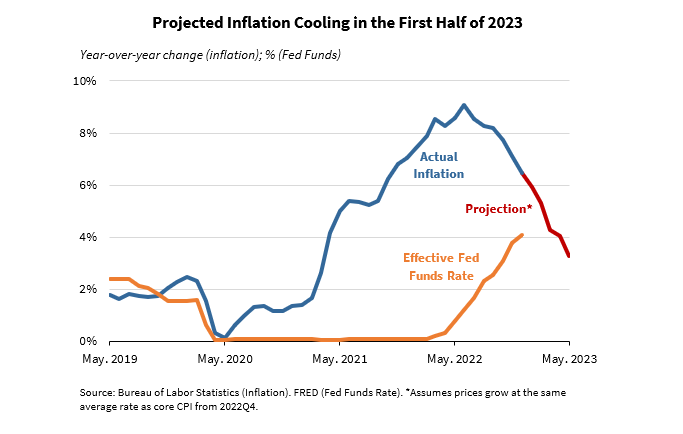
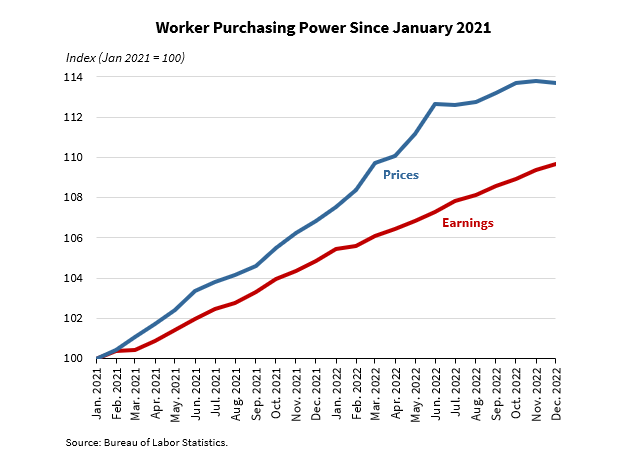
Thankfully, Governor Parson and the General Assembly appear poised to pursue exactly that—rate reductions to Missouri’s income tax—in the upcoming special session of the legislature. Doing so would not only be welcome relief to Missourians suffering under decades-high inflation, but it would also be a great way to kickstart a bold tax-reform agenda to improve the economic prospects of every Missourian. Economic research has demonstrated that lower income-tax burdens encourage work, improve productivity, increase entrepreneurship, promote innovation, and attract people and firms from places with more punitive taxes. When we enable people to earn higher returns on their labor and investments, it should come as no surprise that we get more of both.

This isn’t theory or idle speculation. One only needs to look as far as neighboring Tennessee to see a state much like our own that has grown dramatically faster than Missouri in recent decades. One major reason for that growth is that Tennessee is one of nine states with no income tax, and its major cities do not have local income taxes. Greater economic growth is more than just a statistic. It’s more jobs and new businesses at places ranging from local mom-and-pop shops to modern tech start-ups—all driving up wages and creating ladders of opportunity. Growth benefits Missourians of all backgrounds, which is why we must seize on the opportunity to return power and money to the people through the kind of income-tax-rate reductions now being discussed.

Those who oppose these cuts look past the obvious success of Tennessee and Florida and instead bring up the specter of Kansas, which faced negative consequences in the years following its own major tax cuts. But not every tax cut is created alike, and prudent budgeting always demands running the math both on the revenues and spending sides, which is exactly what Missouri policymakers are doing carefully and seriously as they deliberate. By contrast, when Kansas cut taxes, it created a special zero percent rate for only certain forms of income (namely, LLCs, S-Corps, and other pass-through entities) and did not undertake other subsidy and spending reforms to ensure that the numbers would add up. Favoritism and bad arithmetic are bound to create problems. Not surprisingly, many businesses changed their structure to these newly tax-free entities, and Kansas state revenues fell. Kansas reduced the tax rate on pass-through income to zero, far below that of regular income. Not only did this change have little justification economically but it also greatly encouraged tax avoidance behavior through income reclassification

That is not the proposal under consideration in Missouri. Governor Parson and the legislative leadership are considering accelerating already-planned rate reductions by cutting the Missouri income tax rate from 5.3 percent to 4.8 percent—a move well justified by the enormous surge in revenues the state continues to experience. It would be even better for our state if Missouri were to push even further past 4.8 percent. The prudent course of action in that case would be to also pursue subsidy reductions and other tax and spending reforms to ensure the stability of Missouri finances for vital public services. State leadership is also considering increasing the standard deduction on state taxes, which would deliver further relief to working- and middle-class Missourians, removing some from the tax rolls entirely.

At a time of high inflation and labor shortages, putting Missouri on a faster growth track through pro-growth, pro-work, pro-investment income tax reductions could not be more appropriate. In the short term, having more money in their pockets will provide much-needed relief to struggling families and empower Missourians to achieve their dreams, whether this means saving for a house, starting a business, or donating to their communities. In the long run, taking an important step toward major tax reform signals that Missouri is open for business and no longer willing to cede ground to states like Tennessee, Florida, or Texas. If those states can attract investment and talent by rewarding hard work and entrepreneurship, then we can too.

However you measure it, Missouri has not been growing compared to other states. If the Governor and legislature succeed in passing some combination of tax rate reductions and other adjustments to our income-tax system, they will increase opportunities for all Missourians. That would be a legislative special session we could be proud of.

Perry County Should Reduce Its Commercial Property Tax Surcharge

In 1985, Missouri changed the way that local governments tax commercial and industrial property. Voters approved eliminating the personal property tax on business merchandise and inventory and replacing it with a surcharge on the value of commercial real estate. That year, each Missouri county calculated its new surcharge at a revenue-neutral level of replacement for the discontinued business property taxes. Among the reasons for the change was a desire to base the tax on the value of real estate, which is more consistent than ever-fluctuating inventories. The change was enacted through an amendment to the Missouri Constitution, and that amendment stated explicitly that the replacement levy calculated by the counties could not be raised. However, the change also mandated that only voters—not local elected officials—could reduce the tax. Similarly, the commercial surcharge is at odds with the mechanics of other property taxes in Missouri, which have tax rates that fall as assessed valuations rise. The surcharge tax rate (also called the surtax) remains at the same level, even as assessments increase.

The timing of this change is important. In 1985, Perry County set its rate at $1.06 per $100 of assessed commercial valuation. This is a much higher rate than other counties in the region. Perry County has long had a strong manufacturing base, and it is likely that those industrial companies generated substantial inventory taxes that necessitated—at the time—a high surcharge replacement tax rate. By comparison, Bollinger County’s rate is much lower, at $0.13, St. Francois’ rate is a mere $0.20, St. Genevieve is just above that at $0.21, Madison’s rate is $0.25, and Cape Girardeau tops out the rest of the area at $0.37. Perry County is almost triple the surcharge tax rate for its region.

Assessed valuations have grown enormously since the tax was introduced. For example, in 1986 (the first year after the current assessment system was implemented) the total assessed valuation of Perry County was $84 million and $11 million of that was commercial property. As of the most recent reassessment in 2021, the total assessed valuation of Perry County is $404 million, with $74 million being commercial (an increase in commercial valuation of more than 500 percent). The surcharge rate has never been reduced to offset that significant rise in commercial assessed valuation, as happens with other property taxes. The combination of a high tax rate and the difficulty involved with reducing it puts Perry County at a competitive disadvantage with the rest of the region in 2022.

This is a problem, but a problem without blame. These differences were probably not a big deal in 1985, when the tax alteration described earlier had a neutral effect for Missouri businesses. But it is a major problem now. Reducing rates as commercial assessments rise is simply an issue of fairness. It would not lead to a tax revenue decrease but would simply mean treating the commercial surcharge like other property taxes in Missouri.

Another issue with reducing the tax might be more complicated. Lowering the commercial surcharge rate could both spur economic activity and reduce the perceived need for tax incentives. Frankly, from a government revenue perspective, many of the dollars lost to the surcharge reduction could be replaced by a reduction in the tax incentives that have been given to select businesses. Perry County and Perryville have each engaged in harmful tax subsidies like tax-increment financing. Reducing the surcharge rate for all businesses while eliminating the use of tax subsidies for a few, select businesses would be a public policy win–win for Perry County.

The elected officials in Perry County should place surcharge tax reduction proposals on the ballot so that voters can have a say in making their region more economically competitive. The state legislature should then authorize a vote on changing the Missouri Constitution to allow the commercial surcharge to be reduced as assessments increase, like other property taxes. These two changes would help grow the economies of both Perry County and Missouri, and everyone benefits from that.

Ballwin TIF Ends; Clear Failure Lauded as “Great Success” by Municipal Apparatchiks

In the great film “The Death of Stalin,” there are many fantastic scenes of a dark-comic nature where the members of the Soviet Politburo try to figure out the best way to turn hard truths into lies in the service of the state.

In West St. Louis County, we get to see the City of Ballwin doing the same thing regarding a tax-increment financing (TIF) package that is about to end. Of course, it’s not exactly the same thing. Ballwin doesn’t have gulags or torture and has never invaded Hungary, and I give proper credit to Ballwin for all of that.

The Olde Towne Plaza TIF is ending; not because it uses too many unnecessary “e”s in its name (although it does), but because it has hit the Missouri TIF time limit of 23 years. According to a story in West Newsmagazine, the project and TIF have been a large success (emphasis added throughout):

“It really served to fill two goals: One was to stimulate economic development. The other was to improve the infrastructure. Overall, it was a success,” long-time City Attorney Robert Jones recalled.

Further down, we read:

Finance Officer Denise Keller told West Newsmagazine by email, “The Redevelopment Plan itself was very successful in that an attractive and quality development of retail and service commercial uses has been constructed and maintained, enhancing the tax base and the resulting tax revenues for the city and all other taxing districts within the Redevelopment Area.”

Got it. This tax subsidy has been a big success. God only knows how a rapidly growing suburban region could experience growth without the Kreskin-like ability of city officials to predict the future. But wait, if you keep reading further down the article:

Incremental taxes captured for repayment of the bonds, however, (fell) short of expectations and by the time the bonds mature, there will not be sufficient funds to repay the full amount of the principal due.

So, the project and subsidy were a great success, even though the TIF district didn’t actually pay off the bonds. That’s ok, at least general city funds are not involved here, just the TIF district funds:

Keller added that the bonds have never been an obligation of the city and do not reflect on the financial health of the city.

Thank goodness for that. But wait, if you read further, you see that even though the bonds weren’t an “obligation” of the city:

The city was required by the bond indentures to make an annual contribution toward the repayment of the bonds. The cumulative amount of this contribution to date has been $2.7 million.

I don’t know how you define words like “obligation,” “success,” and “sufficient,” but if you read the full article carefully, this wonderful, amazing, tax-subsidized project experienced high turnover, generated far less revenue than expected, had the city step in to pay shortfalls out of other tax revenues (even if it was not “obligated” to), and the development now has to use an ongoing special sales tax ostensibly targeted for transportation to fully pay off the TIF bonds. All of this while any drive down Manchester Road shows a litany of empty storefronts, brought about in part by numerous municipal tax subsidies used to lure businesses from one place to the other based on chasing the subsidy, not where the best location for their business really would be.

TIF doesn’t work. Politicians, urban planners, and city managers can’t predict the future. To quote P.J. O’Rourke, giving the power of tax subsidies to local politicians is like giving whiskey and car keys to teenage boys.

All of the road improvements Ballwin brags about with the TIF project could have been funded by normal taxes collected over the period of the TIF project, from whatever developed here or elsewhere in the area. Why? Because capitalism works. Frequently, municipal officials throughout Missouri forget that and think that somehow they have the special knowledge to plan their economies in a better way. It’s ridiculous, and in the end it usually fails and you find yourself denying reality to the press.

Stalin would have been proud.

Turning Teachers into Entrepreneurs

Being an entrepreneur is hard work. Or so I’m told. I’ve never actually been an entrepreneur. From what I gather, to become one you must have an idea of a product or service that other people want. And you must be able to produce that good or service for a price that other people are willing to pay. Those two things are key. Without an idea, you’ve got nothing. Without customers, your business will flop.

We rarely use this sort of entrepreneurial thinking in education. For one, the vast majority of students—roughly 90%—attend a public school. Charter public schools are growing in this sector, but traditional public schools still enroll, by far, the most students of any school type. Of the roughly 10% of students who attend private schools, most attend some sort of religious school. Catholics have historically served the lion’s share of private school students.

With public and church-sponsored schools dominating the landscape, there has never been much room for entrepreneurs. Even if someone had a great idea, they would struggle to compete with free public schools or church-supported private schools.

That is beginning to change.

In places such as Florida, where school choice programs allow students to attend private or micro schools with publicly supported scholarships, we are seeing the start of something interesting—teachers becoming entrepreneurs.

I recently had the pleasure to serve as an advisor on a report conducted by Step Up for Students. Step Up for Students is “a state-approved nonprofit scholarship funding organization that helps administer four scholarships for Florida schoolchildren.”

Step Up conducted focus groups with former public school educators who left the public school system to start their own schools. These teachers thought they had a great idea to serve students and, thanks to the scholarship program, families had the means to pay tuition at the schools.

Check out the terrific slide deck or the video below to learn more about these teachers turned entrepreneurs.

A Letter to the Editor: Roll Back Personal Property Tax Rates

Used car values have risen dramatically in Missouri. Prices for used cars increased 25 percent in 2021 alone. Because Missouri is one of the only states with a personal property tax on cars, that increase is going to hit taxpayers hard come December.

The personal property tax is exempt from our Hancock Amendment rules on rolling back property tax rates as values increase. As car values have typically declined over time, this has not been a problem in the past. But with used car values increasing and no tax rollback required, local governments around Missouri will see an unexpected windfall in property tax payments this year. That is not how the tax system is supposed to operate.

There is a solution here. Local elected officials, including county, city, and school district representatives, should voluntarily roll their tax rates back once property valuations are finalized. St. Charles County government has taken the lead on this, and other local governments around the state should do the same for their residents. The personal property tax rate is unconnected to the real property tax rate, and rolling it back to a revenue-neutral level is simple, allowable, and—most importantly—good public policy.

Local governments in Missouri are awash in federal stimulus and COVID-relief funds, while ordinary citizens are getting hammered by inflation. Cities, counties, and school districts don’t need another bonanza on the backs of Missouri taxpayers. Rolling personal property tax rates back is the right thing to do.

Link to the letter on the EMissourian site here.

Support Us

The work of the Show-Me Institute would not be possible without the generous support of people who are inspired by the vision of liberty and free enterprise. We hope you will join our efforts and become a Show-Me Institute sponsor.

Donate
Man on Horse Charging