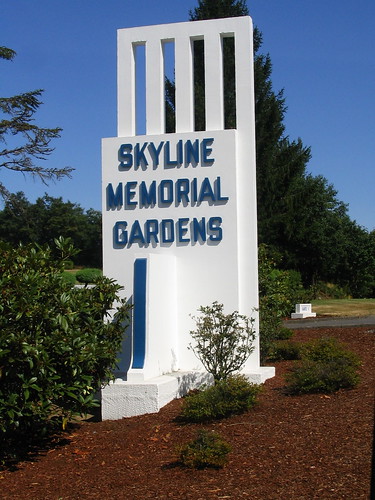
A Memorial for Civil Society

Every Memorial Day that I can recall while I grew up in Portland, Ore., we went to visit my mom’s parents’ resting place. After moving away, first for college and later for work, I got out of the habit of visiting family members’ graves on Memorial Day. There just weren’t any within driving distance.

Now that I’m living in Missouri, it’s a little easier — my great-great-great-great grandpa is buried about an hour and a half northeast of Kansas City, lying at the bottom of an abandoned well with several other people after they were all murdered. Although I visited the site in March, and had considered going there again over the Memorial Day weekend, a nasty bug has laid me out for the past few days … and the rain would have been a dealbreaker anyway — my car didn’t handle so well on the muddy back roads last time.

I did, however, spend some time on Monday thinking about the value of civil society. Because we live in a country largely founded on principles of freedom, tolerance, and the rule of law, people with wildly different cultures, backgrounds, and belief systems can live comfortably together in the same communities. And although from time to time tragic incidents may occur — like the one that killed one of my progenitors, and drove several others out of Missouri — they are by far the exception rather than the rule. There are places in the world where this sort of organized persecution and violent purging happens all the time.

Ultimately, this is one of the most important historical innovations of the United States — despite our differences, for the most part we all manage to live and work together in peace.

Incentives for Students

This week, Gary Becker and Richard Posner discuss programs like the one in New York City that pay children to attend school and do well on exams. I’m surprised that this idea isn’t considered more seriously in St. Louis. After all, St. Louis suffers from some of the same problems as New York, such as a high drop-out rate and low test scores. And many economists support the effort. Becker is enthusiastic in his praise of the incentive programs:

I am confident that it will raise the performance of the students participating. The reason is simply that boys and girls as well as adults respond to incentives, as every parent realizes time after time.

Posner, on the other hand, is more cautious:

The largest indirect cost, I would guess, would consist in relaxed pressure to improve the public schools or to allow them to be bypassed by means of voucher systems. High rates of truancy may be due in significant part to low quality of schools. Paying children to attend school will reduce truancy rates some but without improving school quality, and perhaps without improving the education of the children receiving the payments.

Posner’s point makes sense because the evidence in favor of incentive programs comes from developing countries where children leave school to work and help support their families. They would like to be in school, but they can’t give up the income from their jobs. An incentive program allows them to earn money while attending school.

Before implementing incentive programs, we need to consider whether children are being pulled away or pushed out. If children are leaving to earn money, as is the case in some developing countries, paying them to stay might be appropriate. But if children are leaving because the schools are bad, an incentive program would just keep them in an unproductive environment.

My guess is that both of these factors are at play in St. Louis, at least in the older grades. There’s no reason we couldn’t try to address both. For example, a charter school with afternoon and evening classes would allow students to work during the mornings — like this school in Texas. Or students could combine high school classes with paid internships and apprenticeships. A combined choice/incentive program would keep students in school and improve the quality of their educational experience.

Beating a Dead Horse (With Some New Evidence)

Devotees will remember my reservations about the passage of the property tax reform bill (which prevents backdoor tax increases through reassessment). Well it turns out that compliance with the new legislation is going to cost St. Louis County more than $700,000.

And it may not just cost the county government, but the state government as well. Eugene Leung, St. Louis County’s revenue director, argues that the property tax bill’s requirements amount to an unfunded mandate, in violation of the Missouri Constitution, and therefore the state may have to pony up the bill anyway.

So not only will the bill subsidize existing homeowners at the expense of new homeowners (as I’ve argued), but it also will require taxpayers across the state to pay for the bill’s compliance costs.

No, thanks.

“Those Who Can, Do. Those Who Can’t, Close”

Here’s a good way to make a positive out of a negative. The Missouri State Board of Education has decided to close down the Can! Academies of St. Louis, a charter school that began operations this year.

The Can! Academy never really succeeded. Beginning with 440 students (mostly former high school dropouts), it dropped to only 118 by the end of its first year of operation. Administrators decided that the school wasn’t meeting its performance obligations and the decision was made to suspend operations.

The positive, however, is that this is a perfect example of educational choice at work. If Can! were a traditional public school, it would continue to operate regardless of how bad things got. But that’s the beauty of choice. If a school doesn’t work, then it’s discontinued. Competition among schools helps to ensure that only schools that are actually succeeding continue to operate.

In other words, at least the Can! students aren’t forced to remain in a failing school.

The Earnings Tax in Action

Perhaps there is no finer crucible with which to test criticisms of the earnings tax than a general economic downturn. Nationwide, material costs and unease over the economy have slowed the construction industry. An article by the Post-Dispatch claims that St. Louis is no exception.

The same piece concedes that there is a lone exception, office construction in St. Louis County. Although there are certainly more variables behind a developer’s decision than just the earnings tax, examples like these demonstrate the practical insight behind academic musings. As commercial buildings continue to flee city limits despite their heightened desirability in somewhat uncertain times, lawmakers would be well-served to heed suggested solutions.

Gas Price Crimes and Milk Misdemeanors

Today’s post is simply planned as a collection of stories that you can make your own mind up about. Won’t that be fun! There is an investigation into milk price fixing centered on the Kansas City area and the headquarters of the Dairy Farmers of America. You can get the national angle here from the Washington Examiner and the local story here from the Platte County Landmark. Now, take these charges into consideration when reading Reason’s story about the recently passed horrible Farm Bill. As an Examiner editorial (that I can’t find to link to) asked recently, why is it a crime when private co-ops conspire to fix prices, but the federal government is allowed to do the exact same thing with impunity? Don’t get me wrong, price fixing should be investigated and prosecuted. However, the same government that is investigating this is also helping agricultural interests artificially raise prices through any number of means, from direct subsidies for ethanol to high tariffs for foreign sugar, to asking people nicely to eat more avocados.

Also, in the Platte County Landmark you can find an editorial stating that the price of gas is dictated by corporate manipulation moreso than supply and demand. I don’t know whether to laugh or cry. But I guess this chart, which clearly shows the growth of demand of more than a million barrells a day each year for the past four years, has nothing to do with price increases. Nothing at all to do with it, so let’s all go to the water cooler and bash the oil companies.

Pitch Whacks Earnings Tax Flat in Its Tracks; Backs Tax on Plats, in Fact

Justin’s excellent post earlier today touching on the distortionary effects of the earnings tax was particularly timely. Also today, The Pitch published a piece that mentions our 2007 study about this very issue, "How to Replace the Earnings Tax in Kansas City," written by University of Missouri?Columbia economics professor Joseph Haslag (also now serving as the Show-Me Institute’s executive vice president). Haslag wrote a companion piece that makes the same case for the other side of the state, "How to Replace the Earnings Tax in Saint Louis."

The Pitch‘s piece isn’t uniformly great; for instance, the author, David Martin, mentions at one point that despite some misgivings, "relics such as the old Greyhound station make me thankful that the TIF Commission and other inscrutable quasi-government agencies have the power of eminent domain." But Martin picks up on something that many other people omit when they discuss eliminating the earnings tax — the Show-Me Institute’s suggestion that lost earnings tax revenues could be replaced with a much less distortionary land tax:

[T]he Show-Me Institute released a study on January 25, 2007, urging Kansas City to phase out the 1 percent tax on income and put in its place a tax on land. The author, Joseph Haslag, an economics professor at the University of Missouri-Columbia, calls the land tax a "slam dunk" in terms of promoting growth. […]

The beauty of the land tax is that it essentially makes available to everyone the tax abatements that big-shot developers are always getting at City Hall. It would also save the city from having to go to court to pry valuable real estate from the bony fingers of people like Barber. When the land tax works as intended, speculators are forced to develop their holdings or sell them to somebody who will.

This is indeed one of the advantages of levying taxes on land value. Owners of land would have more of an incentive to either use their land in productive ways, so that they can recoup the value of the taxes the must pay, or avoid paying the tax at all by selling the land to somebody else who believes they can use it profitably. Although Henry George is most famous for promoting this idea, one of the earliest free-market economists, Adam Smith, also observed the value of a land tax as an alternative to other potential forms of taxation.

Of course, a more optimal outcome would be for government officials simply to find ways to cut unnecessary programs and spend much less of the taxpayers’ money. But nobody’s holding their breath for that to happen.

Support Us

The work of the Show-Me Institute would not be possible without the generous support of people who are inspired by the vision of liberty and free enterprise. We hope you will join our efforts and become a Show-Me Institute sponsor.

Donate
Man on Horse Charging