Saint Louis City Board of Aldermen Passes Saint Louis County Employment Act of 2015

The Saint Louis Board of Aldermen met yesterday to discuss a modified proposal that would have raised the city’s minimum wage to $13 per hour by 2020. Eventually, the Board passed a measure that would raise the wage to $11 per hour by 2018. The bill needs just one more vote before going to Mayor Slay.

Some might see a silver lining in the fact that the minimum wage will “only” go up to $11 instead of $13 or $15 per hour. That lining, unfortunately, is hair-thin; an $11 per hour minimum wage is still likely to have serious, negative consequences for the Saint Louis labor market, hurting the very people it is meant to help. If enacted, the increase will make Saint Louis County even more attractive to businesses compared to the city, because the county will have a much lower minimum wage coupled with the lack of an earnings tax.

The timing of this proposal is significant; it was passed now so that it would be exempt from HB 722, which, if enacted, would bar cities from raising their minimum wages after August 28 of this year. However, even if the minimum wage proposal is enacted before HB 722 goes into effect, there are still legal issues with this bill. Namely, section 67.1571 of Missouri State Statutes states that “No municipality as defined in section 1, paragraph 2, subsection (9) shall establish, mandate or otherwise require a minimum wage that exceeds the state minimum wage.”

Of course, things are never as simple as we might hope with regard to state statutes. A Saint Louis Circuit Court did rule that 67.1571 is invalid on procedural grounds. However, no higher court has ruled on this, so the question of 67.1571’s constitutionality is still open.

Relying on the courts to come to the rescue is no substitute for avoiding bad legislation in the first place. Policymakers should realize that minimum wage increases are not the way to alleviate poverty—but if they don’t,  a court ruling that the increase is invalid would preserve the jobs of many low-wage workers in the city.


The Idea That Would Not Die

Last month I talked with a restaurant owner who told me that a sizeable increase in Saint Louis’ minimum wage would be “devastating.” Last June, this owner and many others were granted a reprieve   when the Chairman of the Ways and Means Committee canceled all future meetings to discuss the bill. Yet, like Jason Voorhees and Freddy Krueger, a city-wide minimum wage increase is the idea that will not die.

It seems that there are those in the city who want to get some type of minimum wage increase passed before the Legislature has a chance to override Governor Nixon’s veto of HB 722, which would forbid municipalities from raising their minimum wages after August 28. What’s interesting to note is that even if the Board of Aldermen passes a bill before the August 28 deadline or the Legislature fails to override the Governor’s veto, Saint Louis probably lacks the legal authority to raise its minimum wage above the state minimum wage. Regardless, a $13 per hour minimum wage would be disastrous for the city and its workers.

The Congressional Budget Office studied the effects of increasing the federal minimum wage to “just” $10.10 an hour and found that it would cost 500,000 jobs. Now this 500,000 figure is a national number, but the effect on jobs would be especially pronounced if the wage went up at the local level, because companies forced to pay the higher wage can just hop across the city border to escape the mandate. Even the liberal Vox.com thinks that $13 per hour (never mind $15) would be too high a minimum wage for Saint Louis.

What about the other cities that have raised their minimum wages? If the recent evidence from Seattle is any indicator, things aren’t looking good.There are also some signs out of Los Angeles that might give policymakers in Saint Louis pause.

                Momentum is building in some parts of Saint Louis City government to increase the city’s minimum wage, as evidenced by the convening of a special session to debate the issue. However, that doesn’t mean that such a move would be good policy. A large increase (and going from $7.65 to $13 or $15 per hour would certainly qualify as large), will end up costing jobs  and failing to help the working poor. 

Tax Man Cometh: Obamacare Subsidies Pose Risk for Millions of Tax Filers

Millions of Americans buying insurance in the Obamacare marketplaces could be in for a rude awakening when 2016 rolls around. For one, the cost of insurance in the exchanges is set to rise across the country, in some cases by double digits; in Missouri, for example, insurer Coventry has already asked for a whopping 29% hike on some of its individual insurance products.

But the pain may not hit customers in the price tag alone. Indeed, many Obamacare insurance purchasers are subsidized by the government on the basis of their income, meaning that even when the price of insurance goes up, those consumers usually don't bear the brunt of the hike—the taxpayers subsidizing them do.

At least, that's how it's supposed to work.

According to an update on Obamacare that the IRS recently sent to Congress, out of the 4.5 million taxpayers who got Obamacare's "advance payment" subsidies last year, only 2.7 million had filed the required tax forms as of the end of this May.

The rest filed for an extension (360,000), haven't filed at all (710,000), or didn't submit (760,000) the new ObamaCare form—Form 8962—that's required to make sure they got the right subsidy amount.

These 1.8 million taxpayers actually represent 2.8 million individuals, according to the IRS, because one taxpayer can file on behalf of his or her spouse and children.

In other words, taxpayers who have not filed the proper paperwork for their subsidies—or those whose income has moved them out of the subsidy range—might not only lose that money next year, but also have to return subsidies they have already received incorrectly. And in case you were wondering whether the government would really demand subsidy money back, rest assured: it's already happening. Not only could subsidized consumers see hikes in their insurance rates for insurance they're now forced to buy, but they could suddenly experience those costs without the financial insulation that had been provided to them by the government. 

Rather than simplify America's already complicated health care system, Obamacare made it even more complex, and that hurts the poor and those unaware of how this Rube Goldberg–style law operates. That complexity could lead to a new round of negative financial consequences for millions of Americans in the months ahead.

IRS Obamacare Ruling Buffets Some Missouri Graduate Students

College towns are typically bastions of liberalism, and Missouri’s uber-college town of Columbia is no exception. Columbia Tribune reporter Rudi Keller even wrote (tongue-in-cheek) earlier this year about the city and its county “seceding” to create its own state, in part to better cater to the region’s political sensibilities. (How a “state” economy heavily dependent on state spending would survive is, of course, anybody’s guess.)

But even in an aspiring liberal utopia like Columbia, the consequences of overbearing government are still very real. Enter the IRS, two weeks ago.

Graduate students employed by the University of Missouri will have a harder time paying for health insurance after the university told students Friday it is taking away subsidies that help with premium costs.

Associate Vice Chancellor for Graduate Studies Leona Rubin said the change is the result of a recent IRS interpretation of a section of the Affordable Care Act. The law, which requires adults to have health insurance or face tax penalties, “prohibits businesses from providing employees subsidies specifically for the purpose of purchasing health insurance from individual market plans,” the university said in a letter sent to students Friday.

The IRS, Rubin said, considers the university’s student health insurance plan from Aetna to be an “individual market plan.” Because of the IRS classification, the university cannot give graduate students with assistantships a subsidy to help with health insurance costs, Rubin said.

According to Rubin, the University “could be fined $36,500 per student per year” if it continues its health insurance subsidy program…which makes it even more strange that the University apparently restored the subsidies in question last week.

It remains to be seen whether the threatened fine noted by the associate vice chancellor was a paper tiger meant to provide cover for cost cutting on Mizzou’s part or if that enormous fine is still actually on the horizon. The University of Missouri–St. Louis (UMSL), which took similar action in stopping insurance subsidies of its own, is sticking by its original decision to end its program. And it’s part of a national trend, thanks to Obamacare and the IRS. Keep in mind: while Mizzou has reversed its decision, the IRS certainly hasn’t changed its interpretation.

There’s a sad irony involved here, of course, when a university community generally supportive of big government is itself undermined by big government. And there’s lots to criticize: the credibility gap facing Mizzou’s administration, the timing of the announcement, the threatened walk-out by the graduate students, and so on.

But one of the most disturbing elements of this story is how disruptive Obamacare has been to a health care practice that, by most accounts, was working just fine, and the swift manner in which unaccountable federal bureaucrats were able to upend it nationwide. That a law passed 5 years ago is still changing without legislation is great cause for concern—not only for our health care, but for our democracy, as well. This is a teachable moment, but there’s no telling whether Missouri’s universities will learn from it.

City Should Reject Central West End TIFs

Recently, the Saint Louis Business Journal reported that Koman Group, a real estate developer, plans to add to two apartment buildings to the Central West End. With a total investment of $31 million dollars, these new buildings, which will include apartments along with shop space on lower floors, would be excellent additions to the Central West End. Unfortunately, the developer is requesting that the city grant $6 million in tax subsidies for the project through tax increment financing (TIF).

                TIF is a controversial way of subsidizing development, which we have written about many times before. According to its proponents, it can entice businesses to build in blighted areas that would otherwise remain undeveloped, or conserve historic sites that might otherwise be knocked down. Skeptics of TIF argue that the tool is too often used to subsidize—at the expense of overlapping tax districts—development that would have occurred anyway.

                Whichever view is correct, TIF is almost certainly unjustified in the case of the Koman Group’s proposal. The areas in question are not blighted in any way. I should know, as I currently live across the street from one of the locations and down the street from the other. The proposed building sites, far from being deleterious to the community, are well-maintained properties with active businesses. A new apartment building and Whole Foods is going up in the middle of the block. If these properties can be defined as blighted, any property can be. This is just another example of how a program designed to help downtrodden neighborhoods can be twisted to support luxury developments in booming areas.

                The Central West End has many new apartment buildings, a large source of local employment (BJC Healthcare), and a healthy bar and restaurant scene. It’s time to stop giving tax subsidizes to companies that decide to build there. Koman Group can knock down my nearest dry cleaner and bar if they want, but they shouldn’t get a tax break to do it.

Teacher Survey Makes Case for More Government Employee Freedom

Happy National Employee Freedom Week! The American Association of Educators (AAE), a freedom-promoting alternative to the National Educator Association (NEA) and the American Federation of Teachers (AFT), just released its 2015 Workforce & Pension Policy Survey. AAE polled 700 teachers from all 50 states about important issues in education, including labor policy, and found the following:

  • 98% of educators surveyed believe teachers should have the right to choose an association that best fits their needs. Missouri teachers do have this freedom. However, while the teacher may benefit from the professional development opportunities and liability insurance their association offers, teachers don’t have a choice as to who represents them during negotiations over salary and benefits.
  • 68% of members would prefer to negotiate their own contract. Wouldn’t it be nice if a teacher who works twice as hard as other teachers and increases academic achievement more than other teachers could ask for a raise? This is unheard of in education, where 84 percent of AAE members say collective negotiations do little to recognize excellent teachers. No wonder schools have such a difficult time holding onto great teachers! They can’t reward them appropriately.
  • Only 8% of educators surveyed reported ever having participated in a union certification election. That means that an overwhelming majority of teachers surveyed have never had the chance to vote for which union represents them. Can you imagine if you never got the chance to vote for an elected official—state representative, governor, congresswoman—and the elected official stayed in office indefinitely?

Regular union elections ensure that government employees like teachers have the opportunity to vote for the union or professional association that best represents their interests. While education analysts at the Show-Me Institute often advocate for more choice for students, teachers need choice, too. Teachers need the freedom to decide who represents them at the bargaining table. Whether that’s the individual teacher or a preferred association, teachers should have the freedom to choose. 

Incentivizing Unemployment

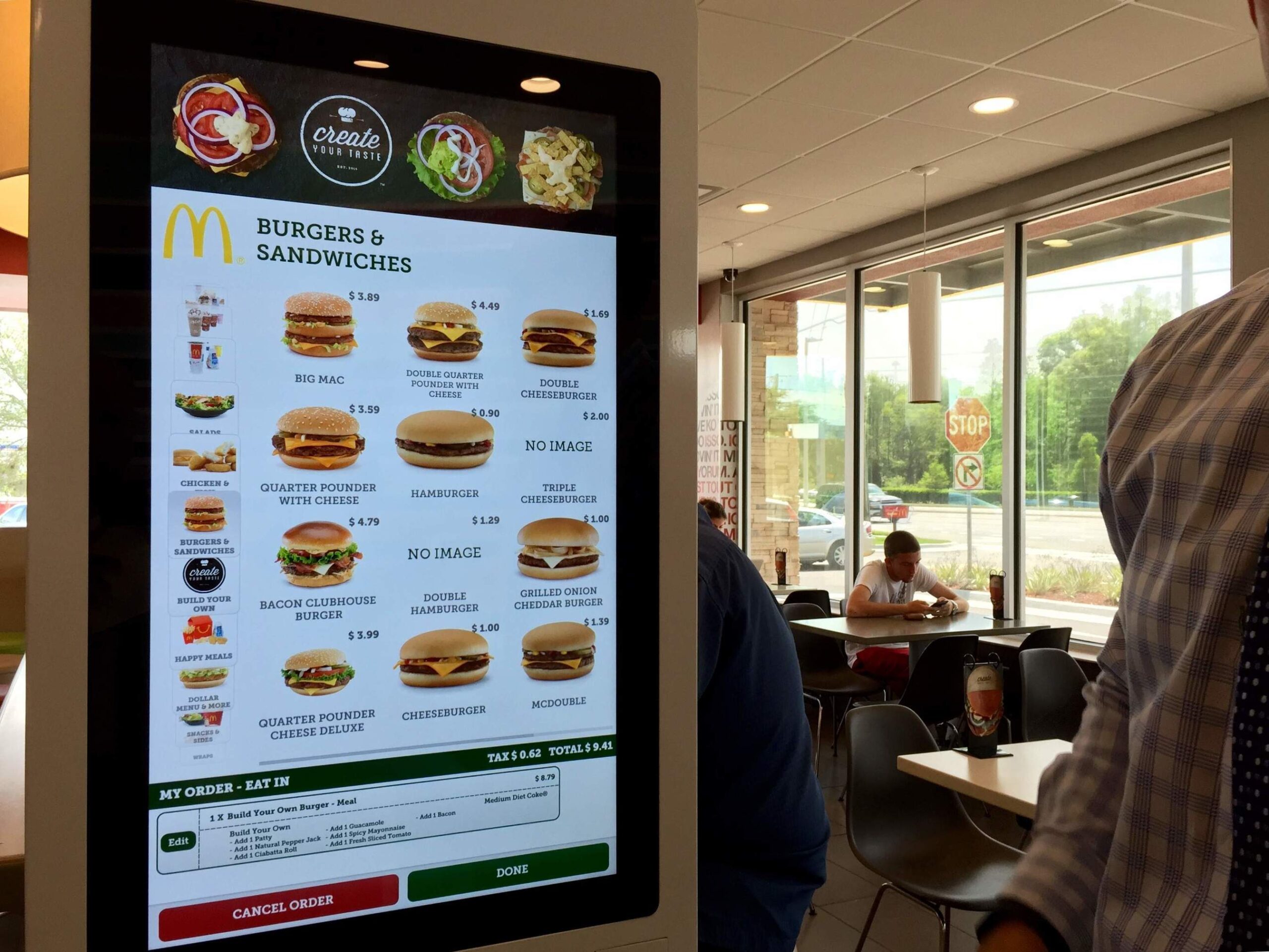
Automation is likely to become more and more prevalent as time goes on, and the fast-food industry is likely to be part of this trend. So it shouldn’t be surprising that McDonald’s is jumping aboard the automation train. If state and local governments mandate higher minimum wages, many more restaurants might be following McDonald’s on the automation express.

McDonald’s’ “Create Your Taste” kiosk allows customers to fully customize their burgers by selecting different buns, cheeses, and toppings without having to interact with a real person. The automation occurring in McDonald’s and other places might be an inevitable feature of the the 21st-century economy, and this has the potential to put many people out of work.

In a purely free market, this is creative destruction. Some jobs are destroyed in the process of delivering increased efficiency. That’s not to diminish the pain of those now out of work; however, it is necessary for the economy to grow. Even though some job losses are inevitable, government should not be expediting the process through regulations. Mandating increased labor costs through a higher minimum wage will encourage employers to use less labor. They instead will substitute other inputs, such as capital, that may have a lower relative cost because of the increase in wages. In other words, if you make labor more expensive, you give employers an incentive to invest in ways to cut down on labor. Forcing employers to pay their lowest-skilled employees more is such an incentive.

Many businesses already have a financial incentive for installing more kiosks like the ones McDonald’s is introducing. According to the Harvard Business Review, “Taco Bell recently announced that orders made via their new digital app are 20% pricier than those taken by human cashiers, largely because people select additional ingredients. Chili’s, after installing self-service tablets, reported a similar increase in dessert orders. Cinemark theater’s new self-service kiosks have ‘had concession spending per person climb for 32 straight quarters.’”

The intention behind raising the minimum wage is presumably to help low-wage workers make more money. However, with this oncoming wave of automation, policymakers might just put these people out of work altogether. Government should encourage work, not mandate that people lose it. 

Support Us

The work of the Show-Me Institute would not be possible without the generous support of people who are inspired by the vision of liberty and free enterprise. We hope you will join our efforts and become a Show-Me Institute sponsor.

Donate
Man on Horse Charging