New Bill Would Raise Missouri Fuel Tax, Cut Highway Miles

Recently, we discussed a couple of pre-filed bills that would raise the fuel tax in Missouri to avert a funding crisis at the Missouri Department of Transportation (MoDOT). But raising the fuel tax is not the only proposal on the table, and one bill (SJR 18) proposes a solution that could aid MoDOT’s financial situation over the long term: reducing the size of the state highway system.

SJR 18 has two parts. The first part would increase the state’s regular fuel tax by 1.5 cents per gallon and the state’s diesel fuel tax by 3.5 cents per gallon. This increase has the potential to net MoDOT around $60 million in additional revenue annually, which would put off any immediate funding crisis for the state.

However, SJR 18 is different from other fuel tax increase proposals in that it also contains provisions for transferring responsibility for the state’s “supplementary” highway system to localities. The supplementary system is mostly made up of the state’s letter routes, but also includes urban streets like Gravois Road in Saint Louis and MO Route 283 in Kansas City. We’ve discussed before how these routes eat up a significant portion of MoDOT’s budget. These types of roads are maintained by counties and municipalities in most other states.

SJR 18 would not simply hand off the supplementary highway system to localities without any aid. The state would continue to provide localities with financial support for the transferred roads (fixed at the average spending of the last three years on that road). This means that in the short-term, MoDOT would spend the same amount on these highways as it does today. However, over the long term this spending would be capped, with local governments responsible for increased investment.

SJR 18—which would require a vote of the people before being enacted—is an interesting policy proposal that addresses both short-term and long-term financial problems at MoDOT. It does not encompass a large tax increase, and instead focuses on capping long-term spending as a method of setting MoDOT’s funding on firm footing.

Metro Ridership Trending Down in 2015

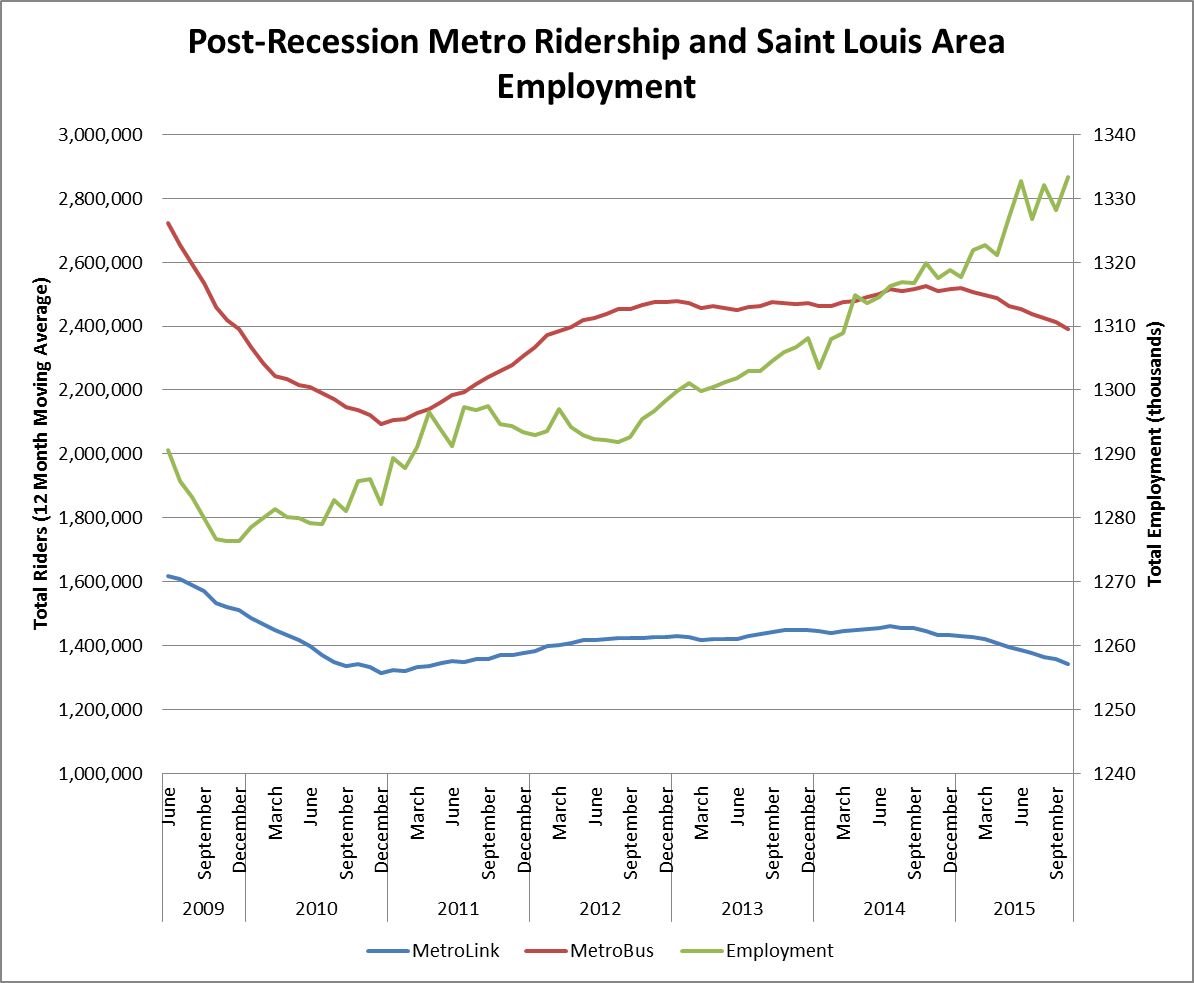
Earlier this year, we talked about how, contrary to the hopes of many Saint Louis regional planners, there is no evidence that people are ditching their cars for public transportation. In fact, Metro ridership peaked around 2008, took a nosedive during the recession, and has experienced tepid growth ever since. The latest data (from 2015) paints an even bleaker picture from Metro, as sluggish growth has transformed into decline.

To see this, we can look at ridership changes on the MetroBus and MetroLink systems since the end of the recession. That recession technically ended in mid-2009, according to the Saint Louis Federal Reserve. And while 2010–2013 cannot be described as great years, total employment in the Saint Louis Metropolitan area has steadily risen since around October of 2009.

Metro ridership was anything but recession-proof. During the economic downturn, MetroLink ridership fell 37% and MetroBus ridership fell 28%. But while the employment in the Saint Louis area has slowly but steadily recovered, the same cannot be said of Metro ridership. In 2010 and 2011, MetroBus gained back much of the ridership it had lost in the recession, but in 2012 and 2013 growth stagnated. MetroLink ridership recovery was less robust. By mid-2014, five years after the recession’s end, MetroLink ridership was still 30% below its pre-recession peak.

But as the chart below also shows, 2015 saw ridership levels reverse their post-recession trend of steady (if modest) growth. From July 2014 to October 2015, MetroLink ridership fell 8% and MetroBus ridership fell 5%. Taking all this together, it means that MetroLink ridership in late 2015 is only 2% higher than the post-recession ridership lows.

There are many factors that may explain weak post-recession ridership growth for Metro. Saint Louis has had a weak jobs recovery, with total employment still below pre-recession highs; employment has only increased 4% since 2009. However, economic growth has accelerated in the last year, the same time ridership began to decline on Metro.

Whatever the underlying reasons, this much is clear: there is no evidence that Saint Louis residents are flocking to public transportation or the MetroLink, despite significant investments made in the 1990s and early 2000s.

Missouri Legislature Takes Up New Roosevelt Laws

Lawmakers are teaming up to address the growing problem of unaccountable government unions. This month Senator Bob Onder and Rep. John Weimann filed twin bills in the House and Senate that seek to reform the way these unions operate.

Government unions—the unions representing government employees such as teachers, firefighters, and state workers—bargain in a much different setting than private sector unions. Rather than negotiating with private companies, government unions negotiate with public officials. This means that public sector collective bargaining affects everyone—not just the few who happen to be associated with a specific business.

In the public sector, unions can use political muscle to help elect politicians favorable to their interests. When it comes time to negotiate pay and pension benefits, politicians are often willing to return the favor.

Franklin D. Roosevelt, a great advocate of organized labor, understood the differences between unions in the government and unions in the private sector. According to FDR, when it comes to government labor, “the employer is the whole people, who speak by means of laws enacted by their representatives in Congress.” For this reason FDR thought that “the process of collective bargaining, as usually understood, cannot be transplanted into the public service.”

Roosevelt was right. The labor laws we use in the private sector are a poor fit in government. Instead, the laws that allow public employees to bargain with their managers should have special features that protect both government workers and the public at large.

I welcome reform introduced in this spirit. Look for more posts from me on this subject in the coming weeks.

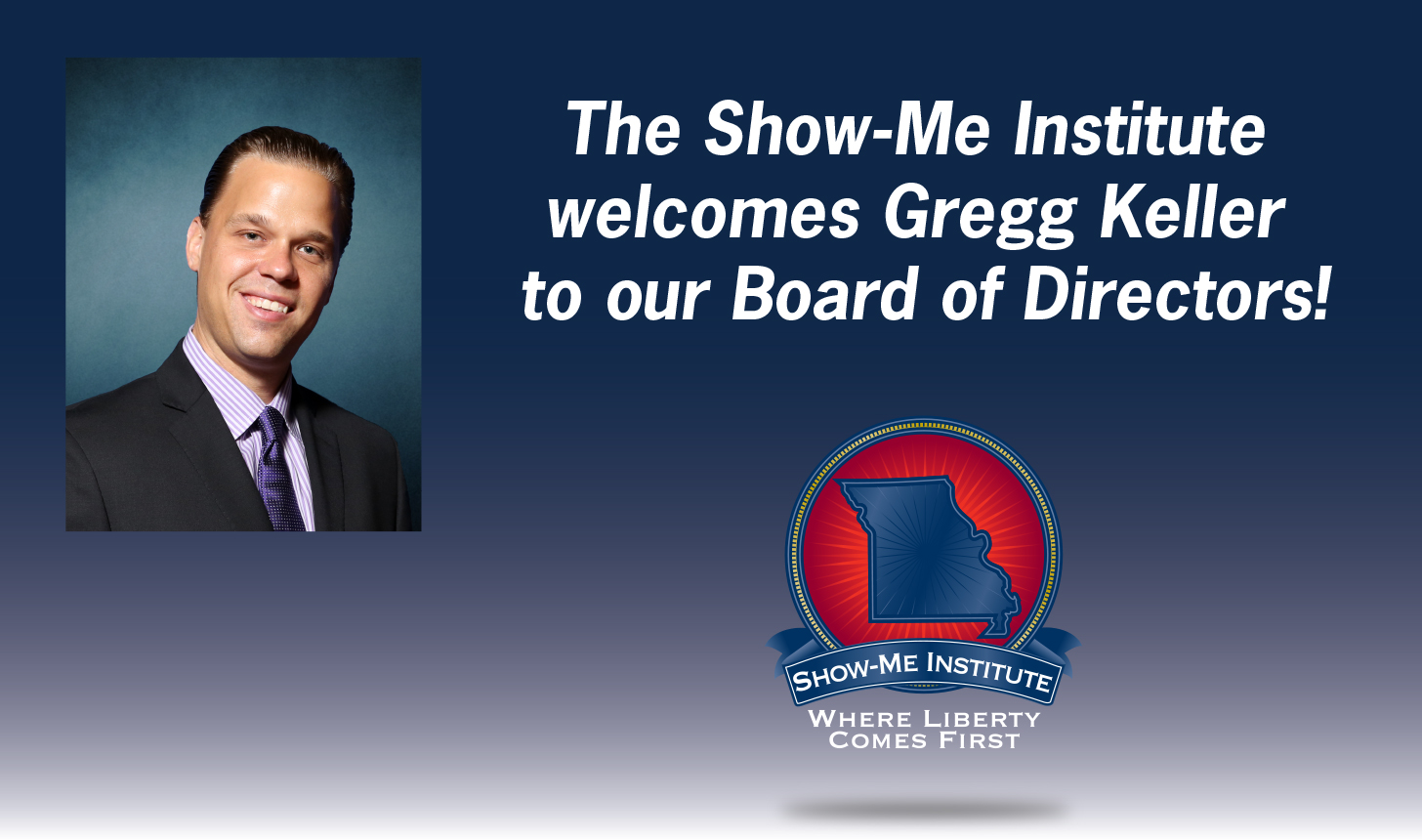
Gregg Keller Joins Show-Me Institute’s Board

We are pleased to announce that Gregg Keller is now a member of the Show-Me Institute’s Board of Directors.

Gregg is the Principal of Atlas Strategy Group and is widely regarded as one of the preeminent public affairs professionals in the country. A former Executive Director of the American Conservative Union, the Conservative Political Action Conference (CPAC), and the Faith & Freedom Coalition, Gregg has been an advocate for free-market public policy at local, state, and national levels for 15 years.

Gregg has worked—and continues to work—extensively with the Show-Me Institute to increase the organization’s membership and following among the next generation of free-market leaders. 

Show-Me Institute Chief Executive Officer Brenda Talent had this to say about our newest board member:

"We’re excited to have Gregg Keller join the Board at the Show-Me Institute. His youth and expertise in free-market public policy will bring a fresh and vital perspective to our Board."


Riverfront Stadium Costs Change, Backers Push Ahead

We’ve covered the proposal to spend some $400 million in public dollars on a new stadium for Rams extensively on this blog. Specific plans have come and gone with regularity, leading to a continuous shell game that can be difficult for residents to follow. That is, perhaps, why a $10 million increase in the amount the city has to pay went almost completely unnoticed.

As part of a recent overhaul of the stadium financing package, which includes giving the NFL all the naming rights proceeds for “National Car Rental Field,” the total cost of the stadium went up about $10 million dollars. With NFL uninterested in paying anything (much less more), and state legislators in near revolt over the governor’s plan to unilaterally extend bonds for the stadium, the city is left holding the bag. Its total payments will increase from an estimate $150 million to $160 million:


Current Proposal

Old Proposal

NFL

 $450,000,000

 $450,000,000

PSLs

 $160,395,657

 $160,395,657

State

 $239,950,585

 $239,950,585

City

 $160,453,758

 $150,438,514

Total Cost

 $1,010,800,000

 $1,000,784,756


Ten million dollars is not a small amount for Saint Louis City. That’s the equivalent of the annual salaries of 190 teachers or the cost of 20 brand new buses. It should not be treated like a rounding error.

Worse than the cost escalation is the reaction of stadium backers to the funding reconfiguration. I sat in hearings where city representatives said, in contradiction to dozens of academic studies, that the stadium would be an economic boon for Saint Louis. I heard how the city was supposedly shifting risk to the NFL by using naming rights dollars to pay for the stadium and paying the NFL back with future tax revenue. I heard how the stadium plan would supposedly be a tax benefit to the city.

Now that the naming rights are going to the NFL and the cost of the stadium has gone up, has this prompted stadium backers to rethink their support? Unfortunately, no. Now they simply argue that keeping the tax revenue and giving away the naming rights proceeds was always better for the city all along. And what’s ten million when the Chamber of Commerce thinks the stadium will generate more than $100 million in new taxes?

With this type of non-response to a worsening deal, what reaction can we expect when we find out who will pay for maintenance? Or when someone has to pay to refurbish the Edward Jones Dome? Or if there are cost overruns? Will stadium backers still claim the plan makes financial sense, or that it is too late to turn back?

New Terminal Plans on the Table in Kansas City

Last week, the Kansas City Aviation Department updated the City Council on its efforts to overhaul Kansas City International Airport (MCI). The current planning process got underway after a previous terminal plan from 2013 failed to gain support. This was due in no small part to the fact that the Aviation Department had not consulted or sought the approval of Southwest Airlines (MCI’s main tenant) for $1.223 billion plan.

At the latest meeting, the Aviation Department told the Council that building a new terminal would cost less than refurbishing the existing terminals. The department claims that refurbishing the current configuration would cost more than $1.1 billion dollars, while a slate of new terminal plans would cost less than $1 billion.

Two things are interesting to note here. First, the Aviation Department’s cost of refurbishing the terminals has escalated dramatically from July 2013, when the initial new terminal plan was proposed. At that time, keeping the existing design was supposed to cost up to $785 million, not more than $1.1 billion. This is likely due to the scale of the refurbishment now proposed, which is more extensive than what the department had previously recommended. The cost escalation underscores the fact that the scale of the refurbishment is directly related to the cost. Certainly, fixing up the existing terminals could cost less than $1.1 billion, but that would mean a different and possibly less desirable end product.

The second interesting point is the cost of the new terminal plans, which range between $900 million and $1 billion. The Aviation Department claims that these are not “Taj Mahal” plans, that is to say they are cost effective. However, the department said the same thing for the plan that they proposed in 2013, which was $1.223 billion. The ability to find more than $200 million in savings indicates that either the “old” new terminal plan was in fact more expensive than was necessary, or that the “new” new terminal plans have lowballed cost estimates (or are insufficient).

We will continue to follow this story as the Aviation Department prepares a final recommendation. 

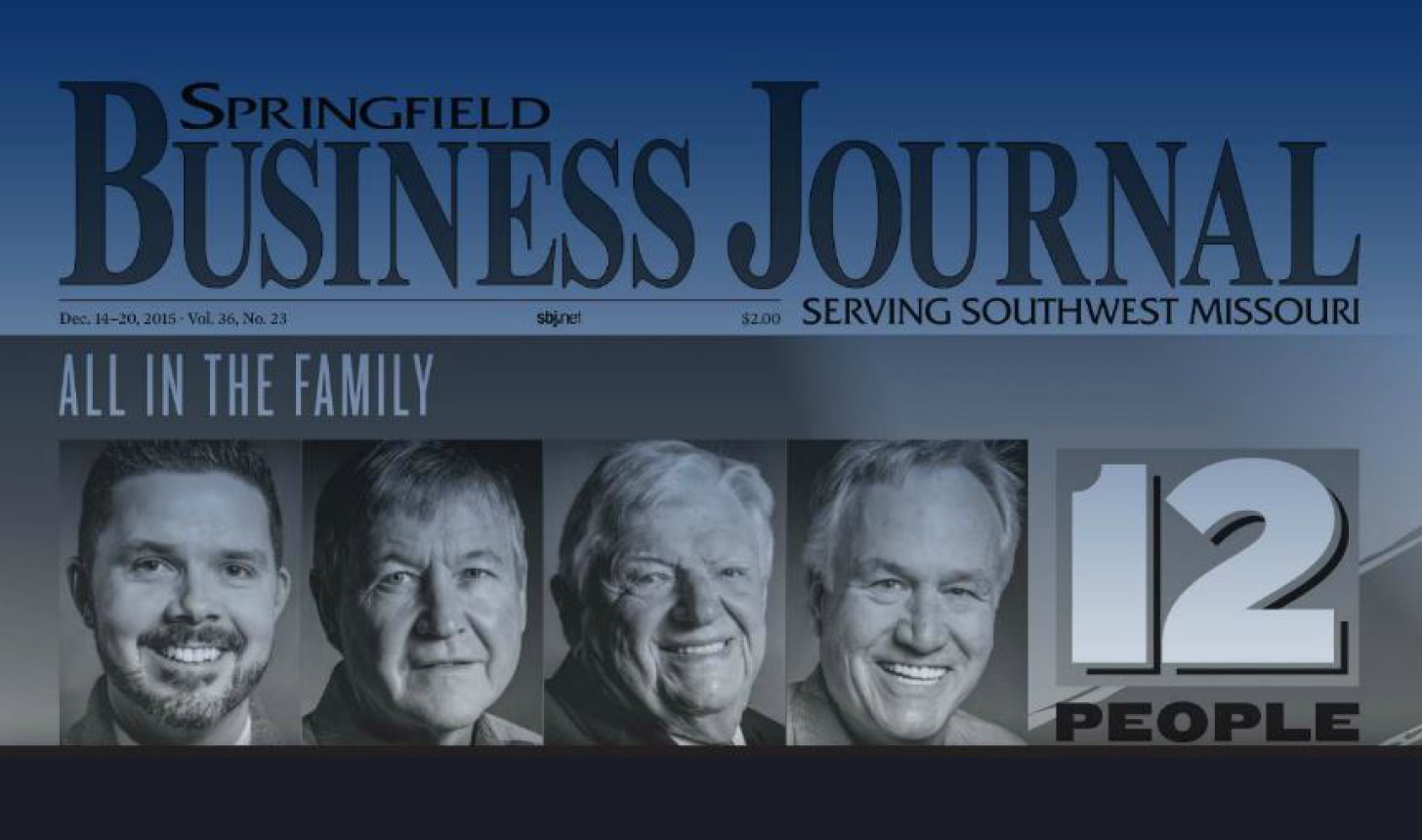
Show-Me Institute’s Griesemer One of “12 to Know in 2016”

Show-Me Institute Board Member Louis Griesemer was named one of "12 People You Need to Know in 2016" by the Springfield Business Journal. In the article, he sums up his economic philosophy: “My thinking is the free market has worked every time it’s tried. It’s not a religion with me. I’m just trying to make things work.”

Read the full story here.

It Truly Is a Wonderful Life

As a child, I never understood the appeal of the old black-and-white film It’s a Wonderful Life. My mother would watch it every Christmas season without fail, and invariably it would bring a tear to her eye. Maybe I lacked the capacity for introspection needed to understand the film’s message. Maybe I just needed to experience life a little more.

As I have aged, I have grown to love and appreciate the story of George Bailey. Like my mother, I now watch it annually. I watch because the film stirs my emotions and shows me just how wonderful life really is. I watch so that I can be reminded that my life can have an impact on others, and I watch to remember the impact that others have had on me.

We may never get a glimpse at what the world would be like without us, but we can thank those who have made a lasting mark on our lives. Some people, like George Bailey, who saved his younger brother from drowning, affect our lives in grand ways. More commonly, however, people change us simply by caring and sharing their hearts. Some people shape us in ways they never realize.

I think back to my time in Mrs. Kunst’s second grade class. Her kindness and devotion made me love going to school, and she inspired me to read and read some more. Mr. Dan McClain’s loud and gregarious personality brought the story of Beowulf to life in English Literature. As he wielded his sword and pounded on the tables as if we were in a mead hall, he taught me to appreciate literature.

Yet, despite the best efforts of my teachers, I was not an accomplished student. After high school, I floundered at community college and eventually dropped out. As I was laboring aimlessly in a dead-end job, it was another teacher, Mr. Eric Smith, who inspired me to go back to college. Were it not for the bond we had formed while I was in school and his words of encouragement, I never would have gone to Missouri Southern State University, his alma mater. I never would have met my wife. I would not have had the opportunity to let the seeds Mrs. Kunst and Mr. McClain planted come into bloom. And I certainly would not be where I am today.

Like my appreciation of It’s a Wonderful Life, my understanding of how important these people were to me took time to develop. Indeed, it wasn’t until much later that I realized the impact they had on me. The influence of a great teacher often works this way.

This holiday season, I hope you will take a few moments to thank the friends, family, pastors, and teachers who have helped make you who you are.


Support Us

The work of the Show-Me Institute would not be possible without the generous support of people who are inspired by the vision of liberty and free enterprise. We hope you will join our efforts and become a Show-Me Institute sponsor.

Donate
Man on Horse Charging