The Honesty Gap in Education

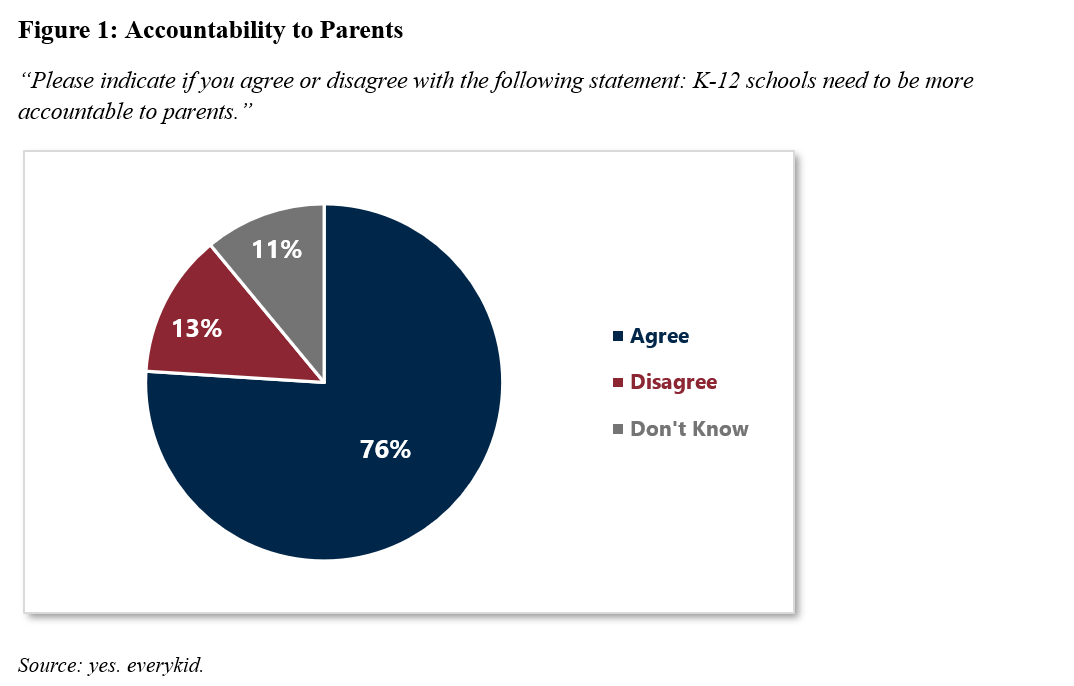
The education system often fails to communicate honestly with students, parents, and community members about how much students are actually learning. The discrepancy between actual student performance and what is reported is referred to as the “honesty gap.” A troubling example is the gap between students’ grades and their performance on standardized tests, which has grown tremendously since the pandemic. Grades are up, but test scores are down.

This is problematic because grades tend to carry more weight with students and parents than test scores. Many parents assume that the grades their children receive are accurate indicators of academic progress.

But this assumption is increasingly incorrect. Grades have become more and more disconnected from actual achievement. This may help explain why 90 percent of parents believe their children are performing at or above grade level in reading and math, even though only about one third of 4th- and 8th-grade students in the United States score at a proficient level on the National Assessment of Educational Progress (NAEP).

Who is to blame for the widening honesty gap? I believe we all bear responsibility. We seem to have collectively lost our appetite for bad news. Parents don’t want to hear that their children are falling behind, and schools are reluctant to deliver that message. Meanwhile, states face little pushback when they lower testing standards and inflate proficiency rates.

Unfortunately, the reality is that the cognitive skills students learn in school really matter for later-life success, and glossing over declining test scores—our best measures of these skills—will not change this fundamental fact. Sending our children to school and pretending that they are learning is not a path to prosperity. It is a path to lower economic growth and a lower quality of life. We should demand high standards from our educational institutions, even if the truth hurts.

Accountability in Missouri’s Public Schools

Successful leaders know that while it might feel good to have “yes men” around, they are not the best people to help you make important decisions. Support and encouragement matter, but so does honest feedback. With that in mind, recent actions and proposals in Missouri raise the question: are the accountability measures in Missouri improving our schools?

Pushing Back Against Policies that Dilute Standards

Currently, Missouri students are categorized into one of four performance levels based on their state standardized test scores. From lowest to highest, these are: below basic, basic, proficient, and advanced.

HB 607 proposes the addition of a fifth performance category, called “grade level,” which would be above basic but below proficient.

  • Proficient: Demonstrates mastery over all appropriate grade-level standards
  • Grade level: Demonstrates mastery over appropriate grade-level subject matter
  • Basic: Demonstrates partial mastery of essential knowledge and skills for the grade level

This definition of “grade-level” implies that it should not be expected for Missouri students to have mastery over all appropriate grade-level standards.

Rather than diluting standards, Missouri should implement policies that make meaningful use of state assessments. One such example is a third-grade retention policy. The transition from third to fourth grade is pivotal—students shift from learning to read to reading to learn. To combat the well-documented fourth-grade reading slump, states such as South Carolina and Mississippi adopted mandatory retention policies paired with targeted phonics-based interventions. The result has been very positive.

Open Enrollment—Better Choice, Better Accountability

Currently, where you can attend school is largely determined by where you live. This prevents many families from changing schools. Establishing a cross-district, universal open enrollment program would allow more families to vote with their feet. Markets excel at revealing best practices, and districts with best practices will likely attract more students and pressure other districts to change.

There is some potential to align open enrollment with Missouri’s accreditation process. In December 2024, it was announced that for the 10th year in a row, the state’s accountability system would not be used for district accreditation. Perhaps there is fear of a trigger in the policy that would allow students to transfer out of unaccredited school districts, especially because the unaccredited districts must pay the tuition for the transfers to receiving districts. If universal open enrollment were adopted, lawmakers could revisit the tuition rule for transfer students out of those districts and implement a meaningful accreditation system.

These strategies offer ways to maintain high standards for our schools and children. Better accountability systems in education are the key to learning which strategies are working and which are not. Encouraging transparency and openness will generate more competition and innovation in our schools, and should ultimately strengthen our education system.

Reputation and Reality Matter in City Governance

When entrepreneurs and job seekers consider where to live or invest, they don’t rely solely on tax rates or housing costs, though Show-Me Institute analysts have addressed those topics for years. People also make judgment calls about safety, governance, and community stability. In other words, they’re evaluating risk—and not just objective measures, but also perceptions.

A new study in the Journal of Business Venturing Insights offers a window into how those perceptions shape decision-making. Researchers Kaitlyn DeGhetto and Zachary Russell surveyed over 500 entrepreneurs and prospective employees about 25 of the country’s largest cities. They asked participants to rate each city on three types of institutional risk: safety, political, and social.

For Missouri, the results are worth paying attention to. Both St. Louis and Kansas City made the list. Despite their differences in culture, governance, and media attention, the two cities are perceived in remarkably similar ways.

Safety was rated the most important risk factor overall, and here both Missouri cities ranked poorly. St. Louis came in 10th and Kansas City 11th, where #1 indicates the highest perceived risk. Respondents were asked to consider the likelihood that someone’s “security and physical well-being will be endangered due to the normalization of aggression and criminality.”

This isn’t strictly about crime statistics. It’s about whether people think a city feels dangerous. For both cities, the perception alone is a barrier to investment and attracting talent.

On political risk—concern over erratic leadership or self-serving government—St. Louis ranked 17th, with Kansas City 19th. On social risk, which includes concerns around discrimination, cohesion and inclusion, St. Louis was 13th and Kansas City was 11th.

The takeaway for state and local leaders is straightforward: it’s not enough to govern well. You also must be seen as governing well. That means doing the hard work of making cities safer, administration more competent, and communities more welcoming—not as mere public relations efforts, but as visible, measurable outcomes.

Reputation isn’t everything. But in a competitive national landscape, perception drives decisions. If Missouri’s cities want to compete, they’ll need to improve both the reality and the narrative.

What Missouri Can Learn from Arizona’s Education System with Sean McCarthy

Susan Pendergrass speaks with Sean McCarthy, Director of Fiscal Policy for the Arizona House of Representatives, about the state’s innovative approach to education. They discuss universal school choice, open enrollment, and the broader implications of Arizona’s funding mechanisms. McCarthy highlights Arizona’s unique position as a national leader in school choice, the role of parental decision-making, and the challenges involved in education budgeting. They also discuss the Empowerment Scholarship Account (ESA) program and examine the positive impact this approach has had on rural schools across the state.

Listen on Spotify

Listen on Apple Podcasts 

Listen on SoundCloud

Timestamps:

00:00 Introduction to Arizona’s Fiscal Policy and Education System
00:48 Universal School Choice in Arizona
03:55 Open Enrollment Dynamics and Parental Choices
10:13 Funding Mechanisms and Their Implications
14:59 Challenges in Education Funding and Budgeting
19:59 Arizona’s ESA Program and Parental Empowerment
26:55 Rural Education and School Choice Outcomes

Produced by Show-Me Opportunity

A Free-Market Guide for Missouri Municipalities, Part Two: Taxation

Download the Full Report Here

A Free-Market Guide for Missouri Municipalities is a multi-part series by David Stokes, director of municipal policy at the Show-Me Institute, offering practical, free market–oriented reforms for improving local government across the state. Each installment focuses on a core area of municipal policy—combining real-world examples, historical  context, and academic research to help cities, towns, and villages better serve residents and taxpayers.

The second installment, A Free-Market Guide for Missouri Municipalities, Part Two: Taxation, examines the sources of municipal revenue in Missouri and evaluates the state’s heavy reliance on sales and income taxes. It makes the case for rebalancing local finance by placing greater emphasis on growth-oriented taxes like property taxes and more targeted sources such as user fees, while reducing reliance on volatile and distortionary taxes. Topics include land taxes, special taxing districts, user fees, local gas taxes, and the economic consequences of tax subsidies like TIF. The report offers practical recommendations to make local tax systems more stable, transparent, and conducive to long-term prosperity.

20250313 – Free Market Guide to Cities Part 2 – Stokes (1)

Beware the Budget Mirage

When it comes to Missouri’s budget, what you see is not always what you get. Recently, as Missouri’s House of Representatives finished passing its version of the FY 2026 budget, lawmakers congratulated themselves for the efficiencies they found that resulted in a budget that totaled less than $48 billion. While $48 billion is still a ton of money (it’s still almost double the state’s FY 2019 budget), what the House passed was significantly smaller than Governor Kehoe’s recommended budget for next year, and was even smaller than Missouri’s current FY 2025 spending plan. But before anyone gets carried away celebrating the legislature’s cost-cutting efforts, it’s important to make sure the alleged savings are more than just a mirage.

Missouri taxpayers don’t have to look too far to find an example of the last time so-called budgetary savings were illusory—we can look at this year’s budget. When the FY 2025 budget was passed last May, our state’s elected officials celebrated their “conservative” budget. They said it was the first budget in a decade that was smaller than the previous year’s, which I noted at the time didn’t amount to much. It was true that the budget they initially passed did call for less spending than years prior, but in the months since, we’ve discovered that claims of budget cutting didn’t hold up.

When the budget passed last May, I explained that the totals were likely misleading, and the general assembly’s recent approval of a supplemental funding bill all but confirms it. To finish out the year, Missouri’s government needs nearly $2 billion extra dollars, with almost $400 million of that total coming from general revenue (state income and sales tax dollars).

As the above table shows, once you take into account all the funds that are truly needed for the year, this year’s budget exceeds last year’s by more than $700 million. What’s worse is that the general revenue portion is similarly higher than last year. This is problematic because not only is Missouri on track to spend more than the state projects to bring in (which was the case even before this extra spending was added), revenue collections are now behind where they were one year ago.

In other words, Missouri is in worse fiscal shape today than it was last year, and despite efforts to make it seem as though spending was being reined in, we’re once again on a path to spend more this year than ever before. As Missouri’s Senate begins its work on the state’s FY 2026 budget, it should be clear that taking real steps to rightsize state government is essential. Taxpayers should keep a close eye on the budget negotiations in the coming weeks. Legislators may try to sell Missourians on a bill of goods again.

Don’t Throw It Out—Fix It

Missouri currently has a very weak system of accountability for public school districts. Every spring, students take assessments under the Missouri Assessment Program (MAP), and these test results feed into an accountability system known as the Missouri School Improvement Plan (MSIP). And by “feed into” I mean that test scores are less than half of what districts are held accountable for. Based on MSIP results, districts are designated as fully accredited, partially accredited, or not accredited. It’s not actually much of a system, though, since all but six of our 520 districts are fully accredited.

The Missouri Senate debated this week whether we should just throw out the MSIP part. Students would still take the MAP tests, but only to meet federal requirements and get federal dollars. Supporters claim that outcomes will dramatically improve because every teacher, freed from the pressure of MAP scores, will thrive and innovate. Of course, that’s not true across the board. We have quite a few districts that need more oversight, not less.

Rather than take an accountability system with almost no teeth and toss it aside, we should be working on building a better one. It is still true that you can’t fix what you don’t measure. We need test scores to tell us if students can read and do math. We need to know how well schools are serving their students. Publicly funded systems should be held accountable to taxpayers.

We are on version six of MSIP. The state board of education recently determined that the results of MSIP 6 are not reliable enough to use without a rolling three-year average. If it is a broken accountability system—which it seems to be—let’s fix it.

Don’t Throw the Baby Out with the Bathwater

As part of the dramatic cuts at the U.S. Department of Education under the Trump administration’s DOGE program, the entire staff of the National Assessment of Educational Progress (NAEP) was cut to just one person. NAEP had a budget of $190 billion to administer an assessment in reading and math to a representative sample of 4th and 8th graders in every state every other year. The test questions change, but the testing standards and measures do not. This means that NAEP is the only uniform way to measure public education in each state and over time.

I’m often asked if school choice is an effective policy. In other words—do states that let parents easily choose from a number of publicly funded options for their children do better than those that don’t? We need NAEP to know the answer. Also, folks want to know if Missouri is improving or getting worse when it comes to educating our students. Well, the state has changed its own test several times in the last decade, so the only way we can know is to look at NAEP scores.

It’s difficult to achieve accountability in a vacuum. Gutting something in the name of cutting costs can be costly in itself. Missourians should hope that NAEP, federal education data collection, and the federal role in researching what works in education get rebuilt quickly and thoughtfully.

Charter Schools Are Highly Effective in Missouri

In 2023, the Center for Research on Education Outcomes (CREDO) at Stanford University released its third National Charter School Study. It compares the effectiveness of charter schools to traditional public schools in 29 states, plus Washington D.C, and New York City. The study shows that Missouri’s charter schools are among the most effective in the nation.

The report focuses mostly on documenting charter school performance overall across the 29 states and two cities. Some of the more notable findings from the full sample include:

  • On average, charter schools are producing more test-score growth than traditional public schools. The CREDO research team estimates that the extra growth is equivalent to six additional days of instruction annually in math, and 16 extra days of instruction in reading.
  • The performance of charter schools is improving over time. The CREDO researchers track improvement by comparing their findings in the 2023 report to findings from their older, similar reports from 2009 and 2013.
  • High-poverty students benefit from attending a charter school more than their low-poverty peers.
  • Though charter schools outperform traditional public schools overall, virtual charter schools perform worse than other charter schools, and worse than traditional public schools.

On the last point, the CREDO dataset covers the years 2014 to 2019, so these virtual charter schools were virtual before it became (unfortunately) fashionable. The finding that virtual charter schools are ineffective tracks with evidence from the pandemic era showing that schools that spent more time in virtual learning had especially poor performance. The CREDO report makes it clear that charter schools are not special in this regard.

In terms of Missouri-specific findings, the report shows:

  • Charter schools nationally are doing well, but Missouri charter schools are doing even better. Our charter schools are among the most effective in the country in terms of improving academic achievement relative to their traditional public-school alternatives. For example, in reading, Missouri’s charter schools are the fifth-most effective among the 29 states covered by the report.
  • Mirroring the national trend, the effectiveness of Missouri charter schools is improving over time.

This is just a quick summary of a very dense and thorough report, so I encourage interested readers to take a closer look themselves. The CREDO report provides compelling evidence of the value of charter schools in Missouri. I hope our legislators enact policies that make it easier for charter operators to improve outcomes for Missouri children.

Support Us

The work of the Show-Me Institute would not be possible without the generous support of people who are inspired by the vision of liberty and free enterprise. We hope you will join our efforts and become a Show-Me Institute sponsor.

Donate
Man on Horse Charging