It’s Time to Stop Making Excuses

Missouri students have a college readiness problem. The Department of Elementary and Secondary Education (DESE) reports that in 2017, just 42 percent of graduating high school seniors were college or career ready. (Try as I might, I can’t find any more recent data.)  But it gets worse. In 2019, just 25 percent of Missouri high school seniors met all four college readiness benchmarks on the ACT college entrance exam. And one-third of test takers met zero of the four.

Some would argue that ACT scores were negatively affected when the state paid everyone’s testing fee and nearly every high school senior took the exam. That appears to be true. The state starting picking up the tab in 2015, but just 77 percent of seniors took the test that year. In 2016, nearly every student took the exam and scores dropped. Only 22 percent of students met all college readiness benchmarks that year. In 2018, the state stopped paying for the exam and participation dropped off. This past school year participation was down to 82 percent and college readiness had improved by three percentage points.

What’s troubling is when you compare 2015 to 2019. Participation rates were about the same. But college readiness was five points higher (30 percent met all four benchmarks) in 2015. And the percentage of students who met none of the benchmarks was eight points lower. The excuse that non-college bound seniors were taking the test and lowering the scores falls apart.

Let’s be honest. The ACT bar is not that high. In English, meeting the college readiness benchmark means that a student has a 50 percent chance of getting a B and a 75 percent chance of getting a C in a typical college freshman English class. If Missouri high school graduates can’t hit that mark, then I would say we have a problem.


 

Legislators Shouldn’t Neglect Health Care Reform Opportunities in 2020

My colleague Elias Tsapelas has produced a lot of excellent research on Medicaid over the last few months. And this important work will continue: Medicaid spending already constitutes a third of Missouri’s budget and is growing rapidly, which will put mounting pressure on other state priorities. Missouri will eventually have to decide whether it’s a government that sometimes provide health care benefits or a health care provider that sometimes governs.

The existential risks of an unreformed Medicaid program are not, however, the only health care issues that Missouri should grapple with next year.

There will be many important items on policymakers’ legislative agendas in 2020. Medicaid reforms should be a high priority—not only as a health care priority, but as an issue that will affect the state’s financial health well into the future. But legislators should also not forget that great progress can be made for Missouri patients through other legislative changes, and I hope these largely modest reforms make their way onto the agenda.


It’s Time to Address Medicaid’s Costs

The share of Missouri’s budget consumed by Medicaid just keeps growing. According to the state’s Medicaid agency (page 10), the program will need hundreds of millions in new funding just to maintain the status quo in the coming fiscal year. This news won’t surprise anyone who has been following the program’s continuous growth over the past decade. But it does raise the question of why state policymakers have been so hesitant to address this alarming trend.

It is doubtful that there’s ever been more information available for Missouri’s elected officials searching for ways to contain Medicaid’s cost growth. Beyond the recommendations that my colleagues and I have proposed, a report was completed earlier this year by McKinsey & Co. that outlined changes that could save Missouri taxpayers more than one billion dollars. The report delivers some harsh truths about the state of Missouri’s program and how dire the need for cost containment has become. At one point (see page 14) it estimates that if costs remain unchecked, the state’s next economic downturn could result in Medicaid consuming more than 50 percent of Missouri’s overall budget.

Additionally, the report identified the following problems with Missouri’s program (page 16):

•           Dollars spent in the program are not well aligned with value received from the delivery system;

•           Specifically, methods to pay providers lack incentives to contain costs or enhance quality;

•           Approaches to utilization management; eligibility management; fraud, waste, and abuse; and third-party liability are limited, partially due to limitations of the MMIS (Missouri Medicaid Information System);

•           Programs for special needs populations are fragmented;

•           There is no substantial measurement nor transparency of outcomes of care; and

•           Service levels to consumers and providers could be improved, including reductions in average wait times for handling questions, as well as increased service channels.

Many of these suggestions are complex and technical in nature, but they demonstrate the plethora of opportunities available for program improvement. There were discussions this past week of the conclusions from the McKinsey & Co. report at the state’s Medicaid Oversight Committee meeting. This is one of the first signs that cost containment may soon become a priority in Jefferson City, but it remains to be seen whether these discussions will result in substantial reforms being enacted in the upcoming legislative session.

At this point, two things are clear: Containing Missouri’s Medicaid costs has become a necessity, and there are many paths available for policymakers who are interested in taking on the challenge. For the sake of Missouri’s taxpayers, let’s hope that 2020 is finally the year of action.


Missouri’s Government Union Reforms Still Tied Up in the Courts

It’s been more than a year since Missouri legislators passed House Bill (HB) 1413 into law, which at the time was arguably the most comprehensive government labor reform package passed in the United States in the last decade. Along with paycheck protection, HB 1413 included key transparency and certification reforms, any of which would have been momentous changes if passed separately.

Unfortunately, the legislation was held up almost from the beginning. On August 27, 2018, a cavalcade of labor interests, including the Missouri chapter of the National Education Association, filed suit against to state to block the implementation of the law, and on March 8, 2019, its motion for a preliminary injunction against the law was granted. This meant that even though the law had already been subject to enforcement for about six months, HB 1413’s reforms are no longer in effect, pending litigation. Currently, the court is considering an order of summary judgment in favor of the plaintiffs, meaning that the judge could soon conclude that the facts and law weigh so heavily in their favor that a full trial would be unnecessary. Your guess is as good as mine on how the judge will rule on that motion.

To be plain, it’s terribly disappointing that HB 1413’s reforms were blocked at all by the courts. As Show-Me Institute researchers have noted in the past, court rulings have made substantive reforms in this area nearly impossible. In the last 20 years, Missouri courts have established new constitutional rights for organized labor from old constitutional language, upending decades of precedent in favor of state judicial activism. That HB 1413’s credible reforms have been tied up in this legal environment at the lower court level is unfortunate for Missouri taxpayers and government employees alike.

Perhaps more disappointing, however, is the stasis that the litigation has imposed on legislative action in these areas, suffocating opportunities to tweak legislative language or otherwise accommodate the courts in effectuating the will of the people. Keep in mind that this was a law passed to protect taxpayers and workers alike by updating the state’s government labor framework. That litigation surrounding this case could continue for years, and will come at the cost of workers’ rights and taxpayers’ pocketbooks.


Some Positive Signs on Economic Development Incentives in Kansas City

Writers at the Show-Me Institute have been railing against the subsidy culture of Kansas City for years. A wide range of private developments have received subsidies, including private world headquarters buildings with questionable job creation claims, hotel subsidies despite (indeed because of) a saturated market, luxury apartment high rises, and entertainment districts that merely moved jobs around the city, to name a few. But there may be reasons to think this is all coming to an end.

  • The Tax Increment Financing (TIF) Commission diverted from its usual rubber-stamping to say no to an outrageous request to subsidize a luxury hotel downtown.
  • A vote to approve a proposal to dump a bunch of public money into an office tower has been repeatedly delayed by the city council. Not only is this a speculative risk for the city, the numbers used by proponents are wrong.
  • More recently, and immediately after the Show-Me Institute published a call to do so, the deal to bring the USDA to Kansas City was reworked to cap public investment by reducing the port authority’s windfall.
  • More promising for the long term, Mayor Lucas appointed former councilmember Alissia Canady to head the TIF Commission as well as appointing some current council members to the commission. Putting elected officials on the commission should make the commission more responsive to voter concerns, and Canady herself has been consistent in her willingness to oppose some incentive projects.

There is a great deal more to be done to rein in the incentives culture in Kansas City. Among other things, we need a legitimately independent study of incentives and their impact, the recent city effort having been an absolute debacle. But based on the past few weeks, there is reason to be guardedly optimistic.


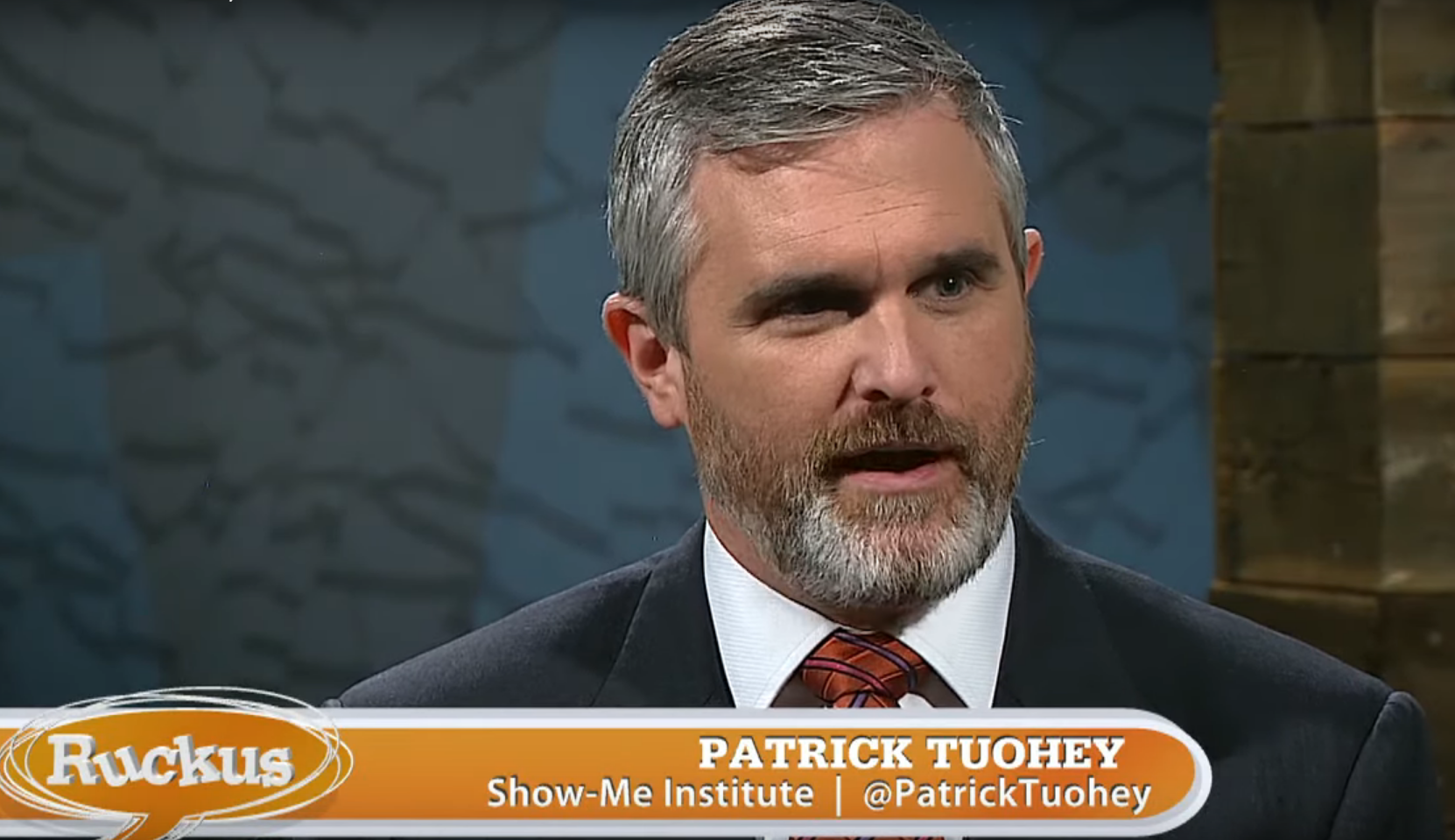
Patrick Tuohey Discusses Local Issues on KCPT’s Ruckus

On November 7, Patrick Tuohey joined the panel on KCPT’s Ruckus to discuss voters overwhelmingly deciding to change the name of Martin Luther King Jr. Boulevard in Kansas City, the recent debate over the tomahawk chop , the USDA move from D.C. to K.C, and a toast to the city’s TIF commission.   

https://www.youtube.com/watch?v=NibOUrzzwho&t=5s


Show-Me Institute v. Office of Administration: A Brief Update

Late this summer, we announced that the Show-Me Institute was going to court to compel the state’s Office of Administration (OA) to provide records to us that it had already provided to the American Federation of State, County and Municipal Employees (AFSCME), a government union. You can find the details of the case in this story by the Jefferson City News-Tribune, or you can listen to our podcast about the litigation featuring attorney, Dave Roland here.

Two months have now passed since our lawsuit was filed, and so far, the case is proceeding relatively slowly, which we expected. Unsurprisingly, the Office of Administration didn’t immediately surrender and decide to just hand over the documents it’s been giving the AFSCME, so we are still anticipating the case will carry on well into next year. In the interest of transparency, I would have hoped that the OA would have simply provided these documents to us without further delay—transparency for AFSCME should also mean transparency for the rest of the public. But unfortunately, it may take a judge to affirm this notion.

A little more surprising is the fact that AFSCME itself has decided to try and intervene in the case, arguing it has a stake in the resolution of this case. That’s surprising because our litigation doesn’t address AFSCME’s actions, but rather the actions of the government. Time will tell what becomes of this intervention, if anything.

We’ll continue to keep you posted on this important case.


St. Louis Ranked in the Middle in Ease-of-Doing-Business Study

The St. Louis Business Journal recently published details of a report that placed St. Louis in the top ten “untapped cities” for startups. This is encouraging, but another study out of Arizona on barriers to business creation was less positive, showing that St. Louis has a lot of work to do in order to ease the way for entrepreneurs.

First, it’s worth recalling that in 2018 the National Bureau of Economic Research (NBER) demonstrated how tax rates affect innovation. Looking at state-level taxation dating back to the early twentieth century, the NBER concluded, “A one percentage point higher tax rate at the individual level decreases the likelihood of having a patent in the next 3 years by 0.63 percentage points.” Specifically, they found that, “higher personal and corporate income taxes negatively affect the quantity, quality, and location of inventive activity at the macro and micro levels.” This should not surprise anyone; resources that might be put toward innovation can’t be used for that purpose if they are spent paying taxes.

The new study from Arizona State University, titled “Doing Business: North America“ looked at 115 cities in the United States, Canada, and Mexico and rated them in six different categories. Those were “starting a business,” “employing workers,” “getting electricity,” “registering property,” “paying taxes,” and “resolving insolvency.” (All U.S. cities tied for first place regarding insolvency.)

While St. Louis ranked 31st overall out of the 115 cities in Canada, the United States, and Mexico (no other Missouri cities were included in the study; Chicago scored 45th overall), the areas where it scored less impressively—starting a business and employing workers—feature significantly in attracting entrepreneurs and innovation.

St. Louis scored 60th on “starting a business” (46th among U.S. cities). This ranking resulted from a “study of laws, regulations, and publicly available information on business entry,” along with consideration of the time and cost of complying with applicable regulations.

Regarding “employing workers,” St. Louis ranked 47th both for the whole sample and among the 66 U.S. cities examined. This ranking was more involved and is described on page 177 of the report, but it reflects the cost of wages and wage regulations such as probationary periods, overtime requirements, and sick leave.

Policymakers can debate the value of local and state mandates and regulations associated with starting a maintaining a business, but all should acknowledge that each one imposes a cost on the employer. Forty-six other U.S. cities have formulated less costly ways to meet their public policy objectives when it comes to employing workers. And St. Louis was outranked by cities in in all three countries examined when it came to ease of starting a business!

All this suggests that when working toward the important goal of taking advantage of St. Louis’ “innovation districts” in the agri-tech, biomedical and technology fields, city government could do a lot more to help entrepreneurs take advantage of what the city may already offer.


Support Us

The work of the Show-Me Institute would not be possible without the generous support of people who are inspired by the vision of liberty and free enterprise. We hope you will join our efforts and become a Show-Me Institute sponsor.

Donate
Man on Horse Charging