
Susan Pendergrass, David Stokes, and Elias Tsapelas join Zach Lawhorn to discuss legislative priorities for 2022, the rejection of a TIF in Webster Groves, and a bid to raise the minimum wage to $15 an hour for state workers.
Credit Where Credit Is Due
Show-Me Institute analysts have been saying for quite some time that parents need choices when it comes to their children’s education. Those who disagree have often relied on the ridiculous argument that giving parents choices will make bad schools worse, since anyone in their right mind would abandon them. But finally, we may be seeing reason from those folks.
The Missouri Board of Education released its 2022 Legislative Priorities and, surprisingly, giving families the option of enrolling in a district other than the one in which they live made the list. Interdistrict choice is not a new idea—44 states and the District of Columbia allow it—but it would certainly be new for Missouri. Currently, only students who can demonstrate that they have a transportation hardship due to natural barriers that make the distance to their assigned school farther away than a school in a neighboring district can apply for interdistrict choice. The state board of education, seemingly, would like school choice extended to every student, regardless of their transportation situation.
It should be said that it’s a tough time for public education in Missouri. District- and school-level test scores for the prior school year were released this week and an initial look at the data suggests the results are pretty dismal. In many districts there are not enough teachers, substitutes, or bus drivers. At a recent hearing of the Missouri Legislature’s Joint Committee on Education, the state school board association seemed to be at odds with the superintendents and even with rural educators—two groups with which it is typically aligned. Perhaps the news has made its way to Jefferson City that, for the near future at least, “it’s the parents, stupid.” Finally, parents are being heeded as a political force that shows up and votes.
Whatever the reason, I look forward to seeing the Missouri Board of Education press for its legislative agenda. I look forward to seeing members of the board in committee hearings giving testimony on the need for parents to have options beyond their assigned public schools. I look forward to joining forces in pressing for this policy. I hope that it is pursued with integrity.
Virtual Town Hall: Ideas to Move Missouri Forward in 2022

Download a copy of the 2022 Blueprint here
The 2022 Blueprint: Moving Missouri Forward presents 14 policy ideas aimed at moving Missouri forward to a brighter future. The Blueprint covers a broad range of issues—from education to health care, from public pensions to corporate welfare, and from tax policy to government transparency. Our expert policy team has thoroughly researched and analyzed the problems facing our state today, and their work informs the policy solutions that follow. We believe that with the right policies Missouri could lead the nation in wealth, quality education, and a vibrant and flourishing civil society.
On December 8, 2021, Show-Me Institute held a virtual town hall to discuss the ideas presented in the 2022 Blueprint.
2022 Missouri Blueprint

The Show-Me Institute’s mission is to advance liberty with individual responsibility by promoting market solutions for Missouri public policy. Our vision is for Missouri to be a place where entrepreneurs can pursue their dreams, parents are free to direct the education and upbringing of their children, and a growing economy provides opportunities for all. Critical to achieving this vision is a state government that understands the value of freedom in the lives and future of our people.
The 2022 Blueprint: Moving Missouri Forward presents 15 policy ideas aimed at moving Missouri forward to a brighter future. The Blueprint covers a broad range of issues—from education to health care, from public pensions to corporate welfare, and from tax policy to government transparency. Our expert policy team has thoroughly researched and analyzed the problems facing our state today, and their work informs the policy solutions that follow. We believe that with the right policies Missouri could lead the nation in wealth, quality education, and a vibrant and flourishing civil society.
Download the 2022 Missouri Blueprint

Missouri Gets a D Grade in Electric Competition
Missouri’s report card for electric competition is in, and it’s not good. According to a new study from the University of Texas, Missouri received a D for competitiveness in electricity markets, which is not surprising considering lawmakers have barely tried to incorporate competition. Missouri policymakers ought to take note, as Missourians have seen the fourth-fastest electricity price increases nationwide since 2008.
The study grades each state from A through F on several factors relating to electricity market design and competition. On most of the important criteria in the study, Missouri gets few of the answers right. For example, while some Missouri utilities do participate in wholesale electricity markets, where grid operators select the lowest-cost electricity to meet demand, in no part of Missouri do customers get to choose their electric service from among competing providers. Moreover, monopoly utilities are not required to submit requests for proposals to find the lowest-cost new generation portfolio. Monopolies utilities can simply build the generation portfolio themselves, potentially at higher cost. This lack of a competitive market means that hardly any power plants in Missouri are owned and operated by non-monopoly utilities.
Not having a competitive market comes with its costs, and lately Missourians have been paying the price. For instance, customers of states that allow them to choose from competing retail electric service providers have seen their prices decrease 17 percent since 2008, whereas the average Missourian has seen his prices increase 17 percent during the same time period. Additionally, flexibility in choosing electric service providers appeals to businesses, as they can negotiate their own contracts and pursue their own electric generation goals.
If lawmakers want to reverse rising electricity prices in our state and create a more competitive and business-friendly environment, they don’t have to look far. Illinois received the second-highest grade in this study and has competitively structured electricity markets. As a result, its prices have decreased 13 percent since 2008. Based on these facts, shouldn’t lawmakers consider allowing greater competition in Missouri’s electricity markets?
The House Is on Fire

We’re in the midst of an educational crisis. We’re halfway through a third disrupted school year and Missouri students, especially the most vulnerable, have fallen dangerously behind. While the Missouri Department of Elementary and Secondary Education (DESE) has cautioned against drawing conclusions from last year’s test scores, they can’t just be ignored.
It’s troubling enough that only about one third of the Missouri students who took the state assessment last year scored at grade level in math. But for certain categories—Black students and students with disabilities—roughly ninety percent did not hit that benchmark last year. When 75 percent of students in multiple subgroups are below grade level, it’s time for immediate and intensive interventions.
Parents are well aware of what’s going on and many are upset that their children are losing ground. A recent survey found that over half of parents think tutoring would be very helpful for their children this year. Nearly two thirds of parents of students with disabilities would like tutoring for their children. Parents who can afford it are seeking tutors and paying out of pocket for them. But what about the 80 percent of low-income students who are falling behind?
Tennessee just pledged $200 million of its federal stimulus funds to launch a three-year tutoring project called the Tennessee Accelerating Literacy and Learning Corp (TN ALL Corps). High-dosage/low-ratio tutoring has “consistently proven to accelerate achievement as quickly as possible” says Tennessee’s education commissioner. In fact, a study from Brown University found that regular, frequent tutoring sessions can increase learning by up to 10 months.
DESE also has nearly $200 million in funding from the American Rescue Plan, plus millions from earlier rounds of stimulus. So far, Missouri has pledged stimulus funds to teacher recruitment and retention, to the Missouri Leadership Development System for principals, to improving the longitudinal data system, and to teacher professional development. While these may be great ideas in the long run, they don’t address the immediate crisis. Missouri’s needs big, bold ideas from its leaders and it needs them now.
St. Joseph Should Privatize Its Sewer System

A version of this commentary appeared in the St. Joseph News-Press.
The usual problems with water in St. Joseph, Missouri relate to having too much of it all at once. But properly getting rid of the water you have used—through your sewer system—is also a complex issue. More stringent water quality requirements from state and federal regulators have made it more difficult for many municipal utilities to operate. Often, they simply do not have the resources to meet the higher water-quality and sewage-control standards. Even large cities have had trouble dealing with revised Environmental Protection Agency (EPA) sewage guidelines. For instance, Kansas City reached an agreement with the EPA in 2010 to upgrade its sewer system at a cost of $2.5 billion over 25 years, and cities like Kansas City have more resources to deal with sewer infrastructure than communities like St. Joseph.
Sewer rates in St. Joseph are already a matter of complaint. A June 2019 article in the News-Press detailed concerns among the area’s business community that high municipal sewer rates were harming the region’s economic environment. Whatever the price, St. Joseph’s sewer issues aren’t going away anytime soon. The city reached an agreement with the EPA to improve the sewer system years ago. During the Trump administration, the EPA gave St. Joseph additional time and flexibility to complete those required system improvements. Under that revised agreement, the city will be upgrading the system until at least 2036, and during that period will continue to periodically release untreated sewage into the Missouri River during major storm events. While the agreement and time extension with the EPA may be justified, the fact is that St. Joseph has another option to consider: privatization. Water in St. Joseph has long been provided by private utilities, and the city should once again—as it has previously—carefully consider privatizing its sewer system.
Indianapolis outsourced its sewer systems to private operators in 1994, and the cost savings were even greater than had been estimated. The city saved $72 million over the first five years of the contract, and those savings allowed the region to invest in major repairs to its aging sewer system. On a smaller scale, communities across Missouri have realized that the best thing for their residents is to privatize their water and sewer systems. Within just the past two years, voters in Bolivar, Eureka, Taos, Trimble, Purcell, Hallsville, and Garden City have approved privatization of their municipal water and/or sewer systems to either Missouri-American Water or Liberty Utilities. Those communities—mostly small towns spread around the state—realized that maintaining these systems was going to be an enormous burden on city governments not properly equipped to manage them. Privatizing them—for amounts ranging from $200,000 to $28 million—was a way for each city to guarantee proper operation of their water and sewer services by a regulated, privately-operated utility. The cities can use (and have used) the money to pay down debts, invest in other municipal needs, or do whatever the city wants to prioritize.
Arnold, Missouri, is probably the best guide for St. Joseph. Arnold, a suburb of St. Louis with approximately 21,000 residents, was having trouble keeping up its sewer system as it grew in population. In 2015, city voters approved a plan to sell its sewer system to Missouri-American Water for $13.2 million. Since that sale, Missouri-American has completed several promised system upgrades, while Arnold used the money to pay down municipal debt and expand its park system. As a larger city than Arnold, St. Joseph could expect substantially more money in any privatization effort.
Private utilities in Missouri are regulated. Just as Missouri-American Water cannot raise water rates in St. Joseph without approval from the public service commission, no private company could take over the sewers and raise rates further without going through the same approval process. The fact is that running a sewer system under current rules and regulations is expensive and beyond the capacity of many communities. However, it is well within the capacity of larger, private utilities like Missouri-American Water, Veolia, and Liberty Utilities. As the Indianapolis public works director said about the private contractors they hired to operate the sewer system, “It’s just a different league. These guys have resources our guys could only dream of.”
St. Joseph should take advantage of that expertise and seek bids from several private utilities to either outsource the management and operations of their sewer system or—better yet—purchase and operate it. That is the best way that city officials can address the sewer system needs of St. Joseph for the benefit of everyone in the community.
Educational Performance Transparency Is Fundamental

Last month the Show-Me Institute released the Missouri Parents’ Bill of Rights (MPBR), a K-12 transparency and accountability proposal that reaffirms that parents and taxpayers should control the educational system they pay for. Since that time, several additional state-focused “Parents’ Bill of Rights” have been introduced by policymakers, and most of the reform provisions in those proposals hew closely to ours.
But more often than not, one provision that seems to get omitted from these plans is a provision that mandates educational performance transparency. As readers will remember, the MPBR requires not only transparency in curricula and school spending, but it also requires transparency in how well students are being prepared to have a productive life. As my colleague Susan Pendergrass has hammered home with the Missouri School Rankings Project:
Missouri schools are failing to teach the core subjects of reading and math and the most recent test scores show that students are falling further behind. Missouri’s Department of Secondary and Elementary (MO DESE) has not offered the level of transparency regarding student performance that is necessary to create an education system focused on higher standards, reducing achievement gaps, and results-based accountability. [Emphasis mine]
Susan’s MoSchoolRankings.org project underlines the danger of allowing DESE to obscure the failings of the schools and districts it oversees. DESE should be the partner to the public in demanding transparency and accountability from Missouri K-12 educational institutions. But all too often, it seems instead to be in cahoots with districts, against the interests of parents and taxpayers.
That’s why mandating educational performance transparency as part of the MPBR was important. It’s also why I think it’s important for such transparency to be included in any bill of rights now being proposed by public officials.
Costs of a Cosmetology License
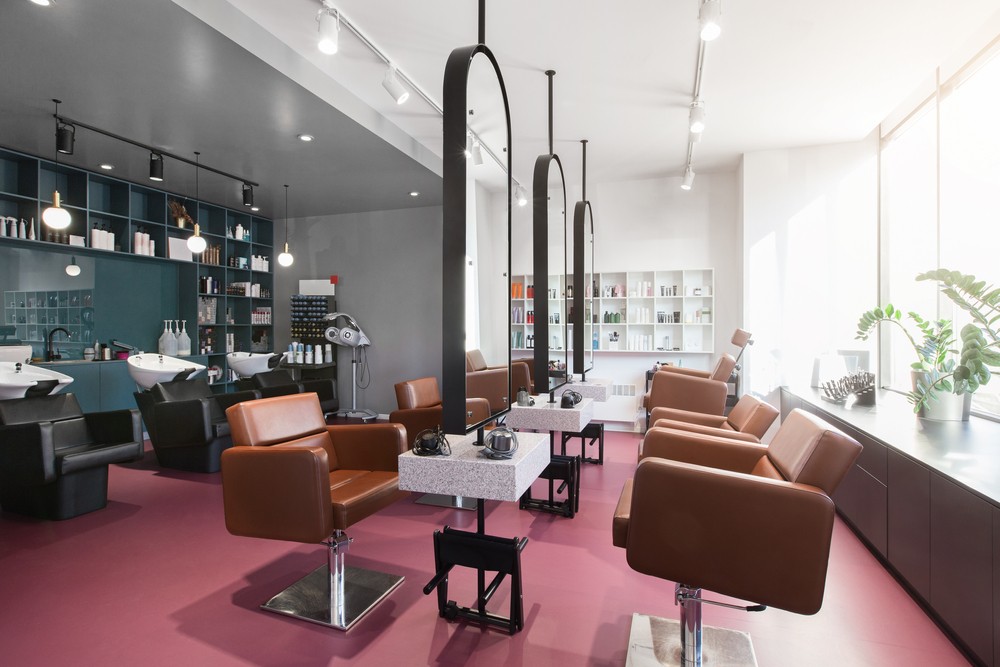
Would you spend over $14,000 on extra schooling to make barely more than minimum wage? It sounds ridiculous, but that’s what the state requires to be a licensed cosmetologist in Missouri. The title of a recent report from the Institute for Justice is true: State cosmetology licensing fails aspiring beauty workers by making it too difficult and expensive to attain a license.
The Institute for Justice’s report examines the debt and dropout rate of cosmetology students across the country, and the numbers are pretty shocking. To receive a cosmetology license in Missouri, one must complete 1,500 educational hours from an accredited cosmetology program. From the 2011–12 school year to the 2016–17 school year, the average cosmetology program cost $14,629 and students took on an average of more than $7,700 in federal student loans.
That’s not pocket change, but it’s even worse when earnings are considered. In Missouri, the median annual wage of a licensed cosmetologist in 2019 was $23,760. That’s slightly lower than the national average of around $26,000 for licensed cosmetologists and slightly higher than yearly earnings from a full-time minimum wage job. (For reference, earning Missouri’s minimum wage of $10.30 for 40 hours per week and 52 weeks per year equates to yearly earnings of $21,424.) And more than two thirds of students do not graduate on time, increasing their debt burden even more.
So much money is spent to fulfill a state educational requirement, but is that requirement even necessary? Occupational licensing is intended to protect the health and safety of consumers, but recent research indicates that only 25 percent of cosmetology training is health and safety training.
Occupational licensing increases costs to consumers, but the other side of that coin is often overlooked. Licensing requirements dramatically increase costs for the workers who must obtain that license to earn a living. This is especially true in cosmetology, where the costs are directly tied to licensing requirements, but this is also true no matter the cost or resulting wages. It’s time for legislators to reconsider these requirements, regulations, and boards that have burdened workers and consumers for too long. A sunset provision for occupational licenses would be a great step toward reducing burdens and costs for consumers and workers.
