WATCH: Missouri School Rankings Project Virtual Event

On February 23, Dr. Susan Pendergrass, Director of Research and Education Policy at the Show-Me Institute, presented her findings from the Missouri School Rankings Project and give an overview of how to use the website.

Visit MoSchoolRankings.org.

Missouri schools are failing to teach the core subjects of reading and math, and the most recent test scores show that students are falling further behind. In response to the Missouri Department of Elementary and Secondary Education’s (DESE) failure to perform one of its most basic functions, the Show-Me Institute, in conjunction with Show-Me Opportunity, launched The Missouri School Rankings Project and MoSchoolRankings.org.


Telemedicine Needs Legislative Action

After nearly two years of Missourians enjoying greater access to telemedicine, Governor Parson allowed the waivers that enabled the service’s expansion to expire at the end of 2021. Telemedicine played a crucial role in Missouri’s response to COVID-19, but as I’ve written previously, this required waiving various state laws and regulations. Now that the temporary waivers are gone, telemedicine needs a permanent solution.

Prior to the pandemic, state law made it difficult to use telemedicine for a health care provider that you hadn’t already seen in person. In addition, there were rules that impacted which providers could use the service, the level of services they could provide, and even the treatments they were allowed to prescribe. Once these unnecessary restrictions were waived, telemedicine grew tremendously. Today, there are likely many patients who would prefer retaining expanded options for remote care.

Some providers, including many pharmacists, found that they enjoyed the flexibility provided by Missouri’s COVID-19 waivers. In fact, the Missouri Board of Pharmacists is establishing new rules to prepare for the industry’s more remote-friendly future. Further regulatory changes will be required for other professions, such as re-establishing an easy path for doctors from out-of-state and other willing providers to treat Missourians remotely.

Perhaps the biggest remaining hurdle for telemedicine is the Missouri laws that need to be updated. For example, state statute should be changed to make it easier for providers to write prescriptions for patients they’ve seen remotely. If providers were able to safely treat patients remotely for nearly two years while this law was waived, there’s no good reason to bring it back now. Fortunately, there are multiple bills filed that would represent steps in the right direction on this front, and I’m optimistic one will make it across the finish line this legislative session.

While the telemedicine restrictions were waived as a response to a public health emergency, their absence showed that access to health care in Missouri can be improved without risking patient safety. It’s time for Missouri’s legislature to capitalize on this momentum and make the ease of access Missourians have come to enjoy a permanent feature of telemedicine.

What I Would Like to See from the Resurrected Trolley

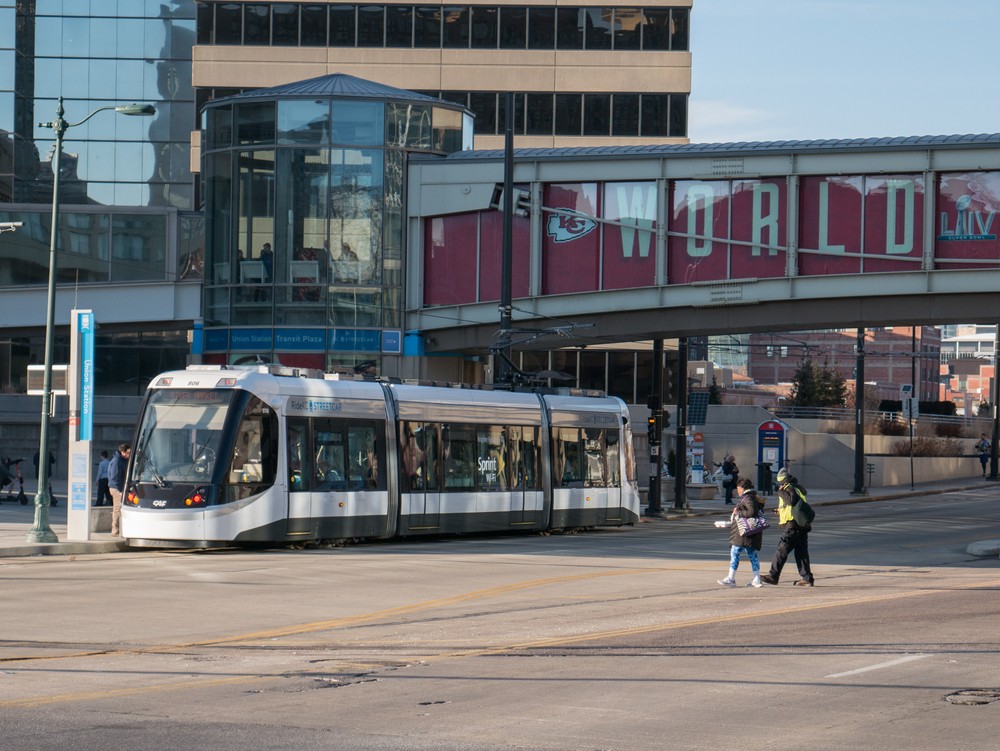
The Bi-State Development Agency has granted the Loop Trolley a new lease on life. Given the trolley’s poor track record, it’s going to be a steep uphill climb for Bi-State to salvage anything worthwhile from this project.

The biggest problem with the Loop Trolley is that nobody wants to ride it. During its 13 months of operation, ridership was under 10 percent of expectations, which led to equally depressing revenue shortfalls. Time and again, trolley management turned to taxpayers to fill its budget gaps, ultimately pouring $51 million of other people’s money into the project. One of those funders, the Federal Transit Administration, issued an ultimatum to the Loop Trolley Transportation Development District (LTTDD): either restart the trolley or pay back $37 million in federal grants.

Show-Me Institute analysts have been issuing warnings about a taxpayer-funded trolley with minimal demand for more than a decade, so this is not your average “I told you so.” But now that Bi-State has decided to clean up the Loop Trolley’s mess, let’s hope it has a good plan.

Bi-State should do what it can to reduce the overall taxpayer burden. As of now, trolley funding will come solely from the LTTDD’s sales tax on loop shoppers, which will not be enough to run the trolley for long. One way to potentially reduce taxpayers’ burden is to sell advertisement spots on the trolley. (Yes, even park bench personal injury lawyers—somebody needs to represent the owners of the cars the trolley kept managing to hit last time).

Bi-State can also lessen taxpayer burden by charging passengers to ride the trolley. Currently, Bi-State is considering letting passengers ride for free. If the thinking is that this revenue would be too small to make a difference, Bi-State should remember that people voluntarily paying to ride the trolley is better than reaching into the pockets of people who don’t ride the trolley. Charging fares from the start would be better, but if Bi-State decides not to do that, it should at least try to boost ridership to the point of charging fares. Whether that’s seasonally themed rides, reaching out to business and marketing students at Wash U for consulting, or any other novel idea, boosting ridership to the point of charging for fares should be the goal.

The trolley is coming back whether we like it or not. Let’s hope Bi-State finds a way to get taxpayers off the hook.


February 23 Event is Now Online Only

 Due to concerns about winter weather, our scheduled event in Jefferson City on February 23 is now an online-only virtual event.


Please register here to join us online at 3:00 p.m. on Wednesday, February 23!

About the event

Missouri schools are failing to teach the core subjects of reading and math, and the most recent test scores show that students are falling further behind. In response to the Missouri Department of Elementary and Secondary Education’s (DESE) failure to perform one of its most basic functions, the Show-Me Institute, in conjunction with Show-Me Opportunity, launched The Missouri School Rankings Project and MoSchoolRankings.org.

On February 23, Susan Pendergrass, director of research and education policy, will present her findings from the Missouri School Rankings Project and give an overview of how to use the website.

New Grid Operator Study Highlights the Need for More Transmission

Missouri’s electric grid operators are requesting new transmission lines. Electric transmission lines carry power from power plants to homes and businesses. Too much power on the line increases the risk of damaging it, and as I’ve written previously, several parts of Missouri already have overloaded transmission lines.

More transmission lines will need to be built to relieve this congestion. The two regional electric grids that Missouri belongs to—the Midcontinent Independent System Operator (MISO) and the Southwest Power Pool (SPP)—have released a draft study identifying several points along their shared electric grid borders—including spots in Missouri—where new transmission projects can help relieve congestion and increase connectivity between different grids.

The study noted several benefits of a more interconnected transmission network. Given that MISO and SPP’s wholesale energy markets select the lowest-cost electricity sources to meet regional demand, a more connected grid allows the most efficient power plants to produce electricity for a wider region. Greater transmission connection also increases reliability, as more power can flow between larger geographic areas in case one spot has trouble meeting electric demand.

The study estimated that the total benefits to customers in the MISO and SPP regions would be roughly $1 billion, savings which would cover a little over half of the expected $1.8 billion cost. It is important to note that these numbers are self reported, although the benefits of more integrated markets and transmission networks are widely understood.

Evidently, the need for expanded transmission capacity in Missouri has caught state legislators’ eyes. However, as I described recently, the bills in the House and Senate take the wrong approach to building out more transmission capacity. These bills give incumbent utilities veto power for new transmission construction proposals. Instead, Missouri should embrace a competitive bidding process, which on average cuts costs by 40 percent.

Electric delivery costs, which include transmission and distribution, are a growing fraction of the cost of providing electricity to customers. Given Missourians’ already rapidly rising electricity bills, policymakers should be keen on finding ways to reduce costs.

Missouri could benefit from expanded electricity transmission, but there are good ways and bad ways to go about doing that. Let’s hope legislators come down on the side of market forces and competition.

Occupational License Compacts Counteract Reciprocity

In 2020, Missouri became one of the first states to enact universal licensing reciprocity. This was a huge step forward that allows Missouri to recognize out-of-state occupational licenses, making it much easier for trained professionals to offer services to Missourians.

Now House Bill 2138 seeks to establish Missouri as part of a licensure compact, which is an agreement between and among states that establishes mutual recognition of specific licenses and is overseen by a third-party regulatory group. This specific compact, the Audiology and Speech-Language Pathology Interstate Compact, would establish mutual license recognition for audiologists and speech-language pathologists in the 15 states in the compact.

There are two main benefits to joining a compact: licensed workers in other compact states can more easily relocate to your state, and licensed workers in your state can more easily relocate or expand their reach to other compact states. Missouri lawmakers have already provided an expanded version of the first benefit, but some Missourians could profit from the second point.

However, the current licensing reciprocity statute states that licensing reciprocity “shall not apply to an oversight body that has entered into a licensing compact with another state for the regulation of practice under the oversight body’s jurisdiction.”  On its face, this language indicates that the license compact would overrule licensing reciprocity to the injury of Missouri consumers.

Here’s another way to think about it. With Missouri’s current licensing reciprocity, Missouri consumers have access to professionals in 50 states and Missouri licensees have access to 1 state (Missouri). (Of course, they may have access to other states with reciprocity, but that is not controlled by Missouri lawmakers.) If Missouri were to enter the Audiology and Speech-Pathology Interstate Compact, it seems that consumers seeking audiology or speech pathology services would have access to professionals from only 16 states (the 15 in the compact plus Missouri), and Missouri licensees would have access to customers in 16 states. While this change gives a small benefit to licensees, Missouri consumers lose out.

Entering this compact with the current licensing statute in place would be a bad idea. Missourians benefit from reciprocity in many ways—reciprocity creates more options for various services, breeds more competition which lowers prices, and encourages businesses and entrepreneurs to move to Missouri, which makes the Show-Me State more prosperous. Because of this, entering a compact would be a step backward for regulatory policy in Missouri.

Podcast: Millions for Improvements in STL, A Gas Tax Holiday, and Medicaid Expansion Update

Jakob Puckett, Elias Tsapelas, and David Stokes join Zach Lawhorn to discuss a new plan to spend millions on capital improvements in St. Louis, rumors of a federal gas tax holiday and the latest on Missouri expanding Medicaid.

Listen on Apple Podcasts 

Listen on Sticher 

Listen on SoundCloud


School Choice Mythbusting Virtual Event

Have you ever wondered: Do the narratives continually pushed by defenders of the status quo in education actually hold up? Are they fact or just plain fiction? Is the proverbial sky falling in education as opponents would have us believe?
Join us on Wednesday, March 9, from 11:00 a.m. – 12:00 p.m. CT as EdChoice’s Jason Bedrick, Director of Policy, and Mike McShane, Director of National Research, challenge these narratives and share with us their published papers on two specific topics. Bedrick’s Who’s Afraid of School Choice? follows up on some of the dire predictions that school choice opponents have made over the years and sees how little they match reality. McShane’s The Accountability Myth attacks head-on the argument that public schools are accountable while private schools are not.
Attendees will also have the opportunity to ask questions via a Q&A session following the discussion.

Register here to reserve your spot for this virtual event today!

Sponsored by Show-Me Institute, EdChoice and Show-Me Opportunity

Parents Have a Right to Know

Like many things, parenting has gotten more difficult in the last couple of years. Families had to adjust to virtual learning and many discovered how little they know about their children’s education. Conversations on the way to the bus stop and looking through backpacks are not the same as being put in charge of the entire school day. One interesting result of having a more informed cohort of parents is that their rights as parents, apparently, need to be clearly delineated.

The Missouri Legislature is currently debating several bills that are each known as a “Parents’ Bill of Rights.” They’re not all exactly the same, but, for the most part, they reiterate that parents have a right to know what their children are being taught—and not by digging through notes or textbooks. Parents should have easy access to what each teacher plans on teaching.

In addition, parents (and taxpayers) should know how much is being spent and what the money is being spent on for public education. Surveys consistently find that parents and taxpayers underestimate how much is spent per student in our public schools. Consider that in the last school year (2020–21), the average spending per student in Missouri was about $16,800. Where is that money going? Parents have a right to know.

One of the most fundamental rights of parents is the right to know whether their children’s school is doing a good job or poor job at educating students. This should be very simple—no jargon, no words like “provisionally accredited,” and no protecting the egos of the adults in the building. Parents understand the difference between an “A” and an “F” on their children’s report cards, and they should be given the same opportunity on a report card for their children’s school and district.

One version of a Parents’ Bill of Rights (HJR 110), sponsored by Representative Christofanelli, requires the Department of Elementary and Secondary Education (DESE) to report on a list of indicators for each school and district and to score them with a letter grade of A through F. Unfortunately, the bill gives DESE too much wiggle room in how to assign points that determine the calculation of grades. It also includes some non-academic measurements, such as attendance, and some gameable measurements, such as graduation rates.

To be useful, school report cards should be based on objective learning outcome measures of both performance and progress. They should be timely and use clear and transparent descriptions of what’s an A and what’s an F. They should be as rigorous as possible and have automatic increases in rigor (e.g., the bar for what constitutes an A keeps going up over time) to encourage continuous improvement.

It’s great that legislators are ready to stand up for parents, but we need to make sure that they get this legislation right.

Support Us

The work of the Show-Me Institute would not be possible without the generous support of people who are inspired by the vision of liberty and free enterprise. We hope you will join our efforts and become a Show-Me Institute sponsor.

Donate
Man on Horse Charging