The Problem
Missouri’s economy is suffering because of an overreliance on the income tax as a source of revenue.
The Solution
Continue to reduce or eliminate the use of the individual income tax and earnings taxes.
Key Facts
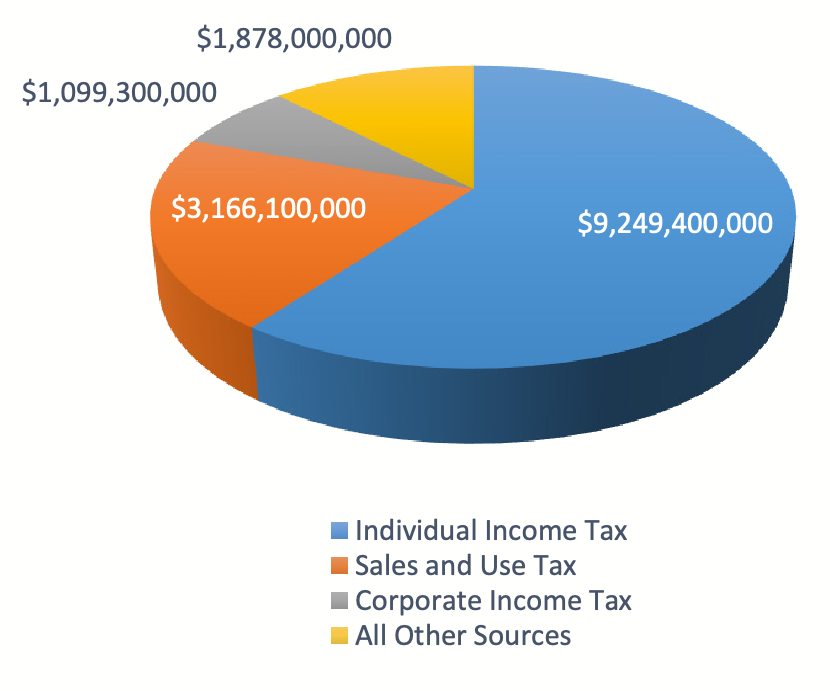
- Missouri collects around two thirds of state revenue through the income tax, which is the third-highest percentage among states, just after New York.
- Missouri’s GDP growth rate for 2024 was 2.3%, which ranked 30th in the country, falling well below the national average of 2.8%.
- Missouri’s two biggest cities rely on a 1% earnings tax, which will be increasingly problematic as non-city residents move toward remote work rather than traditional work in city-based offices and escape these taxes.
Income Taxes Are Holding Missouri Back
Missouri’s economy is once again lagging behind much of the country, and state and local tax structures are a part of the problem. Missouri has the third-worst reliance on income taxes as a share of state revenues in the country, just behind New York. Such a reliance on these harmful taxes—on income taxes at the state level and earnings taxes in Kansas City and St. Louis—has consequences.
Learning from Boom States
Missouri would be wise to take a page from the playbooks of zero-income-tax boom states such as Florida and Texas, which have been magnets for attracting and retaining people, jobs, and investment. In recent years, Missouri lawmakers have taken some steps to reduce the state individual income tax. Most recently, the legislature passed a law to gradually reduce the income tax to 4.5%, triggered by the state meeting certain revenue targets. However, there is no reason to stop those tax reductions at 4.5% if revenue targets continue to be met. Not only would income tax reductions allow citizens to keep more of their hard-earned money, but they would reduce the state’s reliance on income tax revenue and make the state more competitive.
Fiscal Year 2026 Revenue by Source
The lion’s share of state general revenue will continue to come from the income tax for the foreseeable future, but continuing rate reductions would lessen this reliance over time.
Policy Recommendations
- Allow the state income tax to fall below 4.5% with the goal of eliminating it completely.
- Remove the cap on the number of income tax rate reductions based on state revenue triggers and allow the rate to be reduced commensurate with the amount by which the trigger is exceeded.