The Problem
As many Missouri businesses struggle to find workers, the state’s welfare programs are fostering government dependency.
The Solution
Seize the opportunity provided by the recent passage of the One Big Beautiful Bill Act to reform Missouri’s welfare programs.
Key Facts
- Recent passage of the One Big Beautiful Bill Act (OBBB) offers Missouri new opportunities to reform the state’s welfare programs.
- More than 1 in 5 Missourians are enrolled in government-sponsored health coverage through Medicaid.
- Estimates suggest that upwards of 20% of welfare enrollees may actually be ineligible to receive services.
- Missouri should take advantage of the new flexibility granted to states as the many provisions of the OBBB are implemented in the coming years, focusing on encouraging work and making the programs more efficient.
New Opportunities
After decades of creeping growth in government dependence, Missouri now has a golden opportunity to finally enact meaningful welfare reform. Following the recent federal passage of the One Big Beautiful Bill Act (OBBB), states will be tasked over the next several years with implementing the bill’s many provisions that relate to welfare programs such as Medicaid and the Supplemental Nutrition Assistance Program (SNAP).
Drastically changing Missouri’s welfare programs will require significant, much-needed computer system upgrades. According to a recent report from the Missouri State Auditor’s Office, the state’s Medicaid agency continues to struggle with determining recipient eligibility. As a result, individuals who are ineligible to receive benefits have remained enrolled in the program for up to 10 years in some cases. State taxpayers have also been footing the bill for benefits for dead recipients due to a lack of sufficient system controls.
As Missouri is upgrading the state’s information systems as required by the OBBB, there’s no better time to address the existing eligibility system issues and take the extra step to further reform the state’s welfare programs to make them work better for program recipients and taxpayers alike.
Continuing Growth
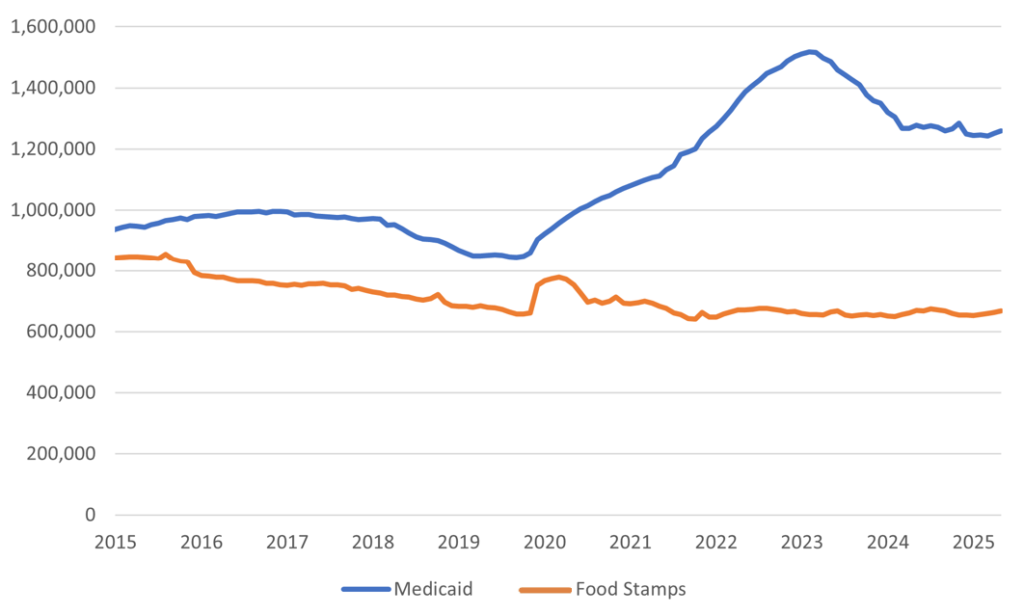
As government spending has grown in recent years, so too has enrollment in Missouri’s various welfare programs. Today, Medicaid is Missouri’s largest government-run program, with more than 1.2 million Missourians—approximately one fifth of Missouri’s population—enrolled. This total represents an increase in enrollment of approximately 50% since the beginning of 2020. Medicaid is not the only program growing in size. Approximately 660,000 Missourians are enrolled in SNAP, otherwise known as food stamps. Estimates suggest that upwards of 20% of all welfare enrollees may not be legally eligible to receive services or are receiving benefits in excess of the amount to which they’re entitled.
Change Incentives to Change Outcomes
Welfare programs shouldn’t encourage dependency, but far too often they end up trapping recipients on government support. After years without enforcing the SNAP or Temporary Assistance to Needy Families (TANF) work requirements, the OBBB requires Missouri to implement “community engagement requirements” for able-bodied SNAP and Medicaid recipients starting in 2027. Missouri should ensure these new requirements are more than just a new bureaucratic hurdle recipients need to clear and are instead offering those who need temporary assistance a clear path back to the workforce.
Welfare Program Enrollment
Following the surge in program enrollment during the COVID-19 pandemic, more than 1.2 million Missourians remain enrolled in Medicaid and more than 660,000 are on SNAP (food stamps).
Reform Can’t Wait
Whether Missouri’s government is ready or not, as a result of the OBBB, substantial changes are coming to the Show-Me State’s welfare programs over the next several years. While many of the bill’s reforms focus on improving program integrity and establish new state requirements with firm deadlines for compliance, some reforms provide states considerable flexibility in how they’re implemented. In these cases, Missouri should take advantage of this newfound flexibility to tailor the reforms to best meet the needs of Missourians, with a focus on maximizing efficiency, minimizing waste, and encouraging work for recipients who are capable.
Policy Recommendations
- Take advantage of newly provided flexibility to meaningfully reform welfare programs in a manner consistent with the goals of the recently passed OBBB.
- Continue upgrading state information systems to encourage greater accountability by minimizing waste, fraud, and abuse.
- Dutifully implement provisions of the OBBB to maximize program integrity while ensuring that productive work is encouraged.