
Economy
Energy Reform
THE PROBLEM
Missouri needs new electricity generation to replace retiring power plants and meet rapidly growing demand without imposing extraordinary costs on ratepayers or losing business investment due to a lack of electricity.
THE SOLUTION
Create a parallel pathway to energy production through private electricity grids.
Data Centers
In recent years, the expansion of artificial intelligence has led to widescale buildout of hyperscale data centers. These come with high infrastructure costs, primarily due to electricity usage. But they also can generate significant tax revenue—enough to lower tax rates for the communities where they operate.
Since data centers do not bring many permanent jobs, accompanying development, or tourists, tax revenue is the key benefit they offer. Municipalities should not squander that benefit by giving tax incentives to data centers.
Challenges on the Horizon
Rising electricity rates are also a concern. With the passage of Senate Bill 4 (2025), lawmakers implemented a tariff for large-load customers connecting to the existing grid. However, Ameren stated that all ratepayers will pay for new power plants needed to accommodate large-load customers.
Meanwhile, Missouri’s primary electric utilities, Ameren and Evergy, are currently slated for significant generation transitions. Ameren plans to shift its energy mix from 52% coal in 2027 to 0% coal by 2045. To both replace existing supply and meet new demand, several new power plants will be needed.
Private Electricity Grids
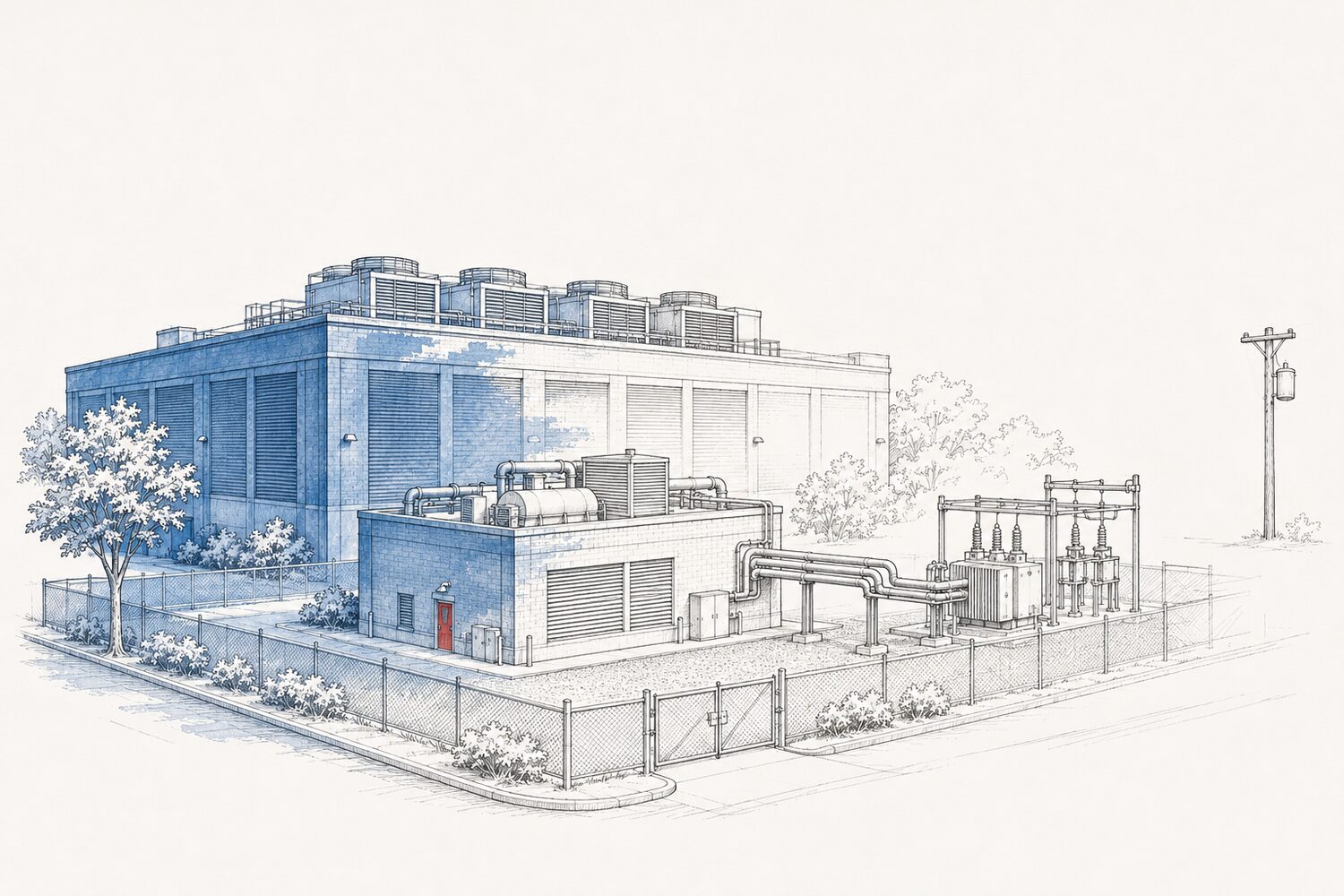
Consumer-regulated electricity (CRE) is a policy option that would allow private electricity grids to serve new, large-load customers separately from the existing grid more quickly and with less red tape.
To avoid being regulated like a public utility by the Missouri Public Service Commission, private electricity grids would not be allowed to sell or supply power to residential consumers, and they would have to be islanded from (not connected to) regulated electric systems.
Since they would not serve captive residential ratepayers, they would be exempt from regulations such as (but not limited to):
- Certificate of Convenience and Necessity (CCN) approval for providing electric service to retail customers
- CCN approval for constructing certain generation, transmission, and distribution facilities
- Prudence and “used and useful” reviews to determine whether investments can be recovered from ratepayers
Developers would see real benefits. The 200-megawatt Socrates South natural gas plant in Ohio, which began operation in summer 2026, was built by a natural gas company to serve a Meta-affiliated data center entirely off the grid. It went online in 17 months (1.4 years). The typical permitting timeline for natural gas projects in that grid region is 7.4 years. Speed matters, and Missouri shouldn’t let investment be constrained by electricity availability.
CRE could help Missouri: (1) reliably meet demand growth, (2) attract investment and innovation for companies seeking stable energy on a quicker timeline, and (3) lighten the burden on utilities working to meet new electricity demand.
To allow CRE, Missouri would need to modify state law to allow private electricity grids to own or operate facilities that enable them to function as private utilities and to sell electricity at retail to eligible customers. State law would also need to be modified so that private electricity grids would not be considered public utilities for regulation purposes. These private entities would still be subject to oversight, such as environmental and permitting laws.
The American Legislative Exchange Council drafted a CRE model policy document that offers a roadmap for Missouri. Real-life examples of private off-grid power in Ohio and West Virginia demonstrate CRE’s potential.
Expanding the Portfolio of Energy Options
Bringing market forces to the energy sector through private electricity grids would give private firms more freedom to use emerging energy technologies and reap the rewards for doing so. This freedom could increase innovation in the energy sector and also help revitalize existing industries such as nuclear energy.
Nuclear energy has received bipartisan support in Washington, D.C., due to its reliability, cleanliness, power, and safety. It could be a vital part of the future economy. Missouri has longstanding advantages, interest, and infrastructure in the sector, and the formation of the Missouri Advanced Nuclear Energy Task Force was a prudent policy decision that Show-Me Institute analysts recommended.
Yet barriers for next-generation nuclear energy exist in the form of financing difficulties, stringent federal licensing regulations, and subjective radiation standards (which may be changing). In addition, first-of-a-kind (FOAK) costs drive up expenses in emerging fields such as nuclear power. These can include initial engineering and licensing costs, unexpected project setbacks, and the costs of establishing new supply chains.
Missouri could allow private firms that want clean, reliable energy to take on the risks and costs of implementing next-generation nuclear energy or other technologies. Energy technologies should succeed or fail on their own merit rather than hinging on government interference through subsidies and mandates.
For example, firms like Google, Meta, and Microsoft have made sustainability pledges while also needing large amounts of around-the-clock electricity. Pioneering next-generation nuclear projects would expose these firms to FOAK costs and greater risk. But it could also provide them with dependable, emissions-free power while establishing partnerships that could help them secure additional electricity in the future.
The benefits could extend beyond the firms undertaking these projects. As the supply chain for next-generation nuclear energy matures and Missouri firms gain experience constructing privately financed nuclear projects, costs could decline. Private electricity grids could therefore open the door even wider for new nuclear energy on Missouri’s regulated electric systems as the federal government continues pursuing needed regulatory reforms.
Private electricity grids would also be better for expanding Missouri’s energy options than subsidies and mandates for “green” energy that exclude emissions-free nuclear energy. As Missouri incorporates more market forces into the sector through private electricity grids, it should also eliminate existing mandates like the renewable portfolio standard to allow the market to play a greater role in guiding the future of energy in Missouri.
POLICY RECOMMENDATIONS
- Allow private companies to own and operate any facilities necessary for generating, storing, transmitting, distributing, supplying, and selling electricity at retail to eligible customers, provided the system in Missouri is physically islanded from regulated utilities.
- Eliminate Missouri’s existing renewable portfolio standard.
