The National Assessment of Educational Progress (NAEP), often called the Nation’s Report Card, is the gold standard for measuring academic performance in the United States. Unlike state exams, which can vary in rigor, NAEP provides a consistent, reliable benchmark for comparing student outcomes over time and across states.
The 2024 NAEP results paint a bleak picture for our country. Scores in both reading and math are on the decline, continuing a decade-long trend. The pandemic made things worse, but scores were already declining prior to the pandemic.
The outlook is even worse in Missouri. Across NAEP’s four core categories—4th-grade reading and math, and 8th-grade reading and math—Missouri ranks, on average, 40th out of the 50 states after adjusting for demographics and poverty. Our highest ranking is 35th in 8th-grade reading—still in the bottom third nationally. There is no way to sugarcoat it: the academic performance of Missouri’s students is abysmal.
This is bad news if you believe (like I do) that an educated workforce is critical for economic growth. Yet the urgency of this problem appears lost on many Missourians and by extension, our elected leaders.
One reason for the disconnect may be that NAEP scores feel abstract. What does a score of 234 in math or 210 in reading actually mean? Without context, the data can seem vague. In this short piece, I hope to provide a more concrete sense of what NAEP scores are telling us about Missouri students’ literacy and numeracy skills.
First, consider this sample question from the NAEP 4th-grade math assessment:
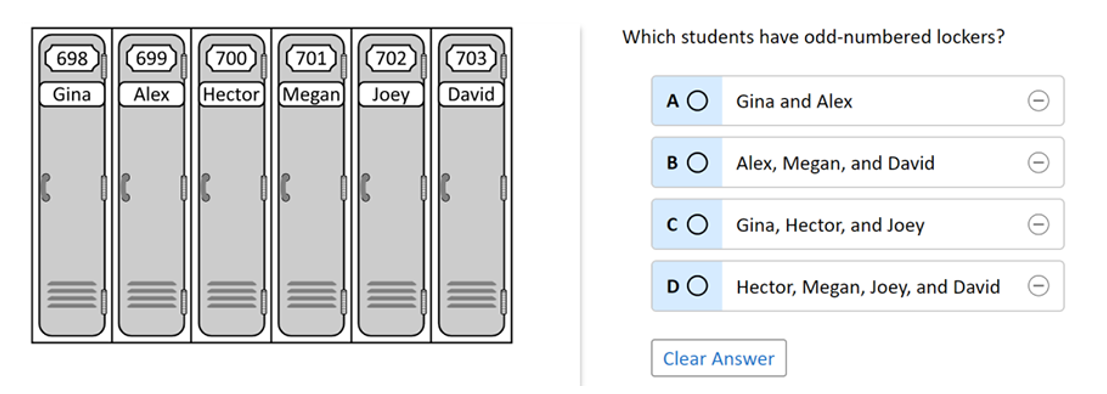
The question asks 4th graders to identify odd numbers. The correct answer is B: Alex, Megan, and David. What percentage of 4th-grade students in Missouri should be able to answer this question correctly? Ideally, nearly all of them. Maybe at least 90 percent? But in reality, just 6 in 10, or 61 percent, get it right. This means 4 in 10 Missouri 4th graders cannot identify odd numbers.
Here’s another question, also from the 4th-grade NAEP test. This one asks students to complete a number pattern counting by fours:
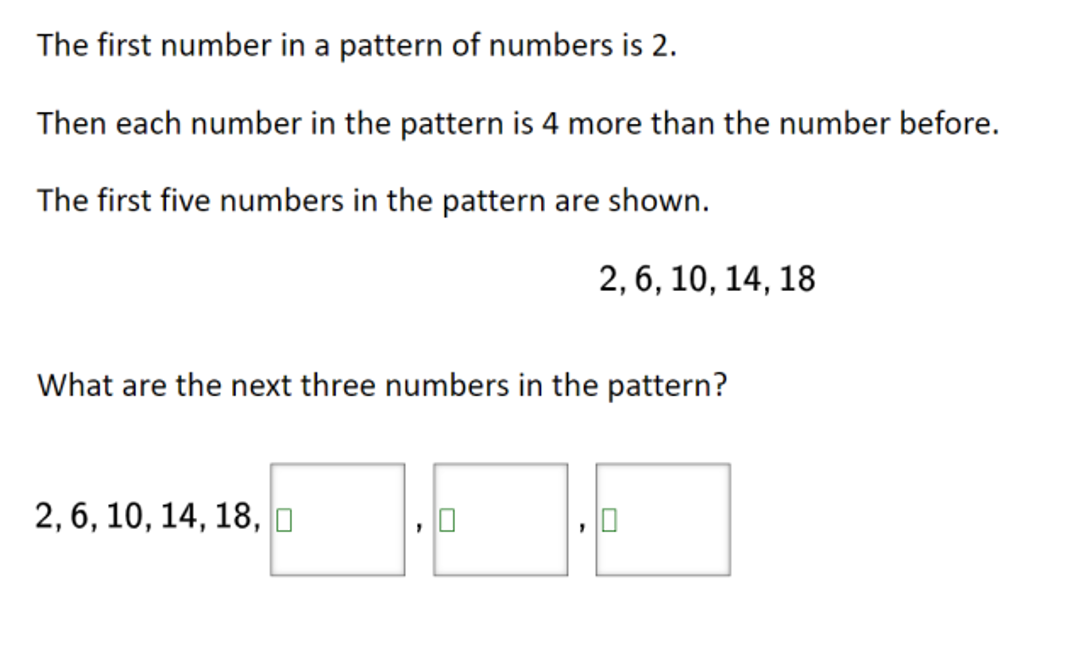
Only 73 percent of Missouri 4th graders can correctly finish the pattern. That means over 1 in 4 cannot.
Turning to reading, NAEP results reveal that many of our students struggle to extract basic meaning from a text. Consider the following questions from the 4th-grade reading test:
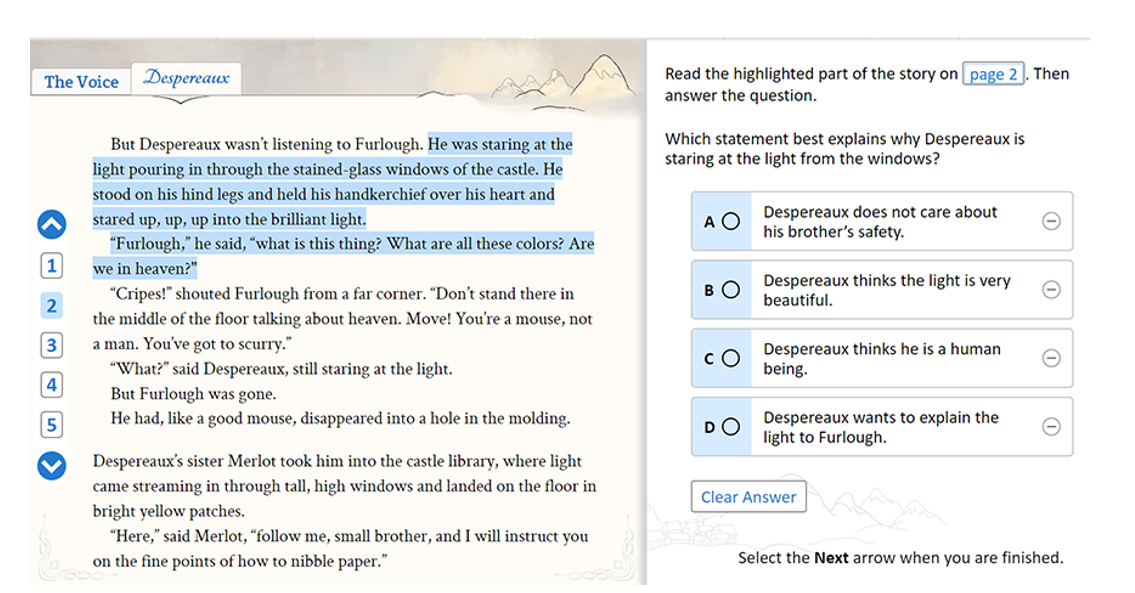
The correct answer, B: Despereaux thinks the light is very beautiful, is selected by Missouri students just 62 percent of the time.
This follow-up question asks students to use the full passage to identify why Furlough’s behavior is important:
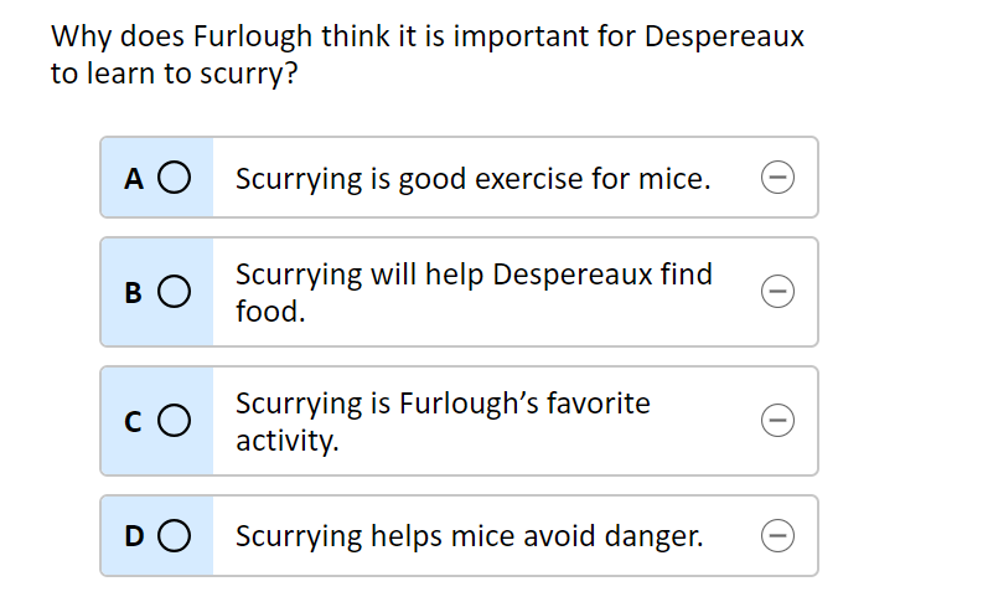
The correct answer is D: Scurrying helps mice avoid danger. Only 70 percent of Missouri students answer correctly.
These are just a handful of examples of questions that Missouri 4th graders struggle with. All are considered “easy” by NAEP. Missouri students fare much worse on more difficult items. Interested readers can look up additional examples using NAEP’s sample question tool.
I hope this post provides some clarity around what NAEP scores tell us about the state of education in Missouri. Our students are struggling mightily. We are not a small tweak away from righting the ship. If we want Missouri children to excel, we need big changes.