For years, the education establishment in Missouri has relied on a predictable playbook. Whenever state test scores drop or national rankings look bleak, we are told that the data don’t capture the whole picture, or that a new bureaucratic report card will soon show things are turning around. We are urged to wait, to invest more taxpayer money, and to trust the system.
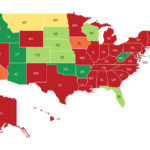
But a newly released look at the numbers from a joint Harvard and Stanford project strips away the capacity for spin. According to the report, Missouri’s reading scores, which declined substantially during COVID, have continued to fall since 2022. We now rank 26th of 38 states (with usable data) in academic growth in math and 28th of 35 states in reading. In both reading and math, Missouri students are more than a half of a year behind where they were performing in 2019 (0.58 grade equivalent and 0.66 grade equivalent, respectively).
The authors point out that the pandemic slide was actually the acceleration of a trend that started around 2013. The pandemic simply poured gasoline on a fire that was already burning.
This scorecard release comes at a critical time for Missouri education policy. Recently, we’ve watched efforts to implement clear, transparent A–F school report cards go sideways in Jefferson City, bogged down by attempts to shift focus away from academic achievement and instead prioritize ambiguous school climate surveys. Fortunately, the governor’s executive order mandating report cards with letter grades will still be implemented.
Similarly, efforts to bring real accountability to early reading were derailed this legislative session. Lawmakers couldn’t commit to rigorously applying the science of reading or to making sure that students who can’t read aren’t socially promoted to grades where they will struggle to understand their textbooks.
If we want to reverse this generation-long decline, we must stop protecting the status quo. The folks in charge of public education need to be held to the highest standards of accountability. Furthermore, we must empower parents with robust educational choice, forcing the state system to compete and innovate rather than take families for granted. If we don’t make changes, we’ll only continue to fall further behind.