• Publications and Model Policy
    • Blueprint for Missouri
    • Model Policy
    • Report
      • Case Study
      • Policy Study
      • Essay
    • The Missouri School Rankings Project
    • Testimony
    • Newsletter
  • Blog
    • Daily Blog
    • Podcasts and Radio
    • Video
    • Infographics
    • Commentary / Op-Eds
    • Events
  • Events
  • Donate
  • About
    • Our Team
    • Board of Directors
    • Fellows and Scholars
    • Authors
    • Jobs
  • Contact
  • Explore Topics
    • Education
      • Accountability
      • Education Finance
      • Performance
      • School Choice
      • The Missouri School Rankings Project
    • Health Care
      • Free-Market Reform
      • Medicaid
    • Corporate Welfare
      • Special Taxing Districts
      • Subsidies
      • Tax Credits
    • Labor
      • Government Unions
      • Public Pensions
    • State and Local Government
      • Budget and Spending
      • Courts
      • Criminal Justice
      • Municipal Policy
      • Property Rights
      • Transparency
      • Transportation
    • Economy
      • Business Climate
      • Energy
      • Minimum Wage
      • Privatization
      • Regulation
      • Taxes
      • Welfare
      • Workforce
Show-Me InstituteShow-Me Institute
Support the Show-Me Institute
  • Publications and Model Policy
    • Blueprint for Missouri
    • Model Policy
    • Report
      • Case Study
      • Policy Study
      • Essay
    • The Missouri School Rankings Project
    • Testimony
    • Newsletter
  • Blog
    • Daily Blog
    • Podcasts and Radio
    • Video
    • Infographics
    • Commentary / Op-Eds
    • Events
  • Events
  • Donate
  • About
    • Our Team
    • Board of Directors
    • Fellows and Scholars
    • Authors
    • Jobs
  • Contact
  • Explore Topics
    • Education
      • Accountability
      • Education Finance
      • Performance
      • School Choice
      • The Missouri School Rankings Project
    • Health Care
      • Free-Market Reform
      • Medicaid
    • Corporate Welfare
      • Special Taxing Districts
      • Subsidies
      • Tax Credits
    • Labor
      • Government Unions
      • Public Pensions
    • State and Local Government
      • Budget and Spending
      • Courts
      • Criminal Justice
      • Municipal Policy
      • Property Rights
      • Transparency
      • Transportation
    • Economy
      • Business Climate
      • Energy
      • Minimum Wage
      • Privatization
      • Regulation
      • Taxes
      • Welfare
      • Workforce
×

State and Local Government / Transportation

The Light Rail Line Less Traveled

By David Stokes on Jun 12, 2024
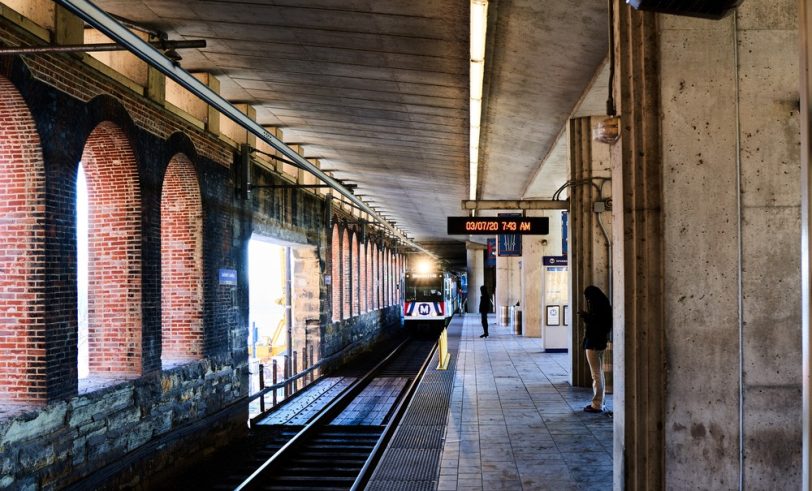
Metro train
Kenyatta Russell / Shutterstock

If anyone has taken Robert Frost’s words to heart and taken the road less traveled, it is Metro, the St. Louis transit authority. If it knows how to do one thing, it is how to build a new MetroLink line nobody is going to ride.

But now we have good news out of St. Louis County regarding transit. County government has rejected all of the various options for MetroLink expansion into St. Louis County. (This is different from the proposed MetroLink expansion in St. Louis City, which unfortunately has been approved locally. The East-West Gateway Council of Governments is currently seeking federal funding for this project, which I hope it won’t get.)

The problem for the various proposals to expand into St. Louis County is that there is no dedicated way to pay for them, at least not yet. The route starts in the city but the expansion primarily serves the county—so is the city or the county going to pay for the first few miles of the expansion? Would the county pay for light rail inside the city? Would the city pay for part of a light rail expansion that mostly “benefits” residents of the county? (Note the use of quotation marks as there is no overall benefit.) Who knows?

This doesn’t mean that light rail expansion in St. Louis County isn’t going to happen, but anything that puts it in doubt is good news in my book.

The other good news in the story is that St. Louis County is now considering bus rapid transit (BRT) as an alternative to MetroLink:

AECOM [the county’s consulting firm] also has been asked to study the use of rapid bus lines, either using new rights-of-way just for buses or designated lanes on existing roads. Those could be deployed instead of MetroLink expansion or in conjunction with it.

BRT has been used in Kansas City with success, and it is something that Metro should consider for St. Louis. BRT moves people effectively at a fraction of the cost of light rail, streetcars, or trolleys. Unfortunately, it seems spending enormous amounts of money is a good thing from Metro’s point of view, no matter how much of it is wasted.

Increased use of BRT could be the transit option St. Louis has been looking for.

Topics on this page
St. LouisKansas CitySt. Louis CountyMetrolinkRapid transitBus rapid transit
More
  • Share
  • Tweet
  • Share
  • Email
  • Print
About the author

David Stokes

Director of Municipal Policy

More about this author >
Footer Logo
Support the Show-Me-Institute
Showmeinstitute.org is brought to you by Show-Me Institute and Show-Me Opportunity.
  • Publications
  • Blog
  • Events
  • Donate
  • About
  • Contact

Reprint permission for Show-Me Institute publications and commentaries is hereby granted, provided that proper credit is given to the author. We request, but do not require, that those who reprint our material notify us of publication for our records: [email protected].

Mission Statement
Advancing liberty with responsibility by promoting market solutions for Missouri public policy.

© Copyright 2025 All Rights Reserved